NASA’s Hubble Spots an Out-of-Sync Galaxy

3 min read

NASA’s Hubble Spots an Out-of-Sync Galaxy
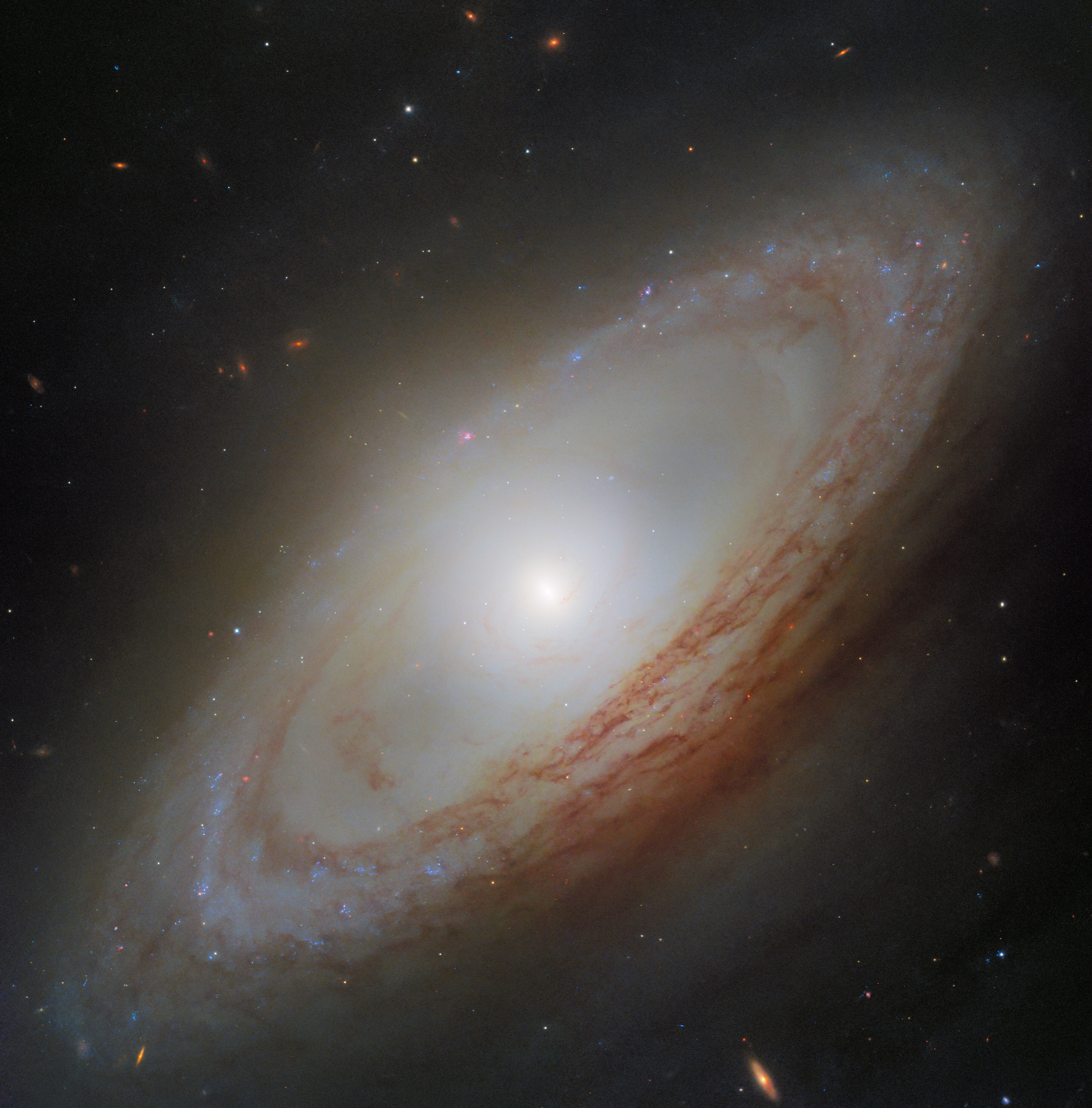
A spiral galaxy viewed at an angle, with a bright central bulge and winding spiral arms. The arms form a ring around the galaxy, without appearing to reach its center. Prominent red-brown dust lanes weave through the arms, which are also dotted with bright blue and reddish regions of star formation. The galaxy is set against a dark background scattered with stars and faint distant galaxies.
The spiral galaxy NGC 4698 shines in this image from the NASA/ESA Hubble Space Telescope.
ESA/Hubble & NASA, D. Thilker, the MAUVE-HST Team

Though the spiral galaxy in this new image from the NASA/ESA Hubble Space Telescope seems serene, it hides a chaotic secret. This galaxy is NGC 4698, and it lies about 55 million light-years away in the constellation Virgo. It’s one of over a thousand galaxies in the Virgo Cluster, the nearest large cluster of galaxies bound together by gravity.

As a spiral galaxy similar to our own Milky Way galaxy, NGC 4698 has spiral arms that curl around within a thin disk of stars, gas, and dust. These arms are marked by opaque clumps of brown dust and dotted with small collections of bright blue stars. Unlike many other spiral galaxies, like this one recently photographed by Hubble, NGC 4698’s delicate spiral arms are only prominent in the outer reaches of the disk; spiral arms often wind down to the very center of a galaxy, but NGC 4698’s spiral arms appear to shy away from its glowing center. The arms instead hover in a ring-like structure around the perimeter of the galaxy.

NGC 4698’s center is dominated by an elongated galactic bulge . The diffuse off-white glow of the galaxy’s bulge comes from stars smaller, older, and cooler than the massive blue stars that dot the galaxy’s outer disk. These tightly packed stars orbit a supermassive black hole containing millions of times the Sun’s mass. Scientists have found signs that this black hole is actively growing, drawing gas inward with its gravitational pull.

With a flat, starry disk and diffusely glowing center, NGC 4698 looks a lot like a typical spiral galaxy — but this galaxy is far from normal. NGC 4698 is one of only a few known spiral galaxies with a bulge that extends out from the disk at a right angle. The elongation is faintly visible in this Hubble image, which shows the ghostly glow of the starry bulge peeking above and below the dusty disk. What’s more, the stars and gas nearest the galaxy’s center rotate perpendicular to the rest of the disk!

What could cause a galaxy to be so out of sync? Astronomers have found that the culprit likely lies outside the galaxy. If NGC 4698 funneled in gas from an outside source, the newly collected gas could have formed a disk of gas and stars in the galaxy’s center, at an angle relative to the rest of the disk. Some observations suggest that this galaxy once experienced a minor galactic merger, as evidenced by a short ‘tail’ of hydrogen streaming from one side of the galaxy.

The data used to create this image come from an observing program focusing on galaxies in the Virgo Cluster. This program zooms in on the details of these relatively nearby galaxies, such as individual star clusters and nebulae. At the same time, researchers will use these data to take stock of the larger picture, learning how a galaxy’s journey through a cluster affects the galaxy’s evolution and ability to form new stars.

Text credit: ESA/Hubble

Media Contact:

Claire Andreoli
NASA’s Goddard Space Flight Center, Greenbelt, MD
[email protected]


Source: science.nasa.gov
NASA Awards Launch Services for StarBurst Gamma-Ray Detector

NASA insignia.
Credit: NASA

NASA has selected SpaceX to provide launch services for the agency’s StarBurst mission, a small satellite designed to investigate neutron star mergers and the origins of short gamma-ray bursts.

StarBurst will launch aboard a Bandwagon rideshare mission on a Falcon 9 rocket from Space Launch Complex 40 at Cape Canaveral Space Force Station in Florida no earlier than 2028.

The selection is a firm-fixed-price task order under NASA’s VADR (Venture-Class Acquisition of Dedicated and Rideshare) launch services contract. This indefinite-delivery/indefinite-quantity contract allows NASA to acquire launch services during a 10-year ordering period, with a maximum total value of $1 billion across all contracts.

The StarBurst mission is designed to observe the entire portion of the sky not blocked by Earth to search for brief, powerful explosions called gamma-ray bursts. The satellite will focus on detecting the initial high-energy emission from short gamma-ray bursts, which occur when dense stellar remnants called neutron stars merge.

By combining StarBurst’s observations with gravitational-wave measurements and follow-up observations from other telescopes, researchers will study these events through multiple types of signals, an approach known as multimessenger astronomy.

StarBurst is part of NASA’s Astrophysics Pioneers Program, which supports lower-cost investigations using small spacecraft and other platforms.

NASA’s Launch Services Program Office, based at the agency’s Kennedy Space Center in Florida, manages the VADR contract.

For more information about NASA’s StarBurst, visit:

https://science.nasa.gov/mission/starburst

-end-

Joshua Finch / Jimi Russell
Headquarters, Washington
202-358-1100
[email protected] / [email protected]

Leejay Lockhart
Kennedy Space Center, Fla.
321-747-8310
[email protected]

Source: www.nasa.gov

NASA-JAXA XRISM Mission Sees Pulsar Gathering Companion’s ‘Wind’

5 min read

NASA-JAXA XRISM Mission Sees Pulsar Gathering Companion’s ‘Wind’

Using data from the Japan-led XRISM (X-ray Imaging and Spectroscopy Mission) observatory, astronomers have directly observed a giant star’s outflow, called a stellar wind, being captured by its compact companion and providing the power source for strong X-ray flares. The research is part of NASA’s exploration of the extreme universe to better understand how the cosmos works.
 
“We’ve never before seen clear indications of wind plasma falling onto a compact object,” said Roi Rahin, a researcher at UMBC (University of Maryland, Baltimore County) and NASA’s Goddard Space Flight Center in Greenbelt, Maryland. “We can now test our understanding of these processes in much greater detail.”
 
A paper describing the findings published Friday in the journal Science Advances.
 
The target system is BP Crucis, a high-mass X-ray binary located about 13,000 light-years away in the southern constellation Crux. The primary star, known as Wray 977, is a blue hypergiant about 40 times the Sun’s mass and 60 times its size. It’s so big, hot, and luminous that ionized gas constantly streams away from it, a phenomenon astronomers call a stellar wind.

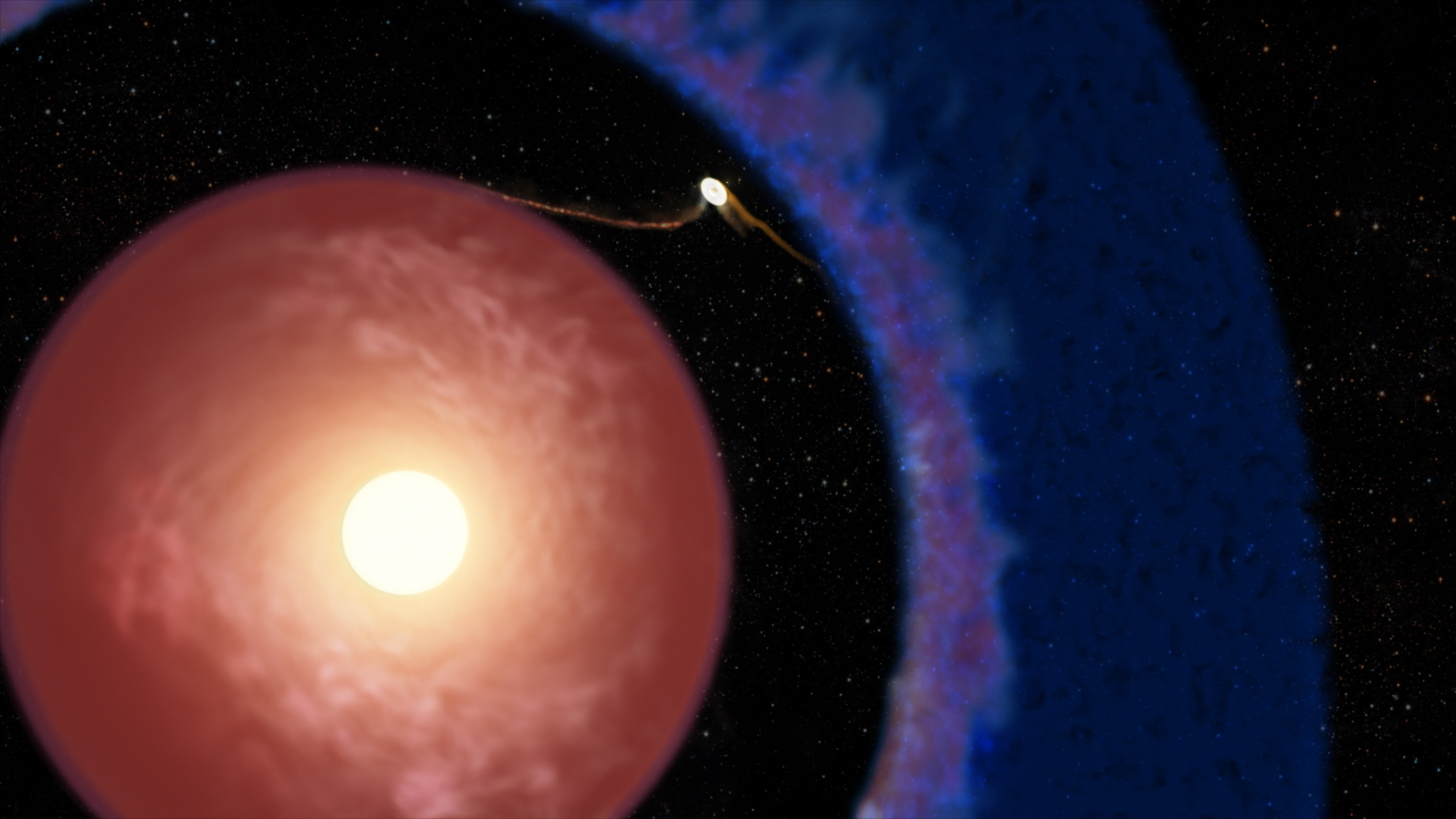
This artist’s concept of the BP Crucis system follows the pulsar on a passage through the dense stream of plasma flowing from its companion, a blue hypergiant 40 times the Sun’s mass. During each four-day passage, the pulsar’s X-ray brightness flares as it pulls in some of the gas. At first, the gas forms a messy, turbulent accretion disk around the pulsar, and plasma spirals down to it. But as the pulsar moves deeper into the stream, there’s not enough angular momentum to support the disk, and it breaks up. At this point, plasma falls straight onto the pulsar. Later, as the pulsar near the end of its passage, a messy accretion disk rebuilds, this time spinning in the opposite direction of the earlier disk due to the stream’s flow.
NASA’s Goddard Space Flight Center/Conceptual Image Laboratory

The supergiant’s companion is a tiny-but-mighty neutron star called GX 301-2. The crushed core of a star that long ago exploded as a supernova, it packs more than the Sun’s mass into a ball roughly 12 miles (20 kilometers) across. Rotating every 11 minutes, it sweeps an X-ray beam toward Earth, which classifies it as a pulsar.   
 
Twice during the pulsar’s 41.5-day orbit, near its closest and farthest points from the primary star, strong X-ray flares occur for several days. Astronomers think the pulsar’s gravitational influence on the star creates an especially dense stream of plasma. Flares occur when the pulsar traverses this stream and captures some of its matter. The strongest eruptions happen closer to the star, where the stream is denser. 
 
The researchers targeted the system with XRISM on Feb. 1, 2025, observing it for about 16 hours near the end of one of these stronger flares. The observatory’s Resolve instrument, jointly developed by NASA and JAXA (Japan Aerospace Exploration Agency), captured highly detailed X-ray spectra, revealing rapidly changing emission and absorption lines. In particular, absorption lines from highly ionized iron revealed the speed and direction of plasma relatively close to the pulsar. 

Watch to learn about spectroscopy, the dance between matter and light, and how NASA missions using it help scientists answer big questions about our universe. 
NASA’s Goddard Space Flight Center

When Rahin first saw these spectra, he realized he hadn’t seen anything like them before. He scoured the scientific literature for similar observations and came up empty-handed.

“It was clear that these observations were groundbreaking, but at the same time this meant the analysis had to be especially detailed,” said Nazma Islam, a co-author formerly at UMBC and NASA Goddard and now an assistant professor at Manipal Centre for Natural Sciences, India. “We could see how the dense stream of plasma acts very close to the neutron star.”

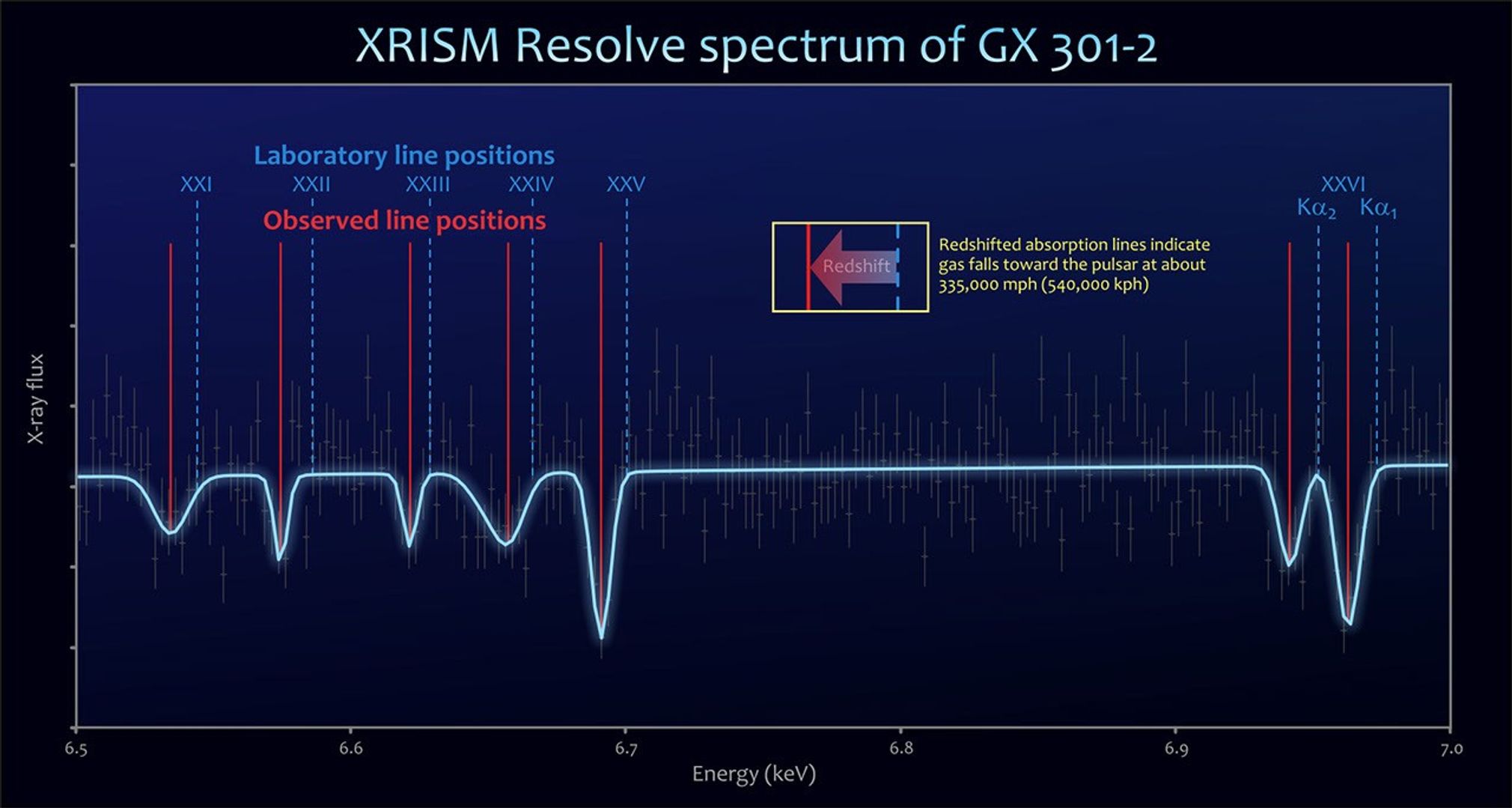
XRISM Resolve absorption spectrum of BP Crucis
The Resolve instrument aboard the NASA-JAXA XRISM observatory captured this high-resolution X-ray spectrum of BP Crucis. Prominent iron absorption lines (dashed) have shifted to lower energies (red lines), which indicates both the direction and velocity of the gas. The observations indicate the gas is moving toward the pulsar at about 335,000 mph (540,000 kph). Data and error bars are shown in gray, with a model spectrum in light blue. Roman numerals indicate the ionization state of iron atoms (the number of electrons they’ve lost to produce each spectral line).
NASA’s Goddard Space Flight Center, JAXA/NASA, Rahin et al. 2026

Rahin and his team show that the iron absorption lines they observed are displaced to lower energies than they would be if measured in a laboratory. This displacement, called a redshift, indicates motion away from the observer, which means the gas is flowing toward the pulsar. The extent of the redshift indicates the plasma’s velocity. The team’s analysis indicates gas is racing toward the pulsar at speeds of around 335,000 mph (540,000 kph).
 
Here’s what the researchers think is going on: As the pulsar enters the stream, it sweeps up gas into a thick, messy, turbulent disk. This gas spirals down to the pulsar, heats up, and emits X-rays to power the flares.
 
As the pulsar pushes farther into the stream, the turbulent disk breaks down. Astronomers suspect that as the pulsar moves more directly into the flow, the stream no longer has the angular momentum required to maintain the disk. Once the disk dissipates, plasma flows directly onto the neutron star. Observations with XRISM occurred near the end of this phase.

Then, as the pulsar nears the end of the stream, a messy disk briefly returns, this time spinning in the opposite direction. And then it, too, disappears as the pulsar exits. In all, the pulsar takes about four days to transit the stream.

“The BP Crucis system is an ideal laboratory for studying wind-fed pulsar accretion, and XRISM’s sensitive, high-resolution Resolve spectrometer is an ideal instrument for advancing our understanding of the processes involved,” said Brian Williams, the mission’s project scientist at NASA Goddard.  

To learn more about the XRISM mission, visit:

https://nasa.gov/xrism

Details

Last Updated

Sep 18, 2026

Editor
Francis Reddy
Contact
Alise Fisher
Location
Goddard Space Flight Center

Source: science.nasa.gov
NASA Invites Media to SpaceX’s 35th Resupply Launch to Space Station

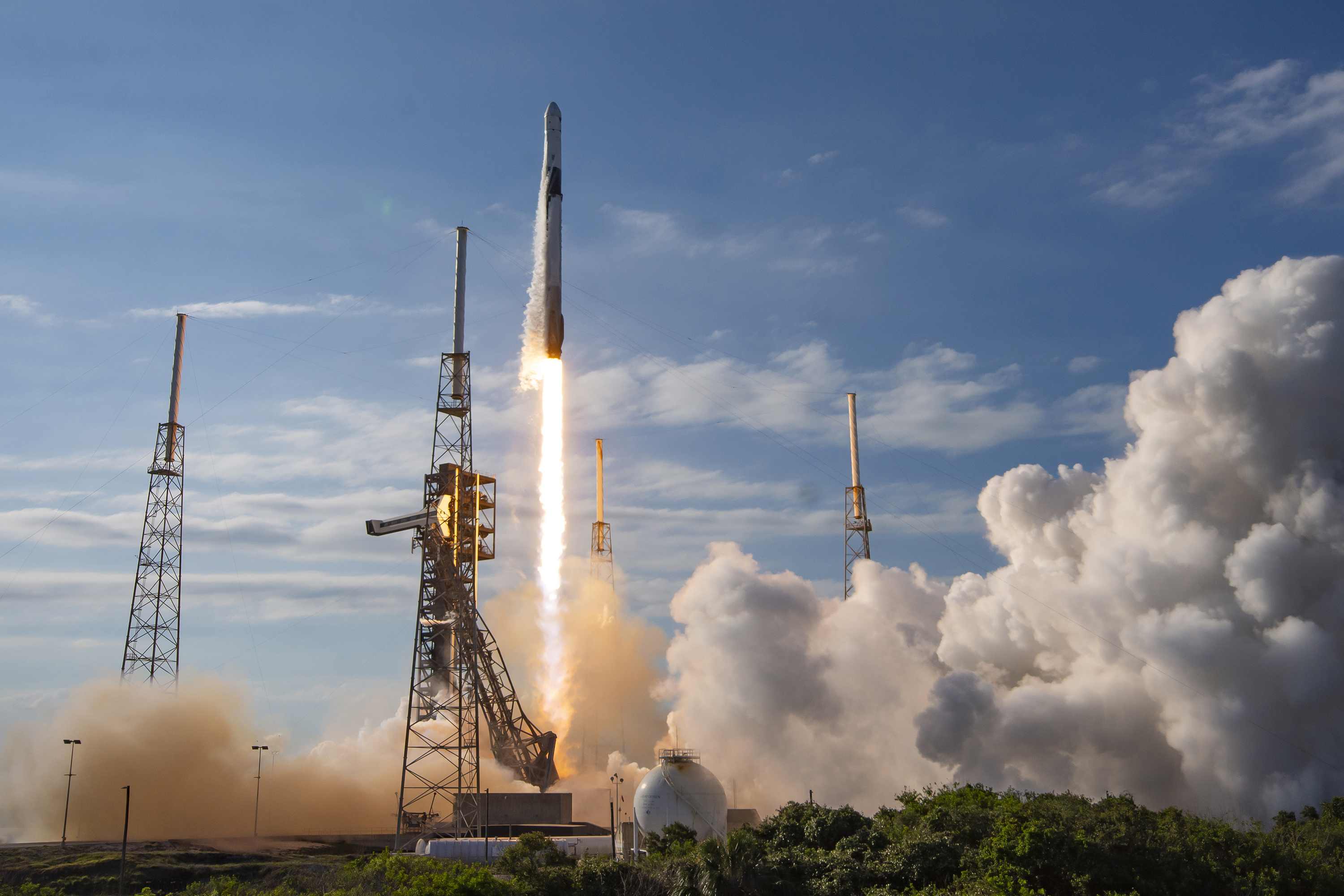
A SpaceX Falcon 9 rocket launches on May 15, 2026, carrying about 6,500 pounds of science, supplies, and equipment to the International Space Station during the company’s 34th commercial resupply mission for NASA.
Credit: NASA

Media accreditation is open for the next cargo launch that will deliver NASA science investigations, supplies, and equipment to the International Space Station. The 35th SpaceX commercial resupply services mission to the orbital laboratory for NASA will lift off on a Falcon 9 rocket.

NASA and SpaceX are targeting no earlier than October to launch the SpaceX Dragon spacecraft from Cape Canaveral Space Force Station in Florida.

Credentialing to cover prelaunch and launch activities is open to U.S. media only. The application deadline is 11:59 p.m. EDT, Thursday, Oct. 1. All accreditation requests must be submitted online at:

https://media.ksc.nasa.gov

Media will receive a confirmation email upon approval. NASA’s media accreditation policy is available online. For questions about accreditation, or to request special logistical support, email: [email protected]. For other questions, please contact NASA’s Kennedy Space Center newsroom at: 321-867-2468.

Each resupply mission to the station delivers scientific investigations in biology and biotechnology, Earth and space science, physical sciences, and technology development and demonstrations. Cargo resupply from U.S. companies ensures a national capability to deliver scientific research to the space station, significantly increasing NASA’s ability to conduct new investigations aboard humanity’s laboratory in space.

In addition to food, supplies, and equipment for the crew, Dragon will deliver the final sets of International Space Station Roll-Out Solar Arrays, called IROSA, which astronauts will install during future spacewalks to complete station’s power augmentation. Once installed, the arrays will provide additional power to support critical station operations, including its safe and controlled deorbit.

The mission also will transport several new experiments to the orbital complex, including hardware to manufacture artificial retinas in microgravity that could help restore vision for patients on Earth and 3D heart cell models to advance large-scale drug testing on future space missions. Dragon also will carry materials to study how a new type of glass is formed in microgravity, and brain organoids that could uncover potential treatment targets for neurodegenerative diseases like Alzheimer’s, Parkinson’s, and multiple sclerosis.

For more than 25 years, people have lived and worked continuously aboard the International Space Station, advancing scientific knowledge and making research breakthroughs not possible on Earth. The space station helps NASA understand and overcome the challenges of human spaceflight, expand commercial opportunities in low Earth orbit, and build on the foundation for long-duration missions to the Moon, as part of the Artemis program, and to Mars.

Learn more about NASA’s commercial resupply missions at:

https://www.nasa.gov/station

-end-

Josh Finch / Jimi Russell
Headquarters, Washington
202-358-1100
[email protected] / [email protected]

Steven Siceloff
Kennedy Space Center, Fla.
321-876-2468
[email protected]

Sandra Jones / Joseph Zakrzewski
Johnson Space Center, Houston
281-483-5111
[email protected] / [email protected]

Source: www.nasa.gov

NASA Unveils Enterprise, the First Space Shuttle

The Shuttle Enterprise (Orbiter Vehicle 101) rolls out of the Palmdale manufacturing facilities with Star Trek television cast members. From left to right they are: Dr. James D. Fletcher, NASA Administrator, DeForest Kelley (Dr. "Bones" McCoy), George Takei (Mr. Sulu), James Doohan (Mr. Scott), Nichelle Nichols (Lt. Uhura), Leonard Nimoy (the indefatigable Mr. Spock), Gene Rodenberry (The Great Bird of the Galaxy), and Walter Koenig (Ensign Pavel Chekov).
The rollout ceremony for NASA’s first space shuttle, OV-101, coincided with Constitution Day of the nation’s bicentennial on Sept.17, 1976. Although the orbiter was originally planned to be named Constitution, Star Trek fans successfully convinced President Gerald Ford to name it Enterprise after the series’ fictional starship.
NASA

Fifty years ago, on Sept. 17, 1976—Constitution Day of America’s bicentennial year—NASA unveiled its first space shuttle orbiter, OV-101, to the public. NASA had originally planned to name the vehicle Constitution, but a letter-writing campaign changed the agency’s plans. Nearly 100,000 fans of the Star Trek television series wrote the White House urging that the shuttle be named after the USS Enterprise, the fictional starship featured in the series. In a memo, President Gerald Ford directed NASA to christen the shuttle Enterprise saying he was “partial to the name”. The name Enterprise, long celebrated in U.S. naval history, had earlier been bestowed on the first nuclear-powered carrier, a World War II carrier, and an American vessel of the Revolutionary War.

Hundreds of invited guests attended the rollout ceremony at Rockwell’s Palmdale facility in southern California, including Star Trek creator Gene Roddenberry and several cast members. Pictured from left to right in this photo are NASA Administrator James C. Fletcher, DeForest Kelley (Dr. “Bones” McCoy), George Takei (Mr. Sulu), James Doohan (Chief Engineer Montgomery “Scotty” Scott), Nichelle Nichols (Lt. Uhura), Leonard Nimoy (Mr. Spock), series creator Gene Rodenberry, U.S. Rep. Don Fuqua (D.-Fla) and Walter Koenig (Ensign Chekov).

Even though Enterprise was not designed to fly in space, it performed the essential atmospheric test flights that paved the way for the shuttle program’s first spaceflights in 1981. The orbiter is now on display at the Intrepid Museum in New York City.

Learn more about the historic rollout of NASA’s first space shuttle.

Credit: NASA

Source: www.nasa.gov

Newfound ‘Baby’ Planet Smashes Record for Youngest Known World

5 Min Read

Newfound ‘Baby’ Planet Smashes Record for Youngest Known World

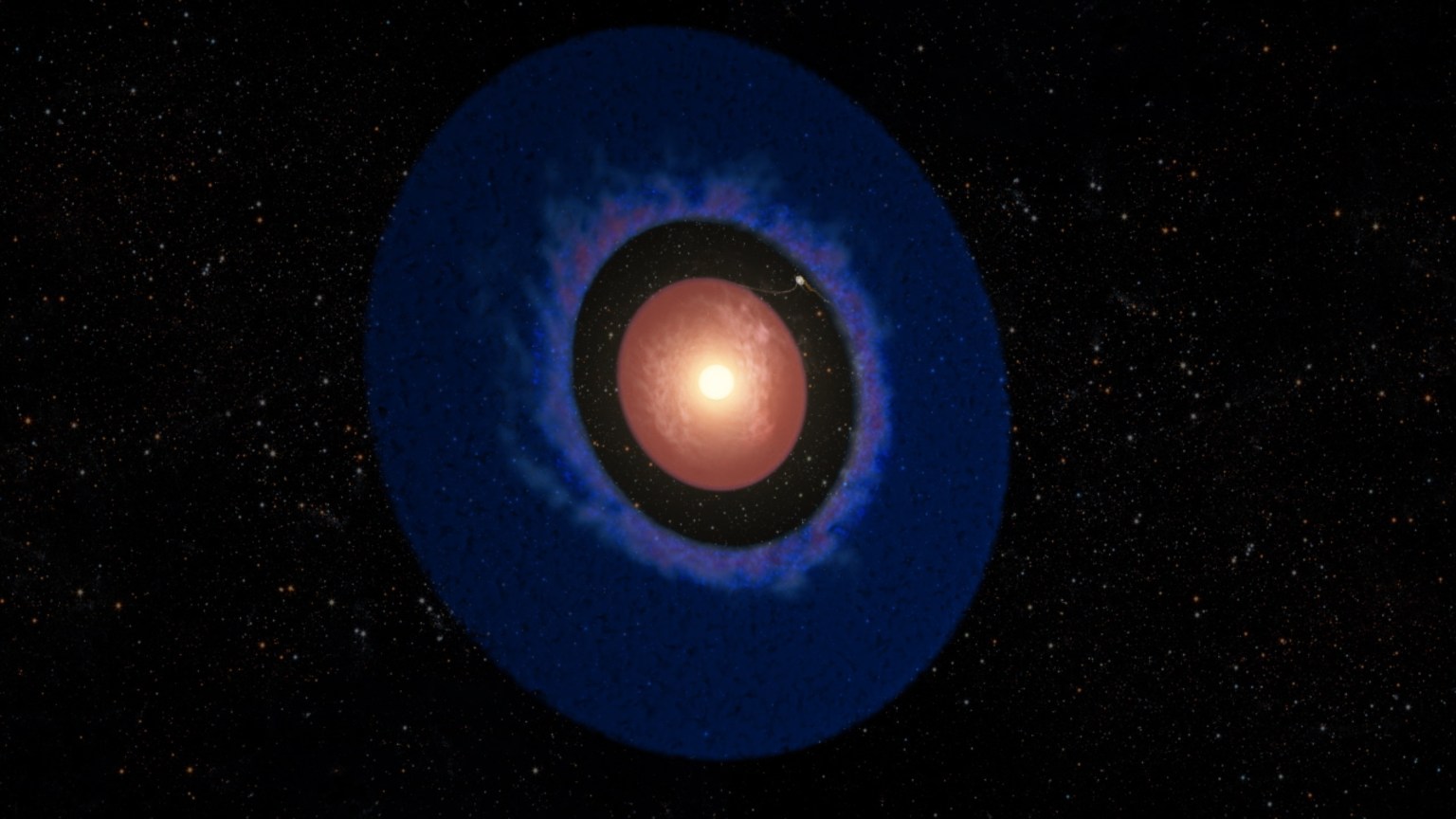
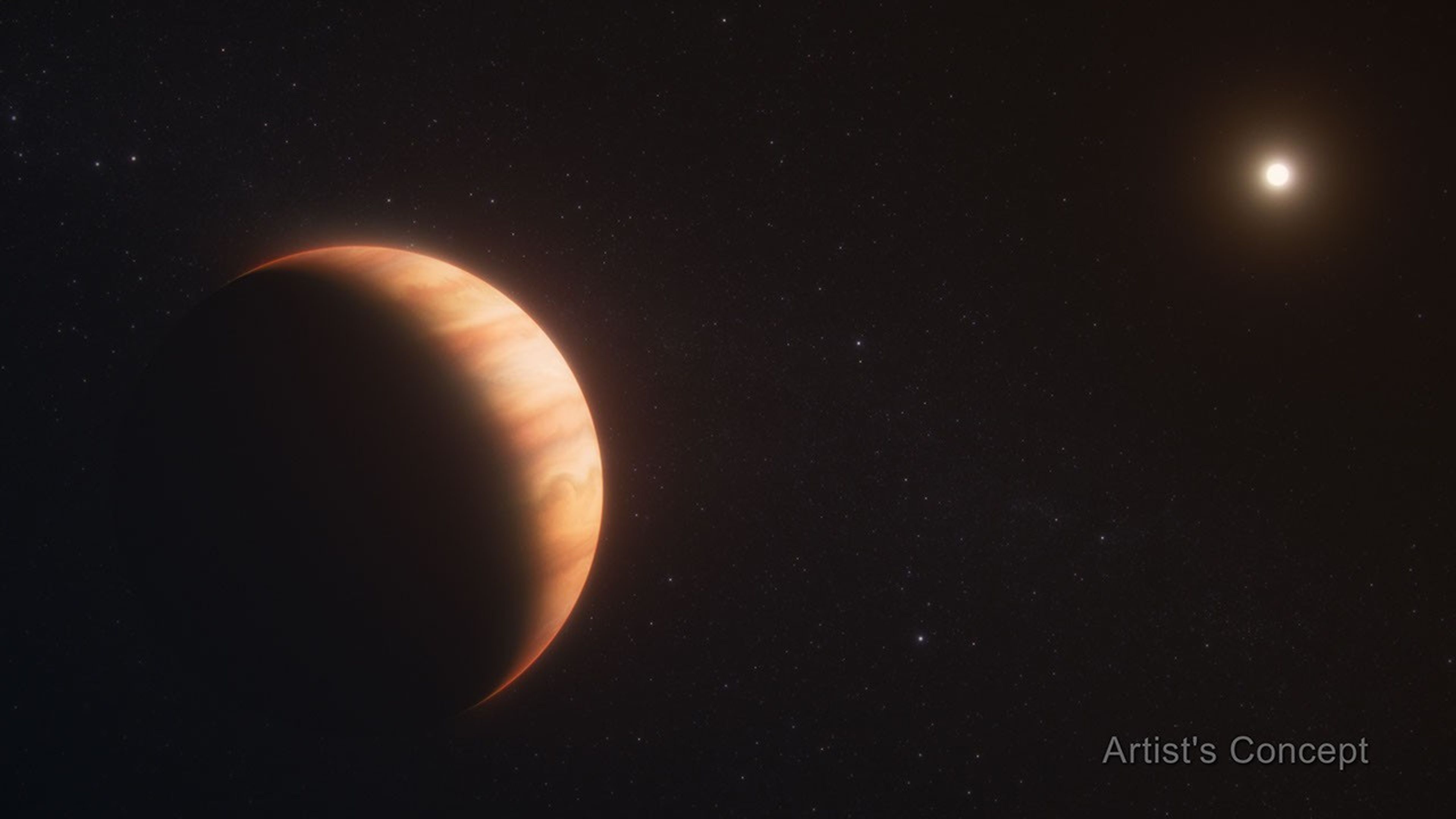
An artist’s concept of the youngest known exoplanet, Elias 2-24 b.

Credits:
W. M. Keck Observatory/Adam Makarenko

Astronomers have confirmed a world that’s less than a million years old as the youngest known planet, using data from NASA-funded archives. Called Elias 2-24 b, the baby planet is still whirling in its natal disk of dust and gas.

“Our planet-formation models already struggled to explain the previous record holders for the youngest known planet — a four-way tie between two planets orbiting the star PDS 70 and two planets orbiting the star WISPIT 2 — which are all more than 5 million years old,” said Lucas Cieza, a professor at the Instituto de Estudios Astrofísicos in Chile and co-author of a paper detailing the results. “Elias 2-24 b shows us that even our best planet-formation models are still missing some important processes.”

In a study published Wednesday in The Astrophysical Journal Letters, a team led by Andrea Bernardi, a doctoral candidate at the Universidad Diego Portales in Chile, homed in on archival observations of seven stars that were observed using the coronagraph at the W. M. Keck Observatory in Hawaii, which partners with NASA under a cooperative agreement. Each of these stars hosts a debris disk chock-full of dust, gas, and chunks of ice and rock with structures and gaps in the disk hinting that planets may be forming around them.

An artist's concept of planet Elias 2-24 b
Artist’s concept depicting Elias 2-24 b, the youngest exoplanet detected to date, still growing within the disk of gas and dust surrounding its young host star. Material from the disk is actively accreting onto the Jupiter-mass planet, which sits within a prominent gap in the disk, supporting the leading theory of giant planet formation.
W. M. Keck Observatory/Adam Makarenko

With the coronagraph blocking light from the host stars, astronomers searched for fainter planets orbiting those stars that could be embedded in the dusty disks. Planets found outside our own solar system are called exoplanets.

“The planets should be found within the gaps, since they are carving them,” Bernardi said. “And that’s exactly where we found Elias 2-24 b.”

The planet orbiting the star Elias 2-24 is about as massive as Jupiter and the star is about 450 light-years from Earth. Studying this system offers a time machine of sorts for scientists to explore what our own planetary system may have been like billions of years ago.

Construction zone

Stars are born in swirling clouds of gas and dust, swaddled in haze. Orbiting planets form from leftover material that clumps up and gradually sculpts a path around the star. But it’s difficult to study an exoplanet’s newborn stage because of all the dust that shrouds them.

Most of the exoplanets we’ve discovered so far have been found using transits, which happen when a planet passes in front of its star and temporarily dims the amount of light we receive.

Those transits are hard to spot when the planets are still deeply buried in dust or orbiting far from the star. That’s why an overwhelming majority of the 6,000 currently confirmed exoplanets are billions of years old and very close to their stars. Current planet-formation models rely on a combination of complex theories and simulations, along with observations of young stars with disks where the presence of planets cannot yet be detected. Finding and studying more baby planets like Elias 2-24 b will help astronomers refine those models.

“The galaxy churns out new stars and planets continuously, so there are many in every stage of evolution,” Cieza said. “That means we can see the entire process in theory, but there is a large gap in what most telescopes can detect. We are mostly blind to these baby planets right now.”

Artist’s animation depicting Elias 2-24 b, the youngest exoplanet detected to date, still growing within the disk of gas and dust surrounding its young host star. Material from the disk is actively accreting onto the Jupiter-mass planet, which sits within a prominent gap in the disk, supporting the leading theory of giant planet formation.
W. M. Keck Observatory/Adam Makarenko

Connecting dots

The confirmation using Keck data solves a mystery that has puzzled astronomers for a decade. About a decade ago, observations from ALMA (Atacama Large Millimeter/submillimeter Array) in Chile showed a gap in the young star’s dusty disk. The European Southern Observatory’s Very Large Telescope in Chile then detected a faint point of light sitting in that gap.
 
Astronomers debated whether it could be a planet; according to planet formation theories, such gaps appear too early and too far from their stars for planets to have formed. Current models predict that it takes about 5 million years to form a Jupiter-size planet at Jupiter’s distance from the Sun (which is just over five times larger than the distance of Earth to the Sun), and even longer farther out. Yet the glowing dot they spotted was 55 times farther from its star than Earth is from the Sun and already behaving like a forming planet.
 
So Bernardi’s team searched the Keck Observatory Archive, a NASA-funded partnership between Keck Observatory and the NASA Exoplanet Science Institute at Caltech/IPAC, for the same little point of light again and found it in observations from 2018 and 2020. They stitched the observations together to analyze its motion over time and found that it behaved more like a planet than an imaging defect or background star, ultimately confirming it as Elias 2-24 b.
 
“We usually hear about telescopes working separately, but this confirmation was possible only by using multiple telescopes together,” Bernardi said. “Elias 2-24 b is at the limit of what current telescopes can detect, but with new instruments like NASA’s Nancy Grace Roman Space Telescope, such detections should become easier.”
 
Roman, which just launched Aug. 30, is equipped with an even more powerful coronagraph and is capable of spotting planets that are much harder for other telescopes to see. By employing the same technique, Roman could find planets in much smaller orbits, including true Jupiter analogs that are currently impossible to see through the glare. Elias 2-24 b is about 10 times farther out from its host star.
 
“This is just the beginning of a new era of discovery,” Cieza said. “It’s incredible that with modern technology, we are actually able to see planet formation in action, and Roman will take planet hunting to the next level.”

To learn more about NASA’s exploration of exoplanets, visit:

https://nasa.gov/exoplanets

About the Author

Ashley Balzer

Ashley Balzer

Ashley is the lead science writer for NASA’s Nancy Grace Roman Space Telescope.

Details

Last Updated

Sep 16, 2026

Editor
Ashley Balzer
Contact
Ashley Balzer
Location
Goddard Space Flight Center

Source: science.nasa.gov

NASA’s Integrated Medical Model (IMM)

2 min read

Preparations for Next Moonwalk Simulations Underway (and Underwater)

Expedition 75 flight engineers Anil Menon of NASA and Anna Kikina and Pyotr Dubrov of Roscosmos smile for a portrait as they check out emergency medical equipment inside the International Space Station's Destiny laboratory module.
iss075e0088825 (Sept. 4, 2026) — Expedition 75 flight engineers Anil Menon of NASA and Anna Kikina and Pyotr Dubrov of Roscosmos smile for a portrait as they check out emergency medical equipment inside the International Space Station’s Destiny laboratory module.
NASA

Planning crewed missions to the Moon and Mars involves preparing for the medical realities of long-duration space travel. Factors like cosmic radiation, microgravity, and distance from Earth create unique health considerations for astronauts. To anticipate these needs ahead of time, NASA developed the Integrated Medical Model (IMM).

The IMM is a decision-support tool that uses medical evidence and computational modeling to forecast health risks before a mission launches.

How the Model Works

The IMM pulls from decades of flight records and clinical research compiled in NASA’s Integrated Medical Evidence Database (iMED).

Using Monte Carlo simulations, the tool models thousands of potential mission paths. Each run accounts for specific mission parameters, such as crew size, flight duration, planned spacewalks, and the spacecraft environment. This approach allows planners to evaluate risks for new mission profiles that lack historical precedents.

The model evaluates more than 100 medical conditions, ranging from common health concerns to hazards specific to spaceflight, like:

  • Decompression sickness
  • Radiation sickness
  • Space motion sickness
  • Smoke inhalation and barotrauma
  • Routine conditions like infections and kidney stones

Practical Applications for Mission Planning

The model generates several quantitative metrics to help teams prepare:

  • Total Medical Events (TME): The projected number of illnesses or injuries during the mission.
  • Crew Health Index (CHI): An indicator of the crew’s overall functional capacity.
  • Quality-Adjusted Time Lost (QTL): The estimated time spent diagnosing conditions, treating patients, and recovering.
  • Probability of Evacuation and Loss of Crew Life (EVAC / LOCL): The likelihood of a medical emergency requiring a mission abort or resulting in a fatality.
  • Resource Utilization: Projections of which medical consumables, medications, and tools the crew will need.

Because spacecraft carry strict mass and volume constraints, these outputs guide the composition of onboard medical kits (MedCap). Mission planners can balance necessary medical coverage against available cargo space with clear data in hand.

Planning for Greater Distances

On the International Space Station, emergency medical evacuation back to Earth can happen within hours. Deep-space exploration changes that timeline significantly, introducing communication delays and eliminating the option for a rapid return.

The IMM provides the data flight surgeons and engineers need to build resilient, self-sufficient medical systems for long journeys ahead.

Explore More

To dig deeper into how NASA prepares for the medical realities of space travel, explore the full IMM overview and supporting documentation:

Source: www.nasa.gov

NASA Visits Schools Strengthening Florida’s Skilled Workforce

NASA recently awarded $10.5 million to seven organizations nationwide through its new State Hubs initiative. Space Florida was selected for Project ORBIT, which aims to expand opportunities for middle and high school students, boost enrollment in key career and technical programs, and create a statewide portal connecting skilled workers with aerospace employers.

Two people looking at a computer screen
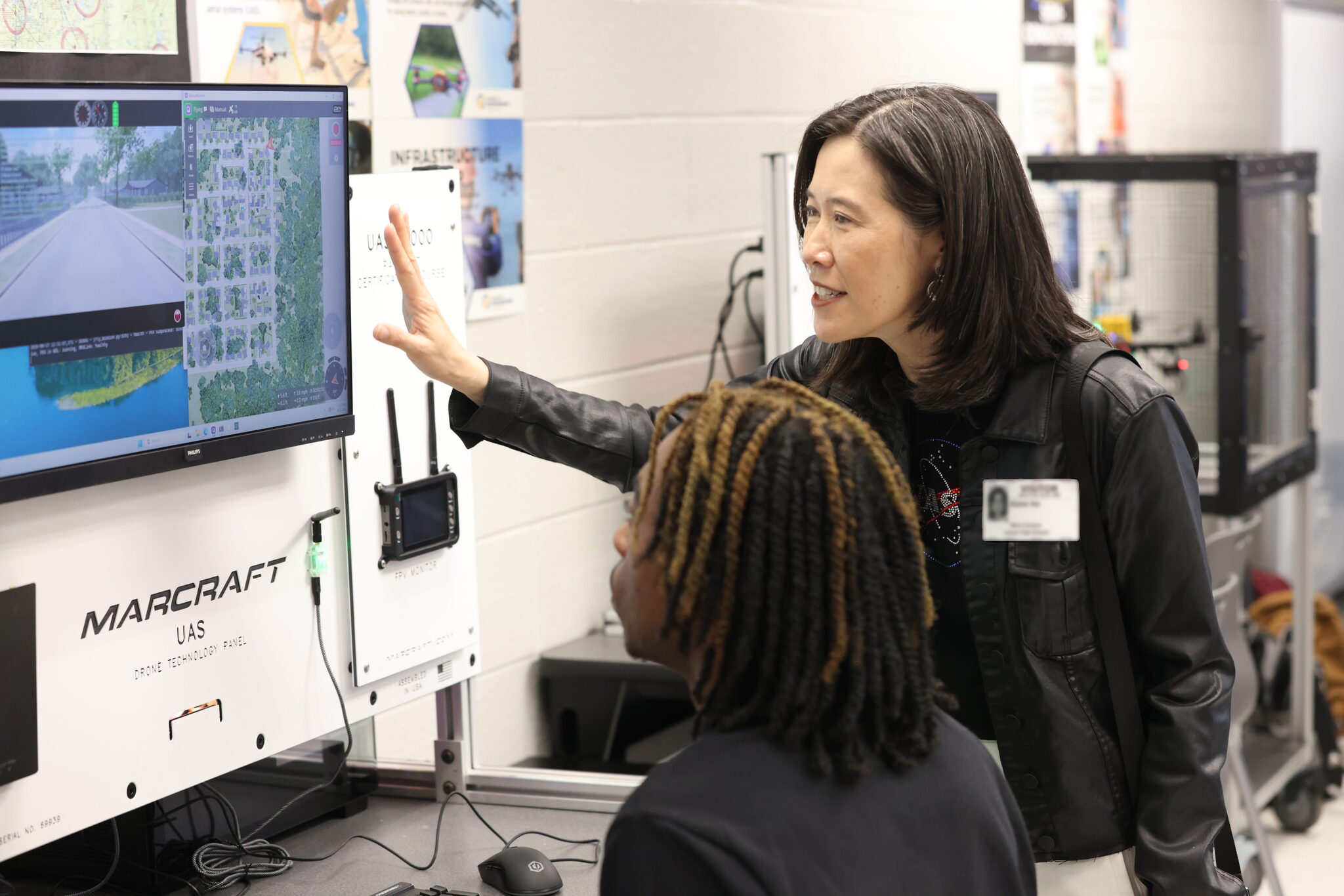
Elaine Ho, right, associate administrator for NASA’s Office of STEM Engagement, discusses training software with a student at Lyman High School in Longwood, Florida on on Aug. 27, 2026.
Credit: NASA/Clayton Rougelot

Elaine Ho, associate administrator for NASA’s Office of STEM Engagement, joined local leaders and industry partners recently to see Space Florida Academy students in action at three Central Florida schools. Students at Lyman High School in Longwood, Florida, demonstrated their skills in aerospace engineering, robotics, building trades, welding, and more. Later, in Merritt Island, Florida, Ho and the other leaders stopped by the Aeronautics & Flight Exploration (AFEX) program and cloud computing classrooms at Merritt Island High School and the robotics lab at nearby Edgewood Junior/Senior High School.

Since its launch in August 2024, the Space Florida Academy has expanded from 23 to 42 participating school districts, preparing students for careers in aviation and aerospace, advanced manufacturing, construction, cybersecurity, logistics, and semiconductors.

A group of students posing with Elaine Ho wearing matching t-shirts
Elaine Ho, center, poses for a photo with Space Florida representatives, public school officials, aerospace industry partners, and students at Edgewood Junior/Senior High School in Merritt Island, Florida on Aug. 27, 2026.
Credit: NASA/Clayton Rougelot

“It’s all about showing students what’s possible and then giving them the tools to achieve it,” said Dean Cuke, Merritt Island High School AFEX astronautics and aviation flight instructor. “There are far more possible pathways to be part of the space industry than I think they realize. We’re showing them ways that they can attain that, through learning, through motivation and chasing after their dreams. I’m excited for them.”

Merritt Island High School juniors and student pilots Olivia Street and Troy Wallenburg have both benefited from the program.

“It makes you feel like you’re a part of something way bigger than just a high school class. I learned what I want to do when I grow up – to be a pilot,” Street said.

“My entire life, I’ve just loved space,” Wallenburg said. “It’s great knowing that I’m actually somewhat involved in it, too.”

Elaine Ho sitting in a chair with her hands on controller with a student helping set up the simulator
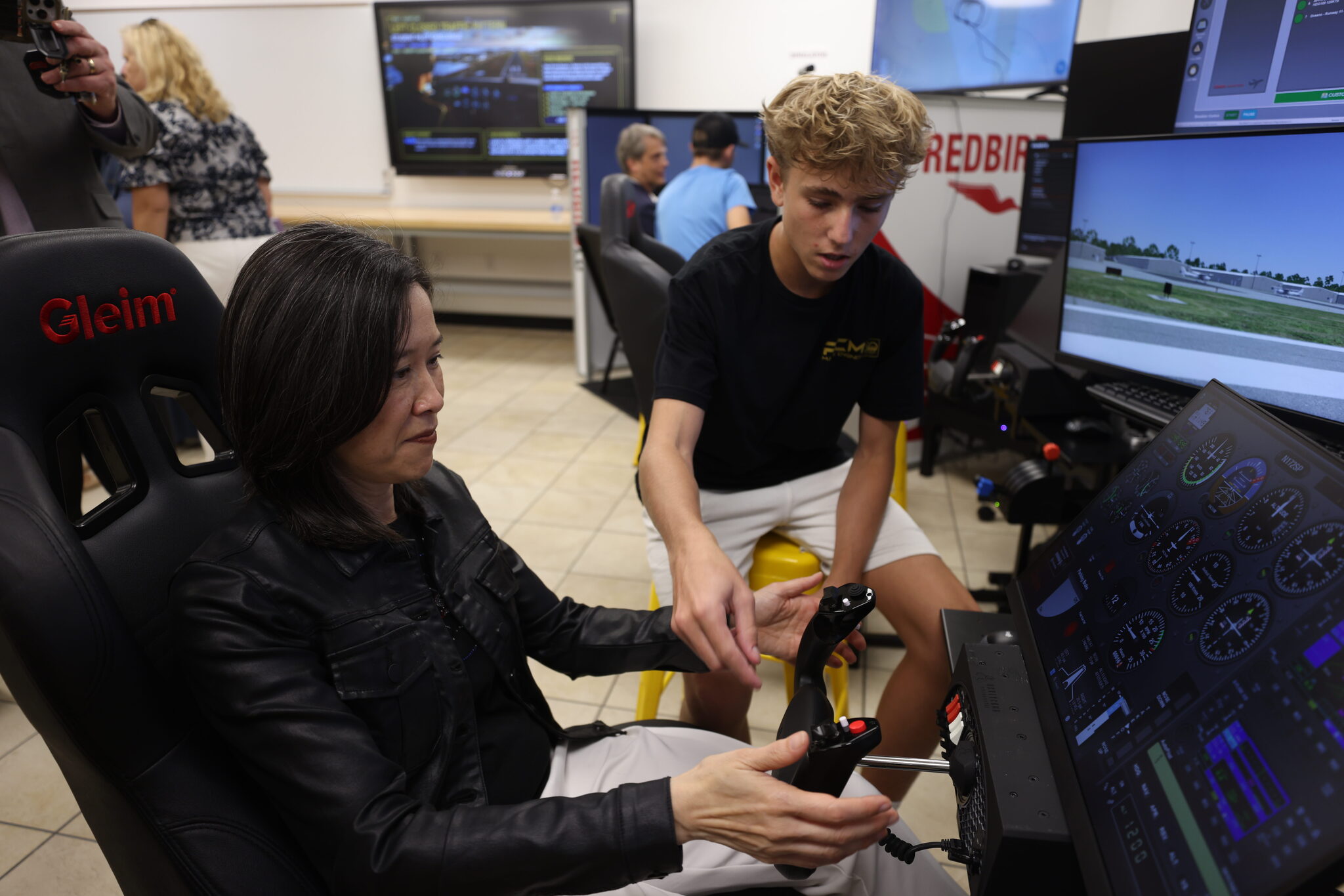
A student in the Merritt Island High School Aeronautics and Flight Exploration program shows Elaine Ho, left, how to use a flight simulator on Aug. 27, 2026.
Credit: NASA/Clayton Rougelot

“I’m so impressed by how this region holds so many opportunities for our students, who are incredibly capable of solving hard problems, who can build our hardware, who want to be part of something bigger than themselves,” Ho said. “NASA is really focused on ensuring that those opportunities are easier to reach.”

Source: www.nasa.gov

NASA Astronaut Reid Wiseman to Join NFL Fans in Baltimore

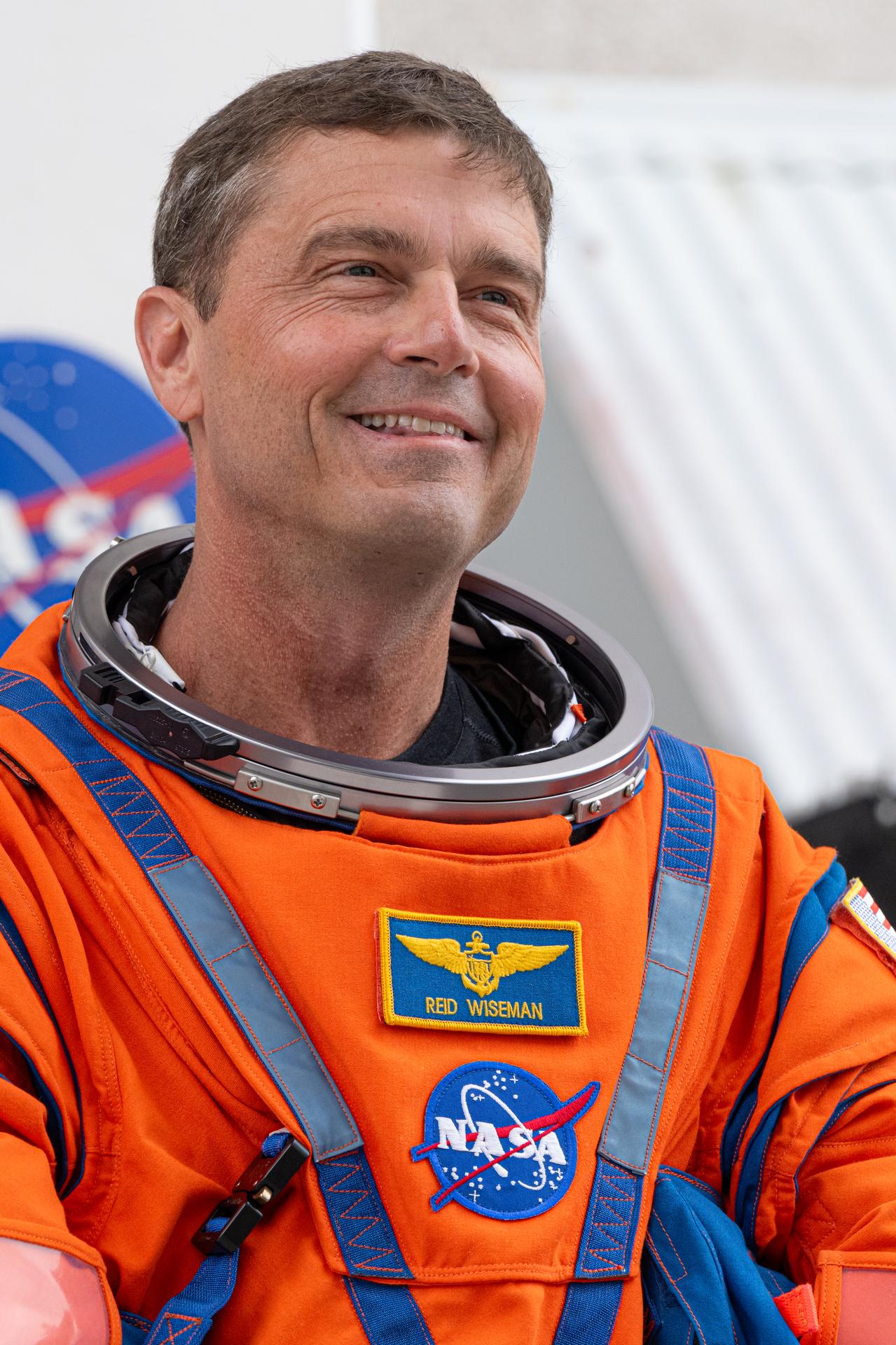
Reid Wiseman looks toward supporters, smiling, wearing an orange spacesuit with his name and a NASA meatball patch.
NASA astronaut Reid Wiseman prepares to depart the Neil A. Armstrong Operations and Checkout Building for Launch Complex 39B at the agency’s Kennedy Space Center in Florida to board NASA’s Artemis II SLS (Space Launch System) rocket and Orion spacecraft for the agency’s Artemis II launch on April 1, 2026.
Credit: NASA/John Kraus

As part of NASA’s new Inspiration Tour, Reid Wiseman, NASA astronaut and commander of the agency’s Artemis II mission, will highlight America’s strengths in space exploration and aeronautics innovation at the Baltimore Ravens vs. New Orleans Saints game in Baltimore on Sunday, Sept. 20.

A Baltimore native, Wiseman is a 27-year Navy veteran and NASA astronaut who spent 175 days in space over two missions. On April 1, Wiseman launched from NASA’s Kennedy Space Center in Florida on a SLS (Space Launch System) rocket as part of the Artemis II mission. Wiseman and his fellow Artemis II crew members completed a historic lunar flyby, marking humanity’s return to the vicinity of the Moon for the first time in more than 50 years.

Wiseman also will be available for media interviews inside the stadium at 12:20 p.m. To RSVP for the media availability, please contact Shaneequa Vereen at: [email protected].

NASA team members will engage with fans at the agency’s Experience Zone, located outside the stadium from 10 a.m. to 1 p.m. before the game. Fans can learn more about NASA’s return to the Moon through the agency’s Artemis program, enjoy interactive games, and capture photos at a selfie station and with a large, inflatable NASA logo.

With stops across the nation, NASA’s Inspiration Tour convenes academic, industry, and public sector stakeholders to connect the agency with the people, technologies, and organizations that drive American leadership in space.

The tour will culminate in MAX POWER, a public exposition of American air and space innovation, Saturday, Nov. 7, and Sunday, Nov. 8, on and near the agency’s Kennedy Space Center in Florida. Held in honor of America’s historic 250th anniversary, the multi-day, family-friendly event will showcase the next-generation aircraft, spacecraft, autonomous vehicles, and technologies that will help define the future of transportation in air and space.

For more information about MAX POWER and the agency’s missions, visit:

https://www.nasa.gov/maxpower

-end-

Camille Gallo / Jessica Taveau
Headquarters, Washington
202-358-1600
[email protected] / [email protected]

Details

Last Updated

Sep 16, 2026

Editor
Jessica Taveau

Source: www.nasa.gov