NASA-Funded Research Finds Complex Life Defying Record Heat

6 min read

NASA-Funded Research Finds Complex Life Defying Record Heat

This video shows Incendiamoeba cascadensis motility at 60ºC. When pushed to its limits in the lab, I. cascadensis can remain partially active at 150.8 degrees Fahrenheit (66 degrees Celsius) and can recover from exposure to a staggering 158 degrees Fahrenheit (70 degrees Celsius) for five minutes. However, 80 degrees Fahrenheit (176 degrees Celsius) proved to be too much for the amoeba to come back from.
Beryl Rappaport

NASA-supported scientists have discovered an organism that lives at extreme temperatures previously thought impossible for complex life. High temperatures can cause the destruction of necessary cell components, which is a big problem for cells with complex parts like a nucleus encasing delicate genetic information.

In the heated waters of California’s Lassen Volcanic National Park, a team of scientists observed an amoeba that can reproduce by division at an astonishing 145 degrees Fahrenheit (63 degree Celsius), setting a record for the upper temperature limit for all known eukaryotes. Incendiamoeba cascadensis, also dubbed the fire amoeba, stops reproducing above 145 degrees Fahrenheit but is still active, moving around to search for food at up to 147 degrees Fahrenheit (64 Celsius). The previous limit of 140 degrees Fahrenheit (60 Celsius) for eukaryotes was set by a few species of fungi and red algae. The results were published on Tuesday in the journal Cell.

Astrobiologists have long studied the boundaries of life’s survival on Earth to determine how organisms might live on other worlds like Mars where conditions are less hospitable than our home planet. Organisms that endure at the edges of habitability under extreme temperature, pH levels, radiation, and other environmental conditions are known as extremophiles. Studying them helps scientists understand what life as we know it is capable of. Extremophiles also produce unique proteins that can have promising uses in biotechnology, from industrial applications to medicine.

Previous extremophile research has mostly focused on single-celled bacteria and archaea. The new study shows that the more complex cells of eukaryotes might be more durable than previously thought and could even help scientists understand locations in the universe where complex life could survive.

Complex life on Earth

Life on Earth is broadly divided into two categories, prokaryotes and eukaryotes. Prokaryotes are single-cell organisms that do not have a nucleus or membrane-bound organelles inside their single cell. This means that they have less cellular ‘machinery’ that can be damaged by extremes, such as blistering heat, bitter cold, caustic acidity, or damaging radiation.

Organisms that live in extreme heat are known as thermophiles. To be a true ‘heat-loving’ thermophile, the organism must be able to replicate, move, eat, and survive above 113 degrees Fahrenheit (45 degrees Celsius).

Prokaryotes include bacteria and archaea, with archaea being particularly adept at surviving extremes. Because of their relative simplicity, scientists also believe that prokaryotes were the first forms of life to appear on Earth, billions of years ago when the environment of our planet was much more inhospitable than it is today.

Eukaryotes are more complicated organisms that are thought to have evolved later in the history of life on Earth. These organisms have a separate cell nucleus inside their cells that contains fragile genetic information. Eukaryotes also contain membrane-bound organelles, such as mitochondria and endoplasmic reticulum. These organelles are like mini cellular machines that perform specific functions. Eukaryotes include a wide span of life, from single-celled algae to multicellular organisms like plants and human beings.

Complexity in Extreme Heat

High temperatures lead to the breakdown of proteins and other biomolecules that living cells need to function. Heat also can cause membranes to break apart, thereby destroying cells. It has been suggested that organelle membranes in eukaryotes could not remain stable above 144 degrees Fahrenheit (62 degrees Celsius). The discovery of I. cascadensis proves that assumption wrong.

“In part, studies on eukaryotes may have been limited because of assumptions about membrane stability,” says Beryl Rappaport, graduate student at Syracuse University and lead author of the study. “We are hoping that the discovery of I. cascadensis encourages others to keep searching for high temperature eukaryotes.”

The team sequenced the I. cascadensis genome, studying the expression of genes at multiple temperatures. They found many genes that help the amoeba stabilize DNA and protect it from breaking down. Other genes allow the organisms to sense the external environment. At high temperatures, the expression of certain genes also increased, including those involved in maintaining protein folding.

“We were able to uncover many strategies that could help I. cascadensis survive at high temperatures, and some of these strategies could be used by thermophiles across all life,” says Rappaport. “For instance, some proteins in I. cascadensis have a high positive surface charge that could help them remain stable. These protein charges are similar to those found in thermophilic bacteria and archaea.”

The team also compared genetic information from other studies world-wide. In this trove of data, they found similar pieces of DNA from geothermal samples in places like New Zealand and Yellowstone National Park. This means that additional thermophilic amoebas related to I. cascadensis might be living all around the globe just waiting to be discovered.

The image shows an over the shoulder view of a scientist wearing a long sleeve blue shirt and a brown bucket hat for protection from the bright sun. They also have a high visibility vest on. They are reaching a sampling stick out toward a small stream of thermal water surrounded by tall grass. The water has brown/green slime around the edges.
Lead author Beryl Rappaport collecting samples of Incendiamoeba cascadensis in California’s Lassen Volcanic National Park. The organism’s name means “Fire amoeba coming from the cascades.” California’s Lassen Volcanic National Park is the southernmost active volcanic region in the Cascade Range and includes Lassen Peak, the world’s largest plug dome volcano.
Kristen Skruber

Search for life beyond Earth

Earth is the only planet we know of that is inhabited with life. For life as we know it to survive on other planets in the solar system or beyond, organisms might have to cope with environmental conditions that are very different from those found here at home.

“Studying extremophiles helps us better understand the biochemical and physiological limitations of life as we know it on Earth,” says Alison Olcott, program scientist for Exobiology at NASA Headquarters in Washington. “This information, in turn, helps guide NASA’s search for life as it expands the range of conditions we think life could potentially be inhabiting elsewhere.”

In particular, the study increases our understanding of where and how life with complex cells might persist on Earth and beyond.

“Finding eukaryotes surviving in high temperature environments not only expands our understanding of where life could be found, but also of how complex that life could be,” says Olcott.

However, the researchers do point out that survival depends on many factors that are part of a larger ecosystem.

“It could certainly be possible for complex life like I. cascadensis to survive on another planet, but Earth is the only planet we currently know of to have all the requirements for I. cascadensis to be happy,” says Rappaport. “It’s not just about temperature. An environment also needs the right acidity, oxygen levels, pressure, water, and food. I. cascadensis could not survive on its own. It needs other life to be supported as well.”

For more information on astrobiology at NASA, visit:

https://science.nasa.gov/astrobiology

Details

Last Updated

Sep 22, 2026

Source: science.nasa.gov

NASA Astronaut to Answer Questions from New Hampshire Students

2 min read

Preparations for Next Moonwalk Simulations Underway (and Underwater)

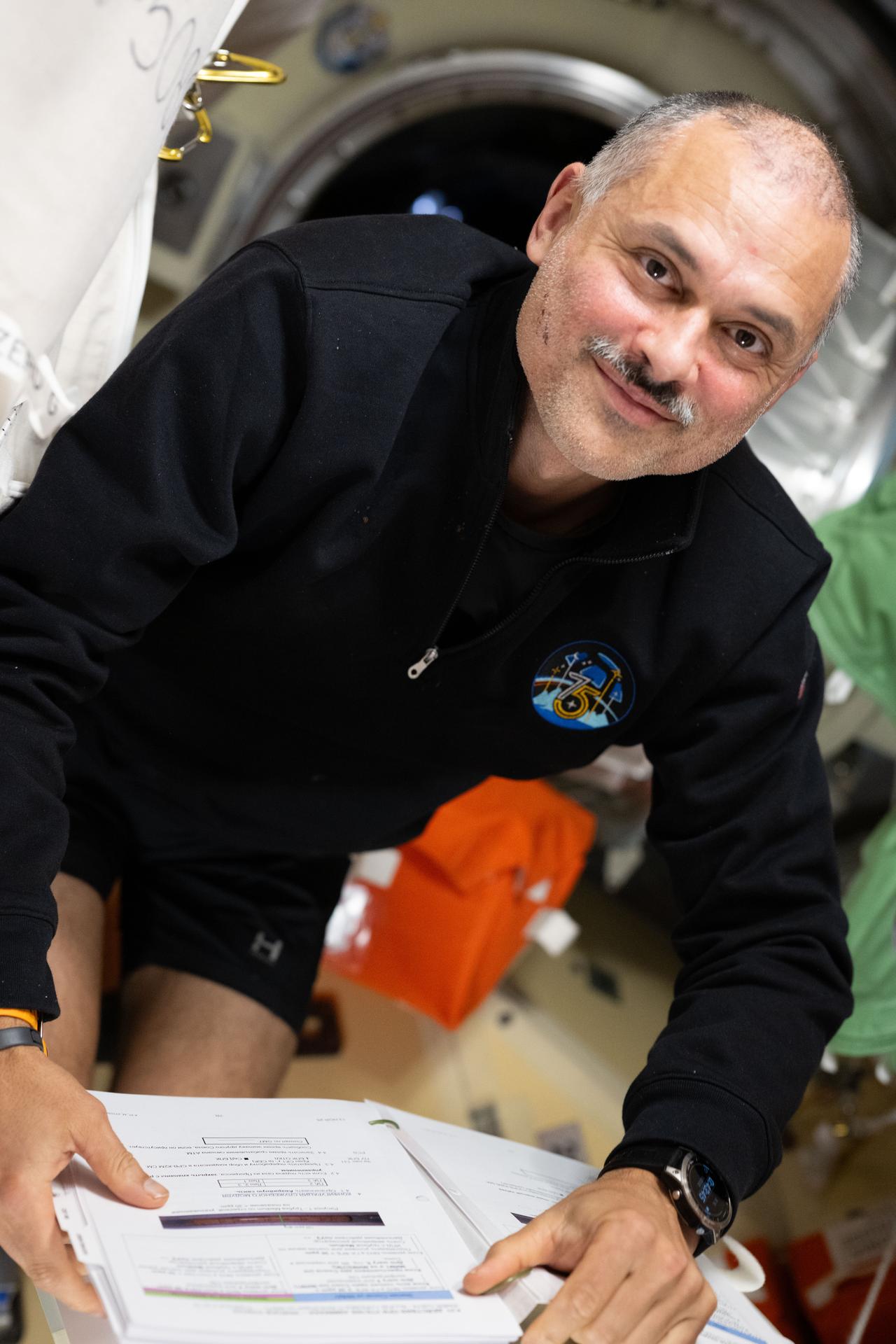
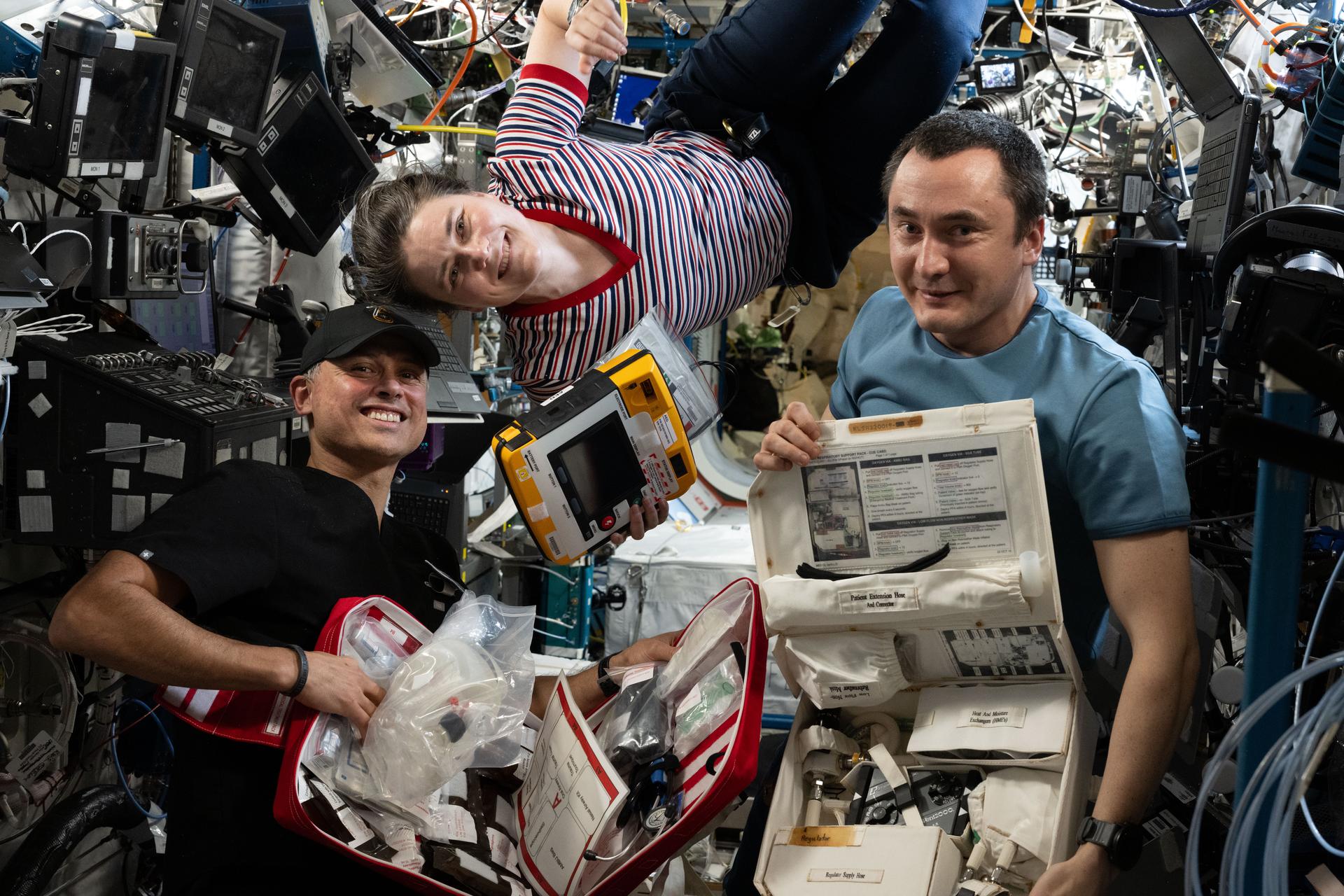
NASA astronaut Anil Menon reviews procedures for emergency scenarios while aboard the International Space Station as part of his long-duration science and research mission.
Credit: NASA

Editor’s Note: This feature was updated Sept. 22, 2026, to note the time change for the in-flight call with students. 

Students in New Hampshire will hear from NASA astronaut Anil Menon as he answers prerecorded STEM questions while aboard the International Space Station.

The Earth-to-space call will begin at 11:40 a.m. EDT Thursday, Sept. 24, and will stream live on the agency’s Learn With NASA YouTube channel.

This event is hosted by the McAuliffe-Shepard Discovery Center in Concord, New Hampshire, for students in grades K-12, and members of the community. This unique opportunity aims to deepen understanding of space exploration and enhance awareness of STEM careers.

Media interested in covering the event must RSVP no later than 5 p.m. EDT, Wednesday, Sept. 23, to Kelly Thompson at [email protected].

For more than 25 years, people have lived and worked continuously aboard the International Space Station, advancing scientific knowledge and making research breakthroughs not possible on Earth. The space station helps NASA understand and overcome the challenges of human spaceflight, expand commercial opportunities in low Earth orbit, and build on the foundation for long-duration missions to the Moon, as part of the Artemis program, and to Mars.

For more information on NASA in-flight calls, visit:

https://www.nasa.gov/stemonstation

Source: www.nasa.gov

Risks of Decompression Sickness and Venous Thromboembolism during Spaceflight and Patent Foramen Ovale Implications

3 min read

Preparations for Next Moonwalk Simulations Underway (and Underwater)

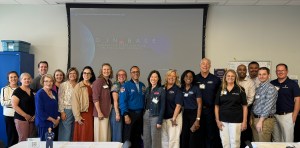
PFO DCS VTE Working Group Photo September 2026
Top Row (from left to right): Michael Stenger, Joe Dervay, Steve Piper, Dave Francisco, Craig Kutz, Matthew Makowski, Alex Garbino, Hiroki Bochimoto, Doug Ebert, James Locke, Raffi Kuyumjian. Bottom Row (from left to right): Mark Crowther, Stephan Moll, Doug Ebersole, Mike Gernhardt, David Southerland, Sarah Taoufik
NASA

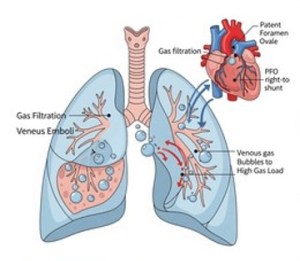
The purpose of this working group was to assemble a panel of experts to review the most recent data related to extravehicular activity (EVA) prebreathe testing and decompression sickness (DCS) events, venous thromboembolism (VTE) in-flight occurrences, and patent foramen ovale (PFO) implication as they relate to NASA’s Artemis (lunar and beyond) missions. The recommendations from this working group are built upon and integrate the outcomes of the September 2024 Assessment of Patent Foramen Ovale (PFO) as Related to Decompression Sickness (DCS) in the Spaceflight Environment and During Ground Testing (NASA/SP-20240010473), the April 2026 NASA Risk of Venous Thromboembolism in Spaceflight Working Group (NASA/SP- 20260005258/REV1), and the updated DCS prevention standard reviewed by the DCS panel in NASA-STD-3001 Volume 2 Human Factors, Habitability, and Environmental Health (NASA-STD-3001 Vol 2 Rev F), with a specific focus on risk mitigation interventions such as PFO closure.

Recommendations

The following is a summary of the working group’s recommendations:

  1. Ground-based studies should no longer remove subjects from research solely due to the presence of LVGE. Protocols should balance subject safety with population representativeness, and subjects must be fully informed of their LVGE status and any associated risks.
  2. The consensus was that the presence of a PFO is not considered a major risk factor for VTE formation, nor for complications from an embolism traveling from an initial formation site in the left internal jugular or cerebrum at normoxic or proposed hypoxic space habitats. No changes to astronaut selection criteria regarding PFOs are recommended with respect to VTE.
  3. The consensus of the group is that there is no definitive link between bubble grades and the risk of DCS at altitude for prebreathe protocols involving partial gravity and ambulation.
  4. The panel concluded that while minimizing bubbles is desirable, the predictive value of bubble scores for DCS remains uncertain, especially for lunar surface operations.
  5. It was determined that a “small” PFO (Grade 1 or 2) does not pose a significant risk. There were mixed opinions on whether closing or screening out crew members with a “large” PFO (Grade 3 or above) significantly reduces the risk of a venous gas embolism (VGE) passing to the arterial side and causing a significant mission health event. The group did not recommend universal screening or exclusion of astronauts with large PFOs but emphasized the importance of risk mitigation through protocol design and ongoing data collection. If crews are assessed, they should be informed of their status and offered closure for a large PFO.
  6. The panel concluded that clear clinical guidance is required regarding medication use for all crewmembers prior to Extravehicular Activities (EVAs). Specifically, protocols must address the use of aspirin for Decompression Sickness (DCS) prevention and pain relief. Additionally, guidance is needed for the pre and post-EVA use of analgesics (acetaminophen, ibuprofen, naproxen, celecoxib), as these medications have the potential to mask DCS symptoms.

Source: www.nasa.gov

NASA’s Chandra Finds Unusual Objects in Pinwheel Galaxy

Researchers found 84 so-called hypersoft X-ray sources in M101, Messier 31, and four elliptical galaxies. This newly-discovered class of objects give off very low-energy X-rays and likely high levels of ultraviolet light. Their existence may help explain questions around Type Ia supernova explosions and the intergalactic medium. These images of the face-on spiral galaxy M101 show X-ray data from Chandra and an optical image from the Hubble Space Telescope.
X-ray: NASA/CXC/Univ. of Alabama/M. Muhibullah et al.; Optical: NASA/ESA/STScI; Image Processing: NASA/CXC/SAO/N. Wolk

Using NASA’s Chandra X-ray Observatory, researchers found mysterious objects that give off unusually low-energy X-rays but intense levels of ultraviolet radiation. One of the galaxies they studied, M101, is pictured here in this image released on Sept. 9, 2026. Astronomers suggest these newly spotted objects in other galaxies may help solve not one, but two long-standing questions in astrophysics.

Read more about this discovery.

Image description: X-ray: NASA/CXC/Univ. of Alabama/M. Muhibullah et al.; Optical: NASA/ESA/STScI; Image Processing: NASA/CXC/SAO/N. Wolk

Source: www.nasa.gov

APOD: 2026 September 21 – Cocoon Nebula Wide Field

APOD

Astronomy Picture of the Day

Discover the cosmos! Each day a different image or photograph of our fascinating universe is featured, along with a brief explanation written by a professional astronomer.

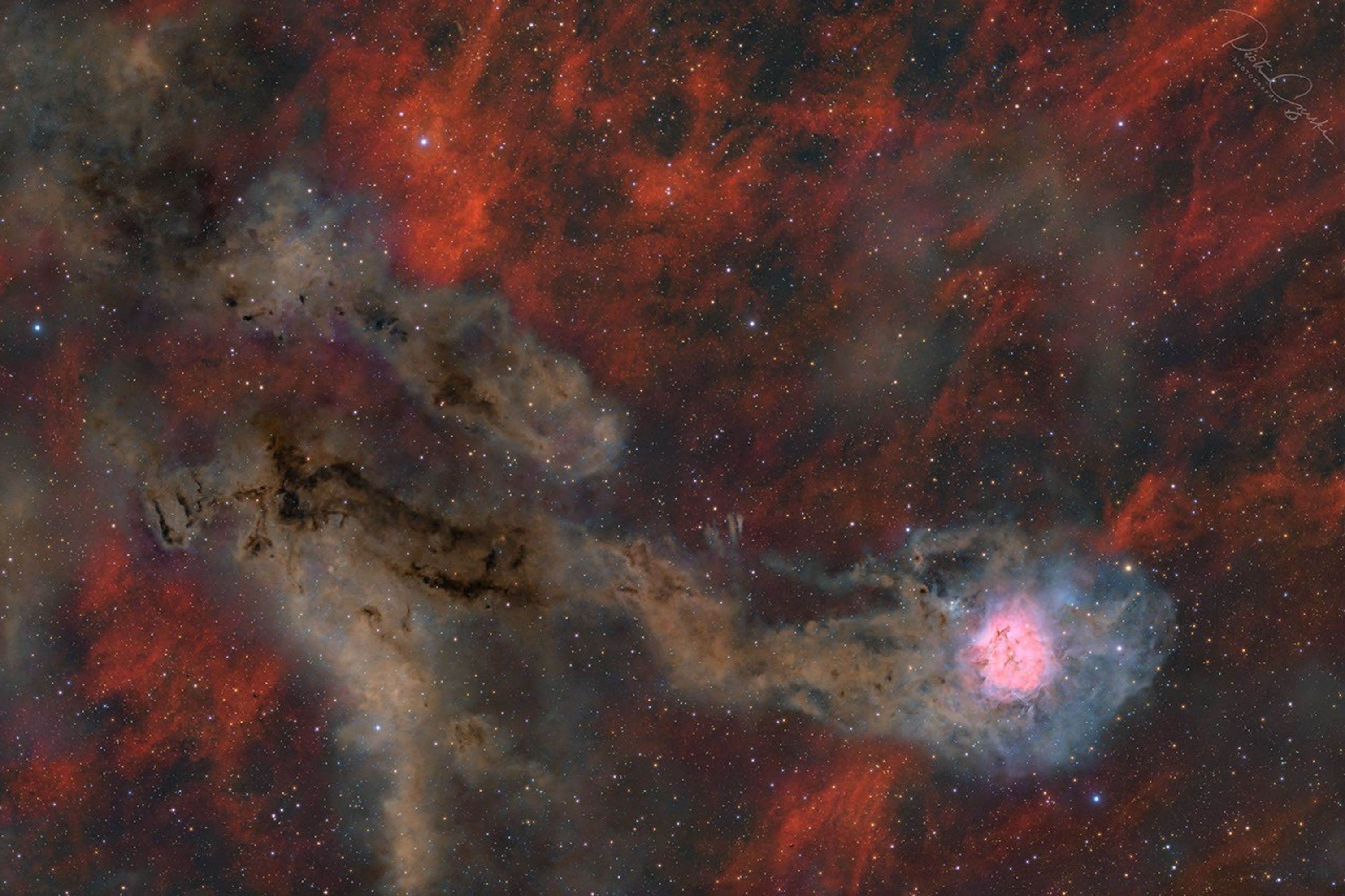
A starfield is shown against a patchy red-glowing background. Two irregular brown trails occur, the lower of which culminates in a bright pink and white region.

Cocoon Nebula Wide Field

Explanation: When does a nebula look like a comet? In this crowded starfield covering over two degrees within the high-flying constellation of the Swan (Cygnus), the eye is drawn to the Cocoon Nebula. A compact star forming region, the cosmic Cocoon punctuates a nebula bright in emission and reflection on the lower right, with a long trail of interstellar dust clouds to the left, making the entire complex appear a bit like a comet. Cataloged as IC 5146, the central bright head of the nebula spans about 10 light years, while the dark dusty tail spans nearly 100 light years. Both are located about 2,500 light years away. A bright star near the colorful nebula’s center likely supplies power and helps clear out a cavity. The long dusty filaments of the tail, although dark in this visible light image, hide stars in the process of formation. The featured image was captured in July from Death Valley, California, USA.

APOD’s main NASA site is moving: From apod.nasa.gov to science.nasa.gov/apod
Tomorrow’s picture: triple eclipse

Date: September 21, 2026
Credit & Copyright: Piotr Czerski
Authors & editors: Robert Nemiroff, Jerry Bonnell, Cecilia Chirenti, Keighley Rockcliffe
A service of: ASD at NASA / GSFC,
NASA Science Activation & Michigan Tech. U.

Source: science.nasa.gov

Johnson Space Center Sparks Curiosity at Houston’s 33rd Annual Japan Festival  

2 Min Read

Johnson Space Center Sparks Curiosity at Houston’s 33rd Annual Japan Festival  

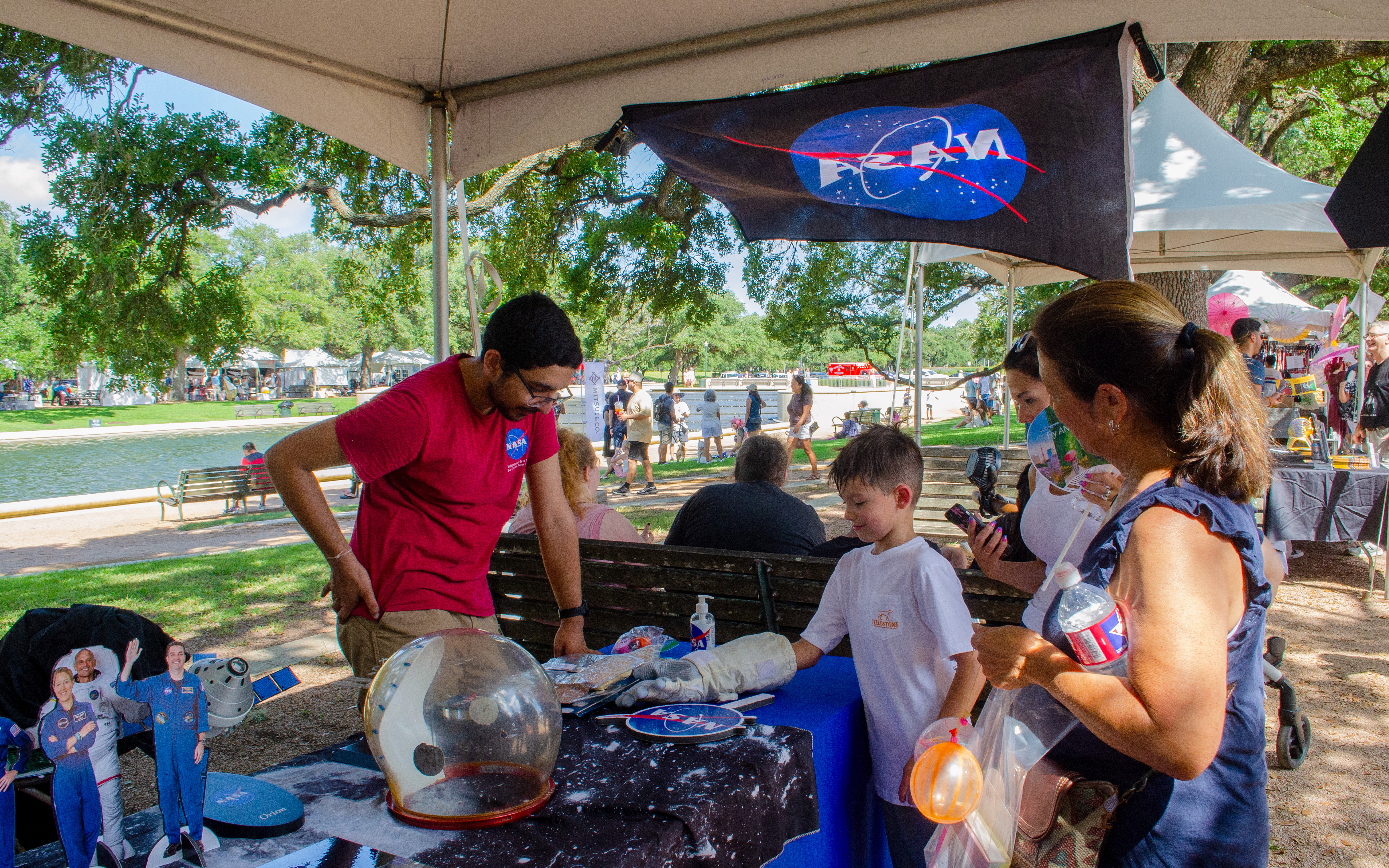
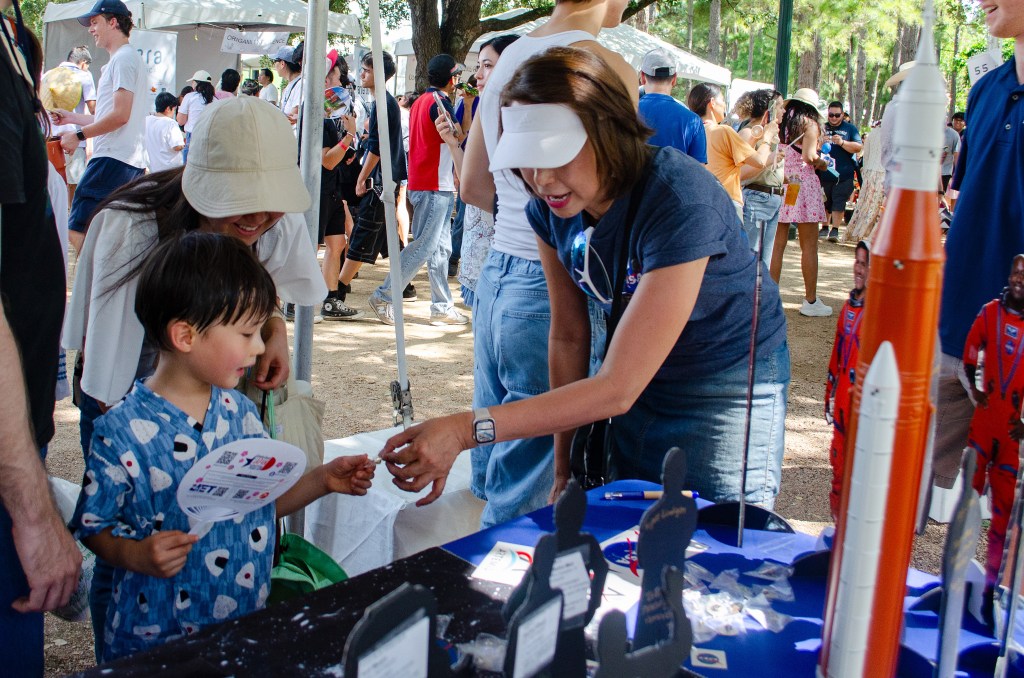
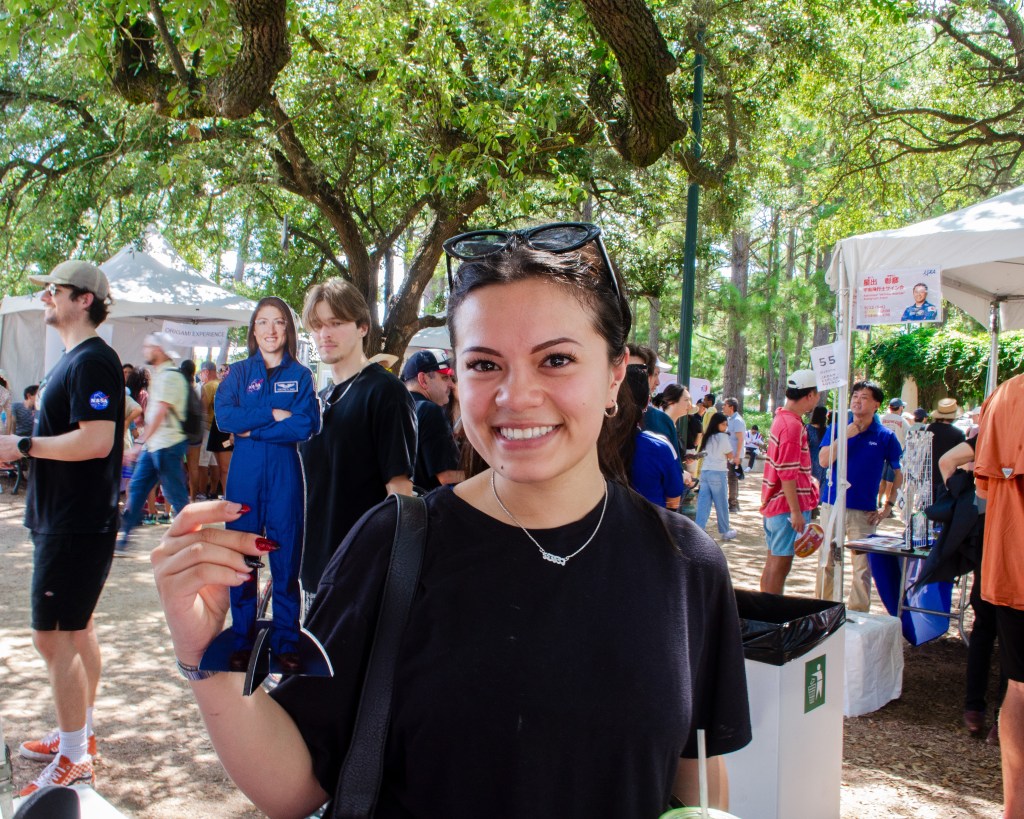
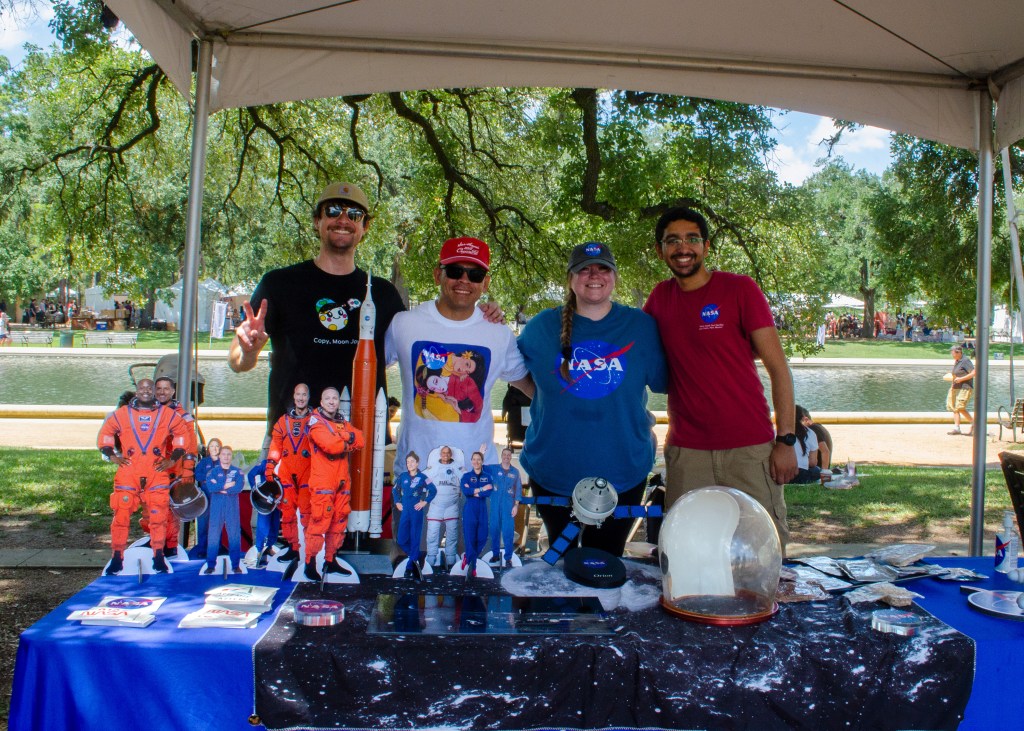
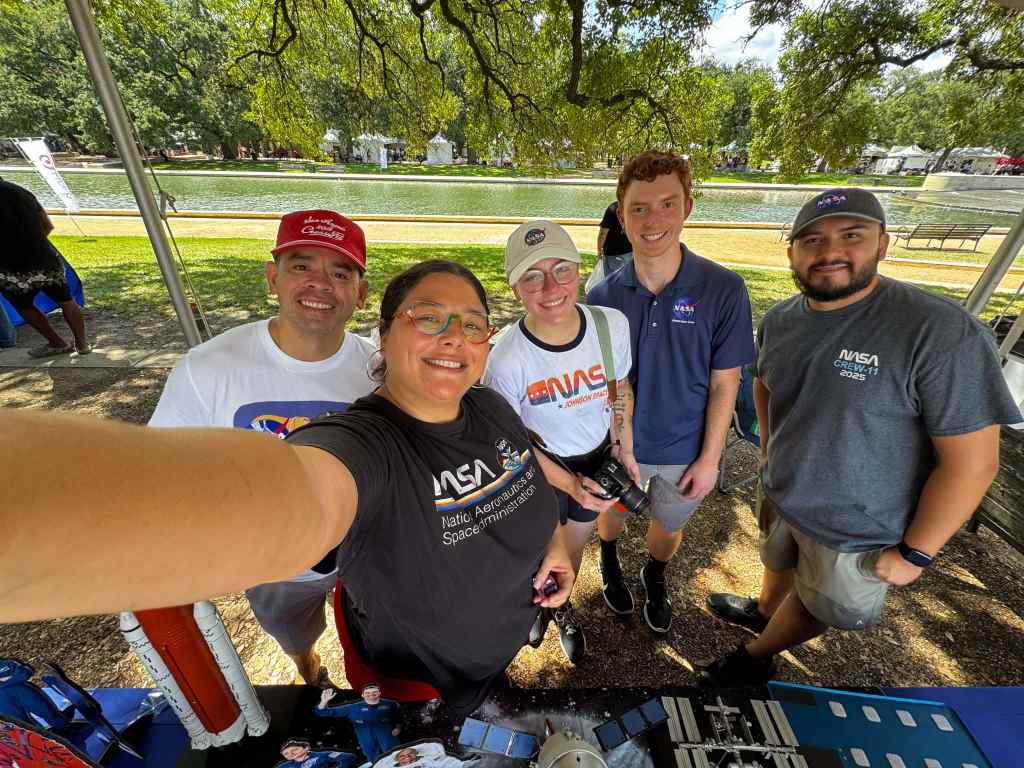
On Sept. 12-13, NASA’s Johnson Space Center employees brought the excitement and wonder of space exploration to Houston’s Japan Festival at Hermann Park. 

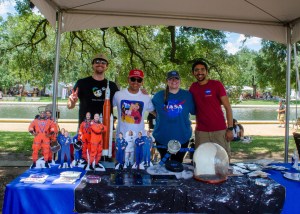
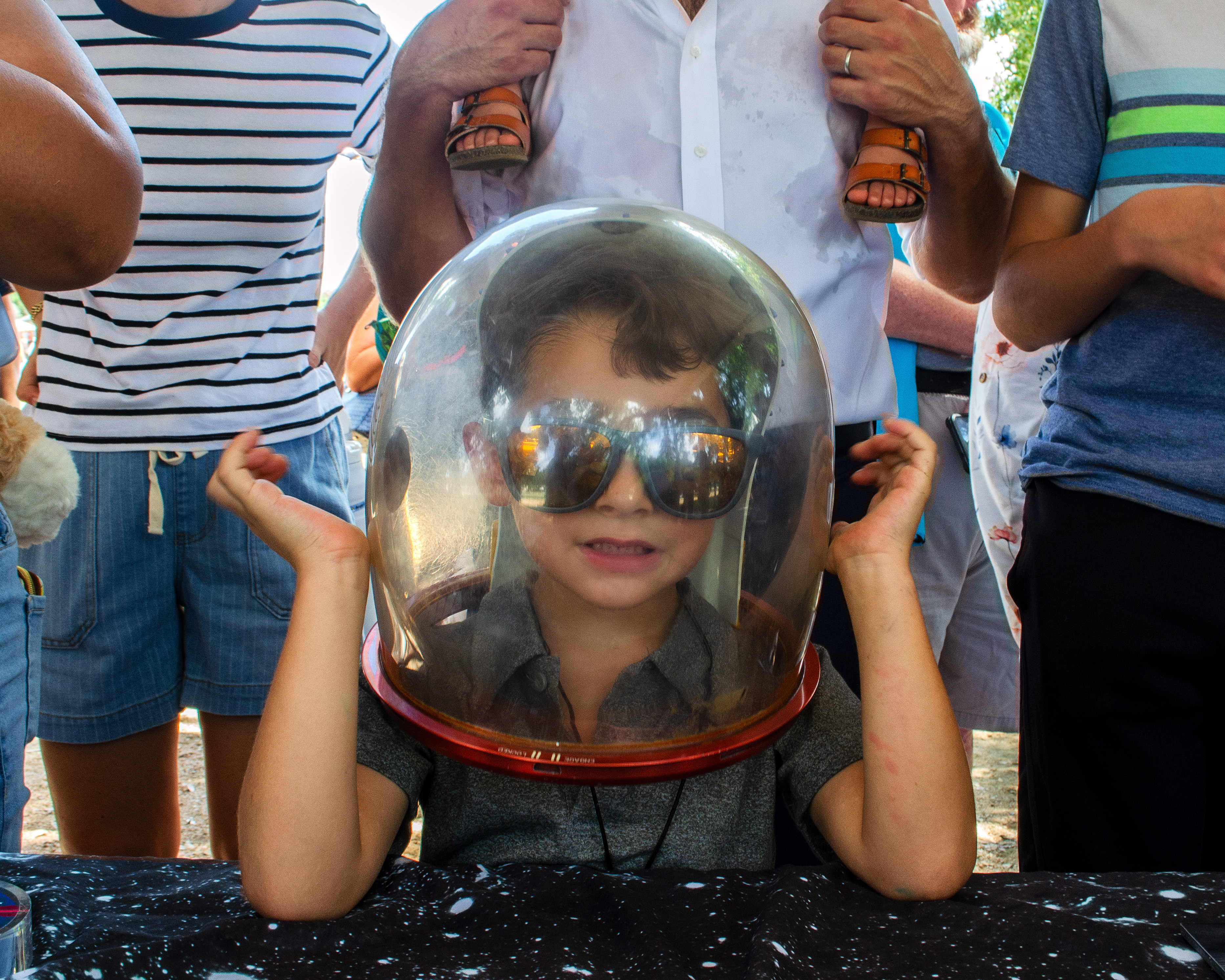
Attendees at the Japan Festival in Houston’s Hermann Park try on real astronaut gloves and a helmet while learning about NASA missions on Sept. 12, 2026.
NASA/Hailey Quist

For more than 30 years, the festival has immersed guests in traditional Japanese culture through food, dance, martial arts, music, and more, Johnson has supported the festival as an exhibitor for the past four years.

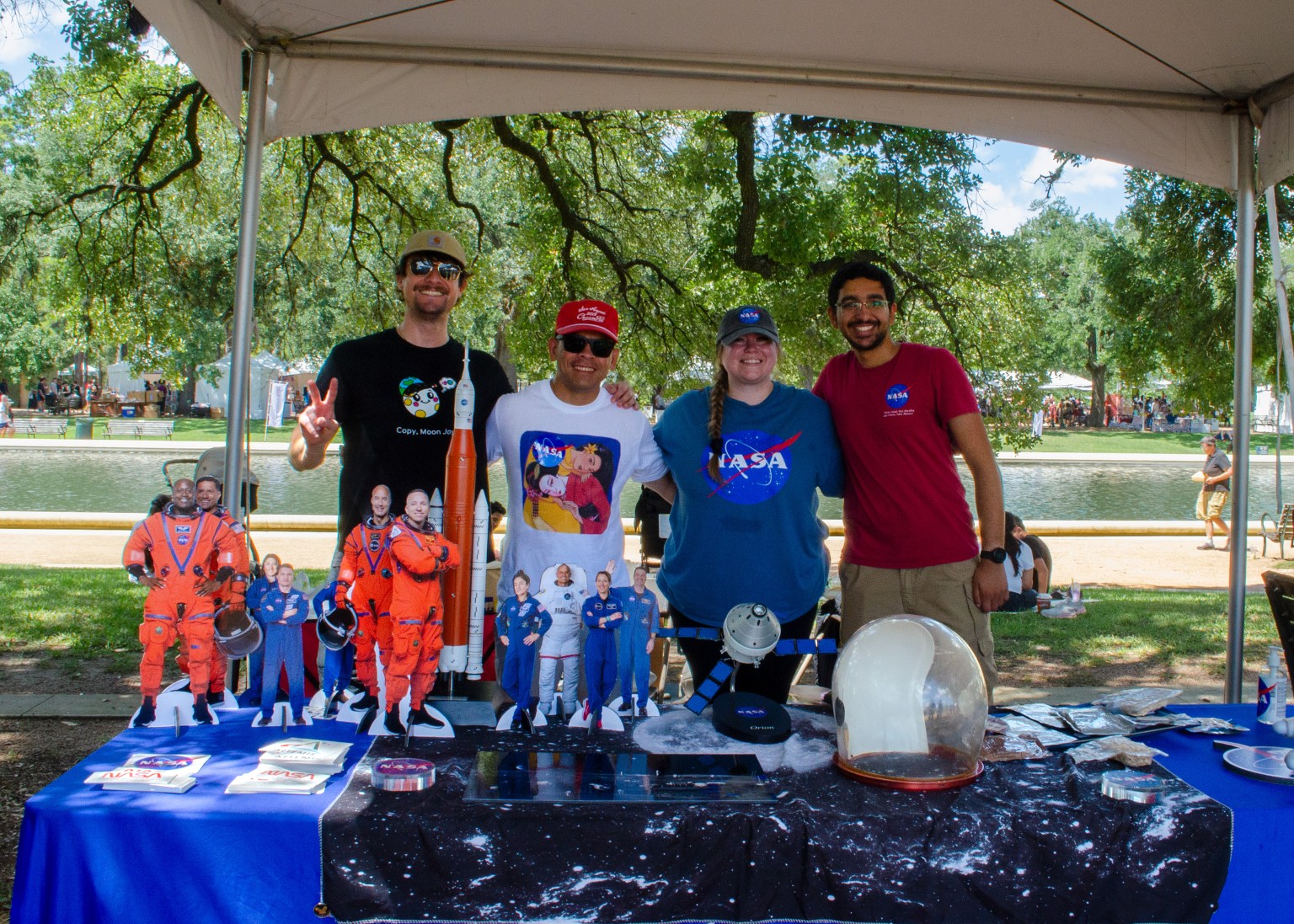
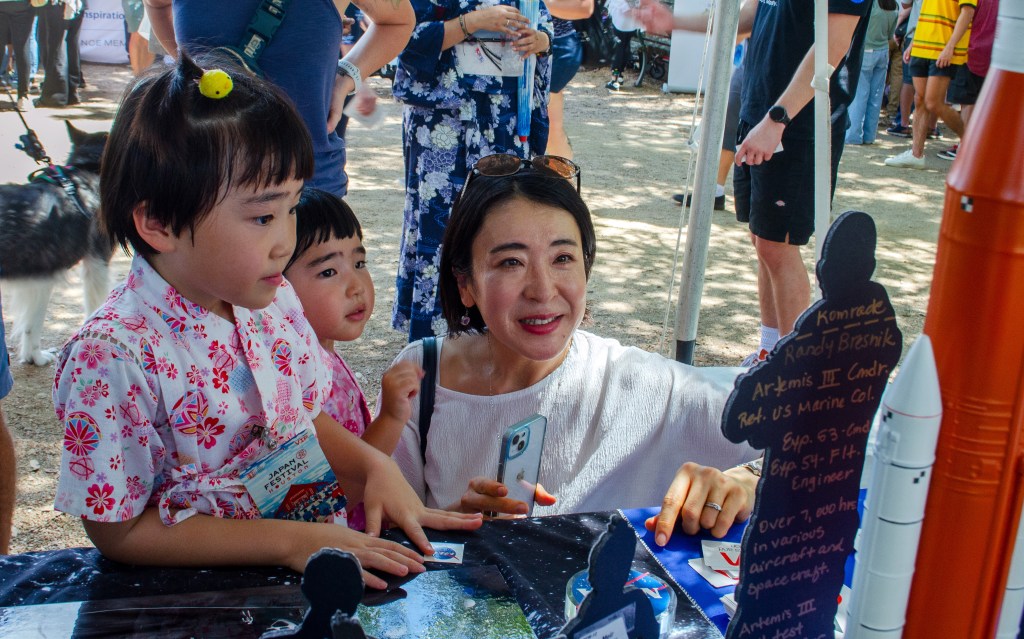
Johnson’s booth showcased the upcoming Artemis III mission and its crew, as well as NASA’s plans for the Moon Base. Display included models of NASA’s Orion spacecraft and the International Space Station, along with interactive exhibits featuring space food and a real astronaut glove and helmet for attendees to try on.

NASA’s Johnson Space Center volunteers share information about NASA missions with festival attendees.
NASA/Hailey Quist

Johnson employees interacted with over 3,000 festivalgoers, informing them about the agency’s current initiatives, handing out NASA stickers and pins, and inspiring the next generation of space explorers. According to Johnson employees, the highlight of the weekend was seeing the joy and excitement on the faces of children and adults as they explored the exhibits.

“It was amazing to see students as early as high school so passionate about NASA and asking questions on how to prepare for a NASA career,” said Brendan King, software engineer for Johnson’s Flight Dynamics Division.

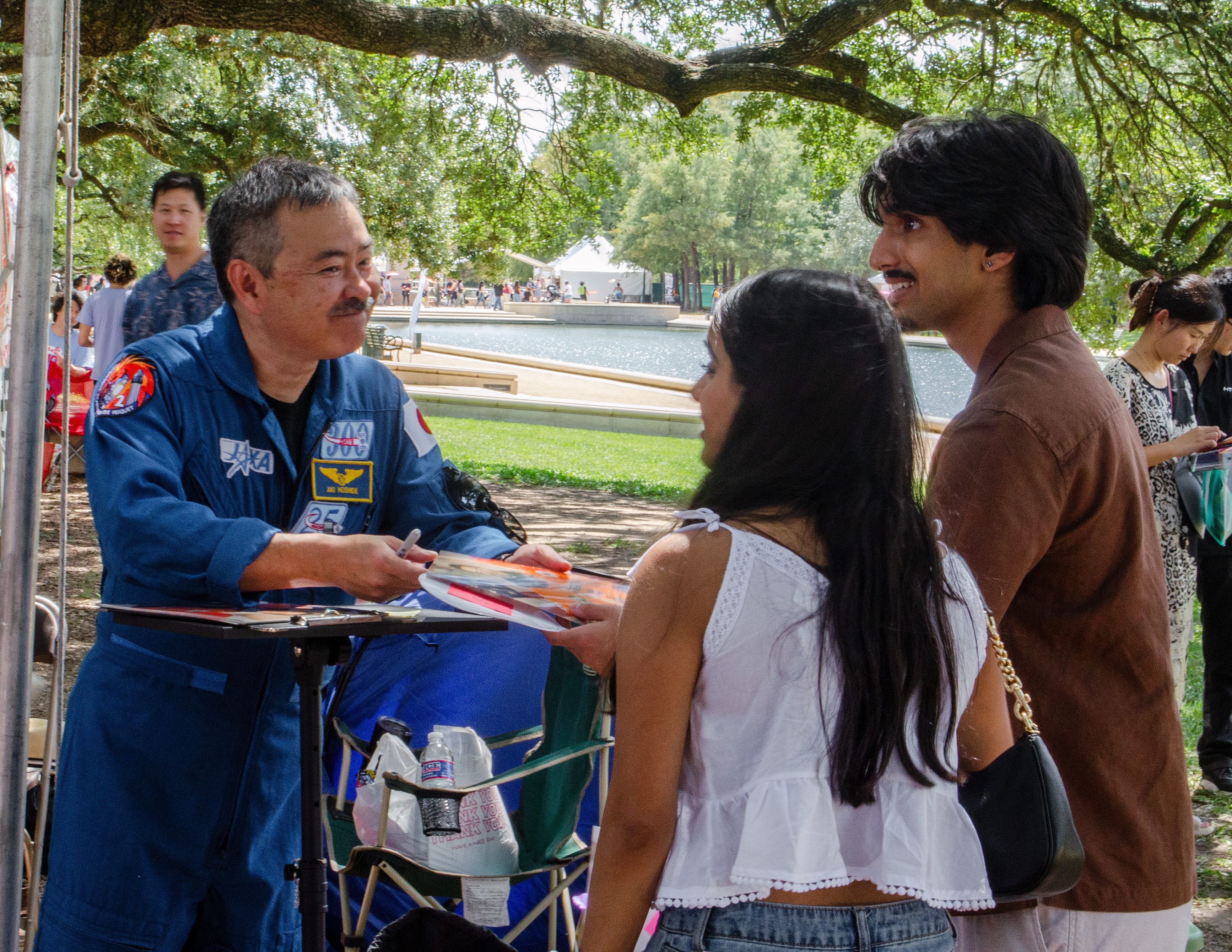
Next to Johnson’s booth, JAXA (Japanese Aerospace Exploration Agency), displayed a model of the HTV-X1 cargo spacecraft, space food, and images of JAXA’s pressurized rover, which could support future crewed and uncrewed exploration on the Moon. JAXA astronaut Akihiko Hoshide also signed autographs and posed for pictures with festival attendees.

JAXA (Japan Aerospace Exploration Agency) astronaut Akihiko Hoshide signs autographs and poses for pictures with festivalgoers.
NASA/Hailey Quist

The proximity of the booths was no mistake, reflecting the long-standing partnership between NASA and JAXA. From the addition of the Kibo laboratory aboard the space station to Japan’s signing of the Artemis Accords and development of lunar surface hardware. NASA and JAXA’s commitment to innovation and international collaboration continues to advance exploration.

As the hub of human spaceflight, Johnson engages with the public through events like Japan Festival. These events give the Johnson community opportunities to share NASA’s history, ongoing work, and future missions. They also remind Houstonians that Giant Leaps Start Here, right in the heart of Houston.

About the Author

Hailey Quist

NASA OSTEM Intern

Details

Last Updated

Sep 21, 2026

Source: www.nasa.gov

Widely Attended Gatherings (WAGs) Determinations

2026

NAHF Enshrinement Ceremony 9.24.26.pdf

An Evening with the Stars EWTS 9.16.26.pdf

Maryland Space Business Roundtable 9.9.26

Virginia Aerospace Business Association (VASBA) Gala 9.24.26.pdf

Roman Space Telescope Event 8.28.26.pdf

The Planetary Society_Celebrating Viking 7.20.26.pdf

Farnborough Airshow Events 7.18-19.26

University of Maryland Acres 7.14.26.pdf

Smithsonian National Air and Space Museum_Blue Origin 7.14.26.pdf

Space Business Roundtable_MSBR 7.22.2026.pdf

USA Rockets Red Glare Reception 6-25-26

Northrop Grumman Event 6.17.26.pdf

FUSE 6.24.26.pdf

Greater Cleveland Partnership 6.10.26.pdf

SSF UC Symposium 6.9.26.pdf

NAA Firefly Aerospace and AE Industrial Partners 6.11.26

AIAA Event 6.3.26

Space Walk III 5.21.26

Maryland Space Business Roundtable (MSBR) 5.20.26.pdf

Congressional Reception for Artemis II Crew 5.12.26.pdf

2026 Skyward Careers Award Luncheon 05.01.26.pdf

US Astronaut Hall of Fama Gala 5.16.26.pdf

RNASA Awards Dinner and Stellar Awards Luncheon 4.26.26.pdf

Space Policy Institute 4.29.26.pdf

Planetary Society APLU and AAU 4.21.26.pdf

41st Space Symposium-suppl 04.13-16.26

Space Symposium 2026 Events 4.13-16.26

2026 NSCFL Space Heroes and Legends Award Banquet 4.18.26

Newport News State of the City Event 4.13.26

Space Policy Institute Event 4.6.26

SpaceX Networking Reception 3.24.26

Maryland Space Business Roundtable (MSBR) 3.26.26

SIA_27th Annual Leadership Dinner 3.23.26

2026 Artemis Suppliers Conference 3.23-25.26

Ansys Government Initiatives Event_AGI 3.19.26

Homeland Security Week 3.17-18.26

Amazon Smithsonian and Space for Humanity Event 3.16.26

HLSR_NASA Night at the Rodeo 3.7.26

WIF Leadership Luncheon 3.4.26

2026 National Space Club Florida Committee Monthly Luncheon

Space Policy Institute Event 2.17.26

Maryland Space Business Roundtable_MSBR 2.11.26

2026 TSC Artemis II Pre-launch Reception 2.5.26

2026 VABA AAAAM Legislative Reception 2.4.26

Chamber of Commerce Summit 2.2.26

Cheniere Energy at the National Portrait Gallery 1.28.26

Leaders for a Better Louisiana at Adams and Reese 1.28.26

California Manufacturers and Technology Association Reception 1.23.26

Goddard Memorial Dinner 3.13.26

ISS 25th Anniversary 1.19.26

2026 Amentum Artemis II Rollout Reception 1.14.26

Maryland Space Business Roundtable 1.14.26

2025

Commercial Space Federation 12.9.25

Ansys Government Initiatives (AGI) 12.16.25

Maryland Space Business Roundtable (MSBR) 12.10.25

Women in Aerospace 12.11.25

Umbra Lab Inc 12.3.25

Space Policy Institute 10.21.2025

MSBR Space Business Roundtable 10.15.2025

76th International Astronautical Congress_IAC 9.29.25

2025 Von Braun Memorial Dinner 10.29.25

Space Foundation Reception 9.16.25

Evening with the Stars 9.10.25

MSBR Rooftop Reception 9.8.25

AIAA Dinner 8.18.25

STScI Event 7.29.25

MSBR Lunch 7.16.25

Rocket Lab Event 7.16.25

MSBR Lunch Reception 6.18.25

2025 Paris Airshow 6.13-19.25

Greater Houston Partnership Reception 6.12.25

Axiom Space X-4 Event

Space Foundation and German Embassy Reception 6.5.25

Mission 2 Moon Landing 6.5.25

H2M Conference and Events 5.28-29.25

Planetary Society 5.19.25

American Rocketry Challenge Reception 5.17.25

Rockets on the Hill Reception 5.16.25

Dayton Development Coalition Event 5.13.25

PA State Day Reception 5.6.25

MSBR STEM Gala 5.2.25

2025 ASF Hall of Fame Gala

AIAA Awards Gala 4.30.25

RNASA Awards Dinner 4.25.25

2025 Space Heroes and Legends Gala

Thunderbird School and Global Management Reception

40th Space Symposium Main Events

GovExec Awards Dinner 4.3.25

AIA Reception.4.2.25

SPI/GWU Dinner.4.2.25

Astrolab and Axiom.3.27.25

SPI/GWU/USRA Symposium.3.27.25

IDGA 18th Annual Event

Artemis VIP Reception.3.24.25

Goddard Memorial Dinner.3.21.25

MSBR Lunch.3.19.25

2025 Satellite Exhibition Event.3.10.25 to 3.13.25

SIA Dinner.3.10.25

67th Laureate Awards Dinner.3.6.25

SPI GWU Dinner.3.5.25

Bae Systems SPHEREx Launch.2.27.25

2025 Artemis Suppliers Conference

Blue Ghost Viewing Event

ServiceNow Forum.2.12.25

MSBR Luncheon.2.19.25

2025 Monthly NSCFL Luncheon

MSBR Lunch.1.22.25

Creole-Queen NOLA Reception.1.13.25

2025 New Glenn Mission 1 Launch Event

2025 Firefly Blue Origin Launch Reception

2024

MeriTalk Reception.12.19.24

Aero Club Award Dinner.12.13.24

Rocket Lab Event.12.13.24

Space Foundation Event.12.13.24

Umbra Lab Inc.12.5.24

Commercial Space Federation Joint Event.12.9.24

AGI Holiday Reception.12.3.24

The Arthur C. Clarke Foundation Event.11.21.24

Planet Labs PBC Reception.11.20.24

Rocket Lab Event.11.19.24

SPI GWU Dinner.11.5.24

Blue Origin and KBR Dinner.10.30.24

JASWDC Gala.10.30.24

SPI GWU Dinner.10.30.24

36th Annual Dr. Wernher von Braun Memorial Dinner

2024 Keystone Space Conference

2024 IAC Event

WIA Reception and Awards Dinner.10.10.24

2024 JPL Europa Clipper Launch Reception.10.8.24

SPI GWU Dinner.9.18.24

2024 VASBA HR AUVSI Gala

Blue Origin Reception.8.27.24

AIA & Amazon Reception.8.26.24

Exolaunch Reception.8.7.24

Farnborough Air Show.7.20-21.24

Artemis II SLS Roll Out Reception.7.15.24

Astroscale Reception Tokyo.7.12.24

Brooke Owens Fellowship Dinner.7.11.24

SpaceX GOES-U Launch

MSBR lunch.6.18.24

NAA Collier Dinner.6.13.24

Greater Cleveland Partnership.6.13-14.24

VAST Space LLC.6.12.24

Coalition for Deep Space Exploration Return to the Moon.6.5.24

The 2024 Infinite Exhibit Grand Opening

AIA and German Embassy Reception.6.4.24

AIA and British Embassy Reception.5.22.24

Space Foundation Event.5.16.24

Foundation Fratelli Tutti Dinners.5.10-11.24

MSBR STEM Gala.5.10.24

H2M Conference and Event.5.7-8.24

SPI/GW Dinner.5.1.24

Astrolab and Axiom.4.30.24

2024 Monthly NSCFL Luncheon

MEI 77th Annual Gala.4.17.24

Crowell & Moring Reception.4.16.24

2024 ASF Hall of Fame Gala

2024 Space Heroes and Legends Awards Dinner

SpaceX Symposium Reception.4.10.24

39th Space Symposium Supplemental

39th Space Symposium Main Events

SPI GWU Dinner.4.5.24

Goddard Memorial Dinner.3.22.24

SPI GW Dinner.3.20.24

AIA and Amazon Reception.3.19.24

MSBR Lunch.3.19.24

AIAA Awards Gala.3.15.24

NASM Event.3.6.24

Planetary Society.3.5.24

Embassy of Australia and Space Foundation.2.29.24

SPI/GWO Dinner.2.27.24

2024 Artemis Suppliers Conference

BDB Engineering Award Event

2024 Aerospace Days Legislative Reception

2024 NG-20 CRS Launch

IDGA 17th Annual Event.1.23 – 24.24

MSBR Lunch 1.16.24

Latino Biden-Harris Appointees Reception.1.11.24

STA Reception.1.11.24

2024 Axiom Space AX-3 Launch Reception

2023

2023 Astrobotic PM1 PreLaunch Reception

AERO Club Awards Dinner.12.15.23

WIA Dinner.12.13.23

MSBR Lunch.12.12.23

SCL and GBM Foundation Reception.12.11.23

LASP and Ball Aerospace Reception.12.11.23

Bayou Classic Brunch

L Oreal USA for Women Event.11.16.23

AAIA Reception.11.15.23

KBR Welcome Reception.11.14.23

SPI GWU Dinner 11.15.23

Museum of Natural History Board Events 11.2.23

USF Reception.10.24.23

Blue Origin KBR Reception

2023 Von Braun Memorial Dinner

Planet Labs PBC Reception.10.26.23

ELI Reception Dinner.10.24.23

OSIRIS REX RECEPTION.10.17.23

WIA Reception and Award Dinner.10.12.23

National Space Club Banquet 2023

Space Foundation and Airbus.10.3.23

IAC Event

NAHF Dinner Ceremony.9.22.23

2023 VASBA HR AUVSI Gala and Symposium

2023 Psyche Mission Team

SPI GWU Dinner 9.13.23

AIA Congress Space Reception.9.7.23

 MSBR Lunch 8.16.23

 WAG NG CRS 7-24-23

 2023 ASF Innovators Gala

 Space Foundation Reception 7.19.23

 Chamber of Commerce Reception.7.13.23

 ECI Fellows Meeting.7.12 to 7.14.23

 Embassy of Italy and Virgin Galactic.7.12.23

 JWST Reception 7.13.23

 Brook Owens Fellowship Dinner 7.13.23

 Comteck and Airbus Space Defense 07.11.23.

 Calgary Stampede.7.7.23

 CLD Reception.6.20.23

 CFA SAO Reception.6.15.23

 Paris Air Show.6.17-20.23

 UCAR Reception 6.7.23

 Space Forum 2023

 Rocket Lab TROPICS.5.18.23

 2023 Axiom Space AX-2 Launch Event WAG

 SW SPI Dinner 5.9.23

 H2M WAG 2023

 MSBR STEM Gala 5.5.23

 AIAA Awards Gala Event 5.18.23

 38th Space Symposium 4.16 to 4.20.23

 Planet Labs PGC Reception.4.13.23

 AL-23-009 RNASA

 2023 TEMPO Pre-Launch Reception

 MSBR Lunch 4.4.23

 Coalition for Deep Space Exploration SLS Orion EGS Gateway Suppliers 3.26.23

 Orion SLS Conference 3.27 to 3.28.23

 EWDC Event.3.23.23

 2023 Agency WAG Debus Award Banquet

 VHMC And Boeing Reception 3.18.23

 Ball Aerospace Kinship Reception 3.15.23

 Airbus Defence Event 3.14.23

 Terran Orbital Event 3.15.23

 SpaceX Satellite Reception 3.13.23

 SPI GWU Dinner 3.9.23

 Goddard Memorial Dinner 3.10.23

 2023 Agency Wag AHOF Gala

Space Foundation Event 2.16.23

BDB National Engineers Week 2023 Banquet
MSBR Lunch 2.28.23
STA Luncheon 2.7.23
WSBR Reception 2.1.23
SPI GWU SWF Reception 1.31.23
Artemis I Splashdown 01.17.23
MSBR Lunch 1.17.23

2022

GRC An Evening With the Stars 8.30.22
JPL 25 Years on Mars Reception 7.27.22
SPI GWU Dinner 7.6.22
Berlin Air Show 6.22-26.22
MSBR Lunch 6.21.22
KSC Gateway VIP Rception 6.14.22
MSBR Dinner Gala 6.10.22
NAA Robert J. Collier Awards Dinner 6.9.22
Advanced Space and Rocket Lab Capstone Event 6.8.22
AIA Challenger Center Reception 6.2.22
2022 H2M Summit 5.17-19.22
MSBR Lunch 5.17.22
FCW GovExec Awards Dinner 5.12.22
Meta Reception 5.4.22
JSC RNASA Luncheon and Dinner 4.29.22
Coalition for Deep Space Reception 4.28.22
SLS Orion EGS Suppliers Conference 4.28-29.22
SPI GWU Dinner 4.27.22
AIAA Awards Gala Dinner 4.27.22
MSBR Luncheon 4.19.2022
Arianespace Northrop Grumman JWST Reception 4.5.22
37th Space Symposium 4.4 to 7.22
Axiom Space Launch Event 3.30.22
Heinrich Boell Foundation Dinner 3.30.22
Aarianespace Reception 3.23.22
SIA Conference Events 3.21-23.22 Revised
Satellite Industry Association Reception 3.21.22
Goddard Memorial Dinner 3.18.22
GOES-T Post-Launch Reception 3.1.22
Goes-T L3 Harris Reception 3.1.22
Christopher Newport University Dinner 02.23.22
NG-17 CRS Launch Events VA 2.19.22
SPI GWU Dinner 02.04.2022
MSBR Dinner 01.18.2022
KSC CCTS Spaceport Summit 1.11-12.22

2021

JWST Launch 12.25.21
Aero Club Awards Reception 12.17.21
KSC NSC Celebrate Space 12.10.21
AGI Ansys Reception 12.10.21
KSC Ball Aerospace IXPE Launch Celebration Reception 12.7.21
WIA Awards Dinner 12.2.21
National Space Council Recognition Reception 12.1.21
SPI Dinner 11.16.21
AIAA ASCEND Event 11.15.21
AIAA Ascend 2021 Reception Dinner Las Vegs 11.14.21
KSC Astronaut Hall of Fame Event 11.13.21
KSC DNC Taste of Space Event 11.5.21
SPI Dinner 11.2.21
IAC Closing Gala 10.29.21
GRC Evening With The Stars 10.27.21
Goddard Memorial Awards Dinner 10.22.21
IAC 2021
Lucy Post Launch Dinner 10.16.21
KSC Lucy Launch Mission Events 10.12-13.21
United Airlines Reception 10.12.21
Blue Origin Launch 10.12.21
SPI Dinner on or about 9.28.21
Goddard Memorial Dinner 9.17.21 CANCELLED
SPI Dinner 9.7.21
RNASA Awards Dinner and Luncheon 9.3.21
GRC Evening With the Stars 8.31.21
FED100 Gala Awards Dinner 8.27.21
Addendum to 36th Space Symposium 8.22-26.21
36th Space Symposium 8.22-26.21
KSC ASF Innovators Gala 8.14.21
NG16 Launch Events 8.10.21
LaRC Virginia Space Reception 7.30.21
KSC 2021 Debus Award Dinner 7.30.21
Coalition for Deep Space 07.22.21
KSC Lockheed WAS Star Center Reception 7.15.21

2020

United Launch Alliance Satellite 2020 Reception 3.10.20
SpaceX Reception 3.9.20
U.S. Chamber of Commerce 2020 Aviation Summit 3.5.20
Maryland Space Business Roundtable Lunch 2.18.20
SLS Orion Suppliers Conference 2.12.20
Coalition for Deep Space Exploration Reception 2.11.20
Northrop Grumman NG-13 CRS Launch Events 2.9.20
VA UAS AeroSpace Legislative Reception 1.29.20
MSBR Lunch 1.21.20
Guidance Keough School of Global Affairs 1.16.20
Boeing Orbital Flight Test Launch Events 12.20.19
Virgin Space Reception 12.17.19
SEA Summit 12.17.19
Wright Memorial Dinner 12.13.19
Analytical Graphics AGI Reception 12.13.19
Ball Reception 12.10.19
MSBR Lunch 12.3.19
Plant Reception 11.20.19
JSC Spacecom Conference VIP Reception 11.20.19
JSC Spacecom Conference Reception 11.19.19
SAIC BSU STEM Roundtable 11.07.19
Apollo UK Productions Ltd 7.10.19
SpaceX Satellite Reception 5.6.19
SPI GWU Dinner 5.1.19
AIAA Reception 4.30.19
MSBR Lunch 1.21.20
MSBR Lunch 1.21.20

Source: www.nasa.gov
NASA Astronaut Reid Wiseman Attends Ravens vs. Saints Game

Reid Wiseman holds up a black phone to take a selfie with Baltimore Ravens fans at a football game. The fans are dressed in Ravens jerseys and shirts in purple and white. The fans are in the stands above, while Wiseman is on the field just below.
NASA/Bill Ingalls

NASA astronaut and commander of the agency’s Artemis II mission, Reid Wiseman, a Baltimore native, takes a selfie with fans at an NFL game between the New Orleans Saints and the Baltimore Ravens at M&T Bank Stadium, Sunday, Sept. 20, 2026, in Baltimore.

NASA’s engagement at NFL games is part of the agency’s Inspiration Tour, aimed at strengthening connections between NASA and its partners and showcasing innovation in air and space in the lead up to the MAX POWER aerospace technology expo and airshow at the agency’s Kennedy Space Center in early November.

Image Credit: NASA/Bill Ingalls

Source: www.nasa.gov
NASA Discovery Reveals Complex Water Systems on Early Mars

5 min read

Preparations for Next Moonwalk Simulations Underway (and Underwater)

A panoramic view of a barren, reddish-orange Martian landscape stretching toward distant hills, partially obscured by the jagged black silhouettes of a rover in the foreground.
The Perseverance rover captured the data used in this panorama of the “Margin Unit,” a geologic area that hugs the inner edge of Jezero Crater’s rim, between Oct. 8 and Oct. 16, 2023.
NASA/JPL-Caltech/MSSS

When NASA’s Perseverance rover reached the inner edge of Mars’ Jezero Crater in September 2023, mission scientists were surprised by what they found. Called the “Margin Unit,” the geologic area stretches along the shoreline of an ancient Martian lake, so they expected sedimentary rocks, which would have formed as layers of sand piled on top of each other over millennia. Composed of clay and silt, sedimentary rocks on Earth are good at preserving past microbial life. The scientists were especially intrigued by strong signals of carbonate minerals detected by Mars orbiters. On Earth, carbonates frequently form in shallow ocean and lake environments capable of supporting life.  

Instead, the rover team found igneous rock, which can form deep underground from magma or from volcanic activity at the surface. Igneous rocks are excellent record-keepers, particularly because mineral crystals within them preserve details about the precise moment they formed. In this case, they preserved an astonishingly complex record of water activity on early Mars. In fact, these rocks showed signs of having interacted with water on at least three separate occasions, with each encounter further altering their chemistry and appearance. The findings were published Monday in the journal Communications Earth & Environment. 

The instrument behind the findings is SuperCam, which perches on the rover’s mast and determines the mineralogy of geologic features based on the light they reflect. When the science team spots an intriguing rock, they can send commands for SuperCam to fire its laser up to 21 feet (6.5 meters) away. The spectrum of the resulting plasma reveals the target’s chemistry. Perseverance has analyzed more than 185 bedrock targets across the unit this way. 

“Before we arrived at the Margin Unit, the main hypothesis — derived from orbital observations — was that the carbonate seen from orbit formed from interaction with the lake that existed in Jezero Crater,” said Candice Bedford, a research scientist at Purdue University in West Lafayette, Indiana, and the study’s lead author. “But now we know that this location became a sort of crossroads for aqueous systems. The Margin Unit findings are important because Jezero Crater sits inside one of the largest exposures of carbonate on Mars, so what we learn here reaches well beyond this crater.” 

Slow-cooling underground 

Perseverance explored the Margin Unit across approximately 870 feet (265 meters) of elevation. At higher elevations, it found rock that was coarse-grained and crystalline — hallmarks of the mineral olivine — with almost no sign that water had ever touched it. Made of magnesium and iron, the area’s olivine unit formed in a body of magma deep underground, cooling slowly enough for its grains to grow large, and reached the surface only after the ground above it eroded away. Lower in the unit, on the lakebed, the rock looks transformed, as the olivine grains were fractured with silica between them. 

Carbonate and silica minerals are an important signpost in the search for ancient life. When water interacts with olivine on Earth, the reaction can release hydrogen, which can be a food source for some microbes, and it leaves behind carbonate and silica, two minerals that lock in traces of the past existence of those microbes. 

Multiple episodes 

The Perseverance team can determine the sequence of the Margin Unit’s interactions with water, but not their age. On the first occasion water reached the rocks of the Margin Unit, carbon-dioxide-rich groundwater reacted with olivine, resulting in ridges of carbonate that run through the fractures in bedrock at low elevations. Today, these carbonate-filled fractures are left standing as the softer rock around them wears away.  

The second time water reached the rocks may have been related to the lake that once existed in the crater. 

“Some of the Margin Unit rocks also contain silica,” said Eleni Ravanis, a planetary scientist at the University of Hawaii at Manoa and a coauthor of the study. “Turning olivine into carbonate can leave silica behind, and we see more of that silica in rocks that sat below the water line.” 

Last came a water event that generated mineral veins at one location in the eastern part of the Margin Unit, about 10 inches (25 centimeters) thick, creating minerals like calcium sulfate and fluorite. Finding fluorite is an important clue because it typically forms when hot water circulates through volcanic rocks, revealing that this area experienced a later, heated underground-water event. 

“If there is one thing I have learned after 10 years working with Mars rovers, it is that Mars constantly throws surprises at you,” said Bedford. “It is very rare that things are as we expect them to be from orbital data. I hope this work helps reshape how scientists view the history of water in Jezero Crater and across Mars. Ultimately, I hope it helps planetary scientists reconstruct the changing climate and habitability of early Mars.” 

More about Perseverance 

A key objective of Perseverance’s mission on Mars is astrobiology, including the search for signs of ancient microbial life. The rover characterizes the planet’s geology and past climate and collects and stores Martian rock and regolith. 

Managed for NASA by Caltech, Jet Propulsion Laboratory in Southern California built and manages operations of the Perseverance rover on behalf of the agency’s Science Mission Directorate as part of NASA’s Mars Exploration Program portfolio. SuperCam is co-led by Purdue University in Indiana, Los Alamos National Laboratory in New Mexico, and IRAP (Research Institute in Astrophysics and Planetology) and CNES (Centre National d’Etudes Spatiales) in Toulouse, France. 

For more about Perseverance: 

https://science.nasa.gov/mission/mars-2020-perseverance

-end-

2026-062

Details

Last Updated

Sep 21, 2026

Source: www.nasa.gov