From the Corps to the Cosmos, featuring Jaden Caradine

Jaden Caradine knew he wanted to be an engineer at eight years old. He just took a winding road to get there.

Before he enrolled at Embry-Riddle Aeronautical University, before he discovered the field that would become his focus, and before he landed a Pathways internship at NASA’s Langley Research Center in Hampton, Virginia, Caradine spent five years as a mechanic in the United States Marine Corps, four of them stationed in Japan. It was a deliberate detour, one that shaped how he approaches everything since.

“I’ve kind of always known I wanted to be an engineer,” he says. “I just had to figure out what kind.”

Jaden Caradine, NASA Pathways intern, at NASA Langley Research Center
NASA Pathways intern Jaden Caradine
Credit: NASA

Finding the Overlap

Caradine grew up in the Salt Lake City area, raised by a mother who put him on a snowboard at four and on a rock face not long after. He was the kind of kid who learned to love science not for its own sake, but for what it could do. “Math is an enabling skill,” he says. “It’s not about doing the math. Math has a purpose and it’s useful.”

By the time someone asked young Jaden what he wanted to be, the answer was immediate. “I was building Legos,” he says, “and I just thought — I want to build stuff. I can’t really see myself being anything other than an engineer.”

Right out of high school, Caradine enlisted in the Marines, trained as a mechanic, and shipped out to Japan. During those five years, between the technical work and the distance from home, he started reading books on decision-making, career planning, and long-term thinking. He found a framework he keeps coming back to: ikigai, a Japanese concept that maps the intersection of what you’re good at, what you enjoy, what the world needs, and what you’re paid to do.
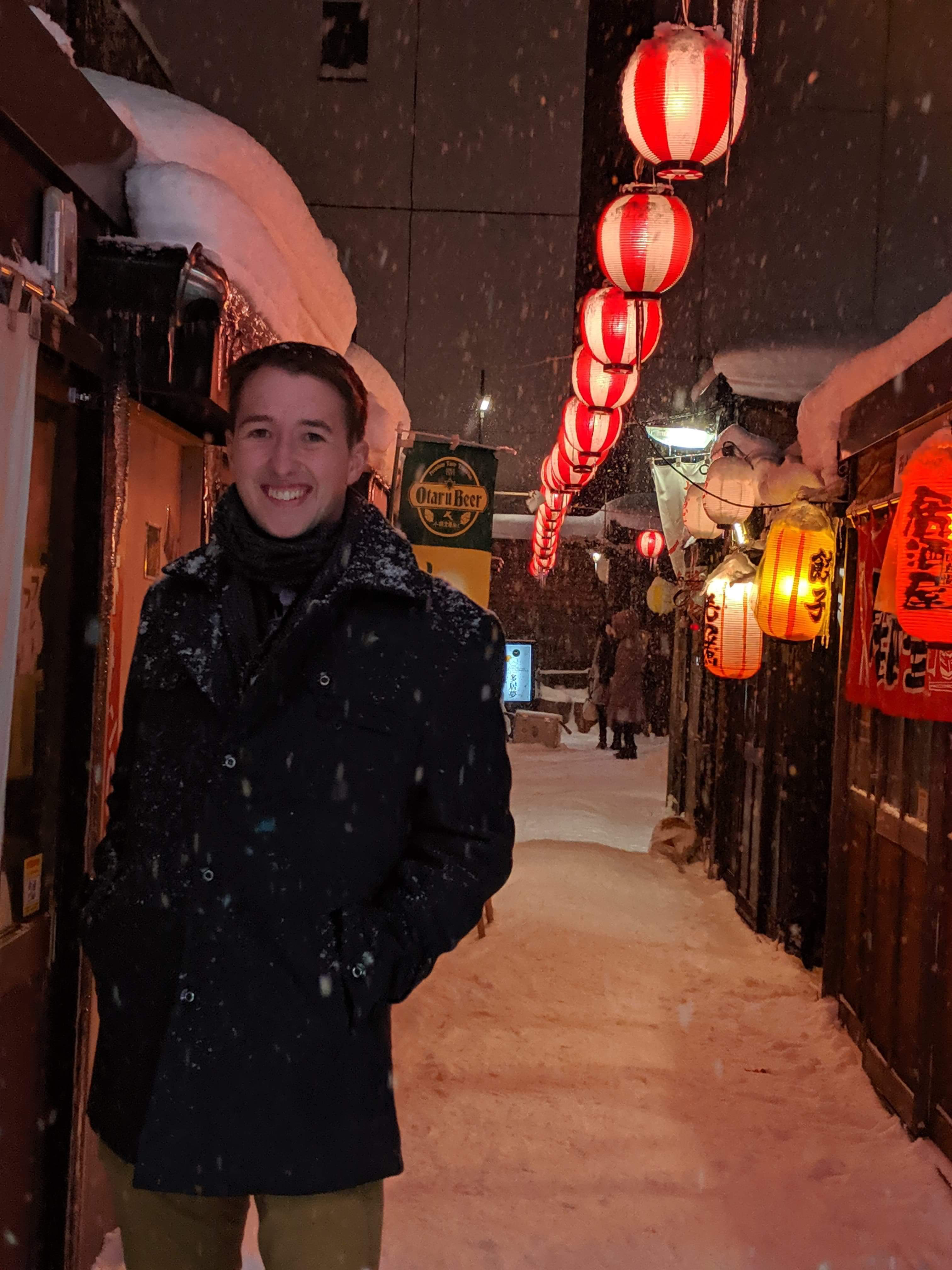
Jaden Caradine at the Sapporo Snow Festival in Hokkaido, Japan, during his service as a U.S. Marine
Caradine at the Sapporo Snow Festival in Hokkaido, Japan, while serving as a U.S. Marine
Credit: Jaden Caradine

“Your ikigai is the thing where all of those overlap,” he says. Engineering was already in the picture. The question was what kind.

Chasing the Signal

The answer arrived through research and a company Caradine stumbled on while scanning the landscape of emerging aerospace technology. They were using magnets to spin a launch system to 14,000 or 15,000 RPM and release small satellites into orbit, recovering the energy on the way down through the same magnetic system. “I thought that was awesome,” he recalls. “So, I started looking into aerospace engineering, and it was a good fit.”

Once he had the field, the destination wasn’t hard to find. Caradine transferred to Embry-Riddle Aeronautical University’s Daytona Beach campus to study aerospace engineering and immediately started showing up everywhere he could — satellite conferences at Kennedy Space Center, industry events in Orlando, small satellite gatherings back in Salt Lake City. “I went to all the career fairs, even though I wasn’t looking for a job yet,” he says. “I just wanted to learn as much as I could, as fast as I could.”

At every NASA booth, he asked questions. He learned about Pathways, the program that places undergraduate and graduate students at NASA centers with the potential to convert to full-time civil service positions, but he waited a year to apply. “I hadn’t really done the things I wanted to do in order to write a strong application yet,” he says. He wrote the next application with the intention of using it as a practice run. He got in.

His reason for choosing NASA over industry was simple and firm. “NASA doesn’t work for profit,” he says. “We’re here to remove barriers so that industry can eventually do the things they weren’t able to do before.”


“Human beings are far more capable than we give ourselves credit for. A journey of a thousand miles starts with a single step and can only be taken one step at a time.”


Work Worth Doing

At NASA Langley, Caradine is part of the Systems Analysis and Concepts Directorate, where “we help agency leaders figure out why they should make certain decisions, especially those that have lots of moving parts,” he explains. Specifically, he works with the in-space servicing, assembly, and manufacturing (ISAM) team, a group focused on the emerging field of building and maintaining infrastructure in space, rather than simply launching and discarding it.

A major part of his summer was curating the State of Play, a comprehensive document that consolidates everything happening in the ISAM sector across government, academia, and industry into a single, navigable resource.

“Jaden joined the team and immediately contributed to this year’s State of Play update,” says Dale Arney, aerospace engineer and Caradine’s mentor. “He also created an automated tool that will help the team create future updates more quickly.”  
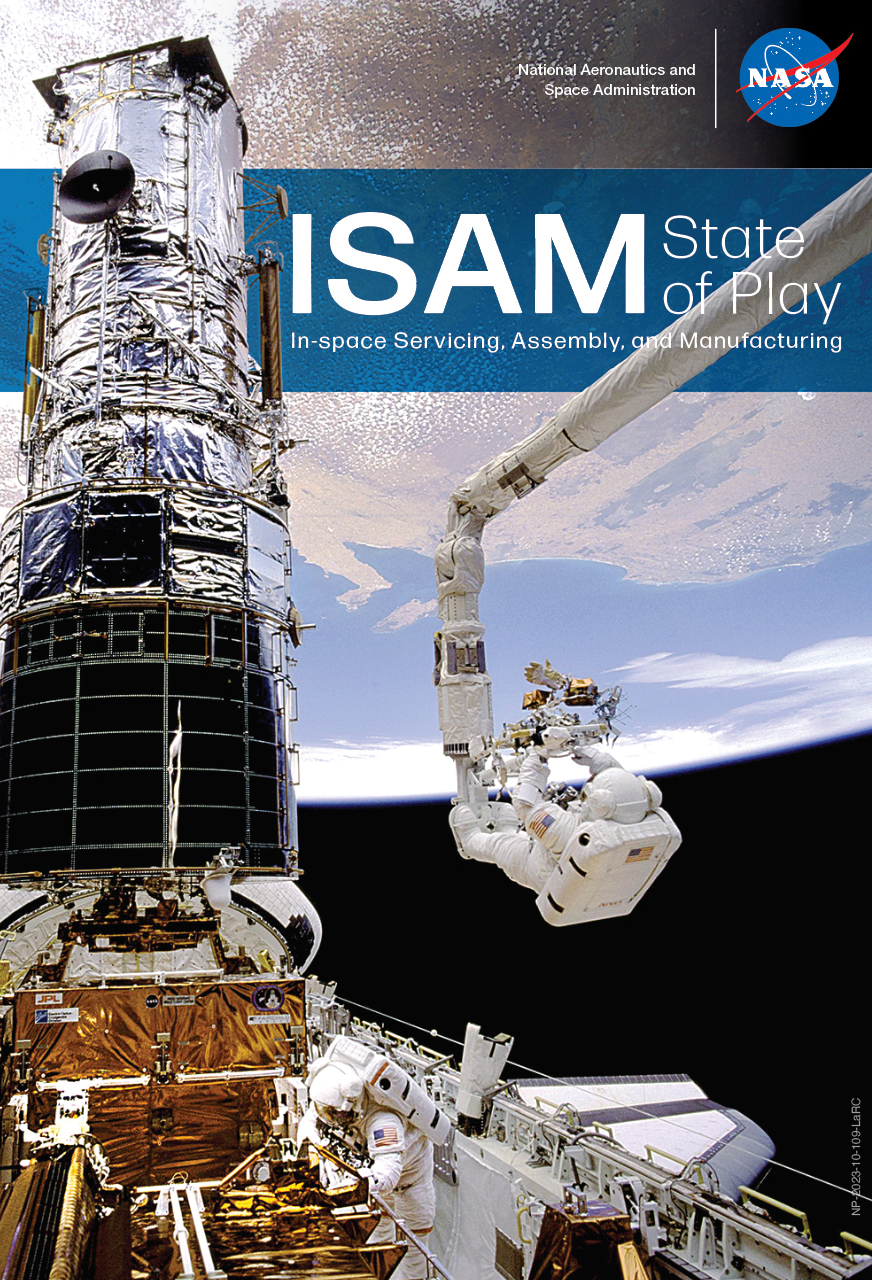
Cover of NASA's ISAM State of Play document, a survey of in-space servicing, assembly, and manufacturing capabilities across industry, academia, and government
The ISAM State of Play document is a survey of past, present, and near-future ISAM capabilities across industry, academia, and government agencies.
Credit: NASA

That tool scrapes aerospace news from across the web, compiles relevant updates into organized tables, and produces a readable summary on a regular cadence. “It kind of replaced the need for everyone on the team to spend 30 or 40 minutes every day scrolling through news to keep up,” he says.

“Jaden was constantly looking for ways to improve himself, the team, and our products,” Arney adds. “He was eager to take the lead in trying a number of new processes and ideas to try to make them work for us.” 

No Silos

The thing that surprised Caradine most about NASA Langley had nothing to do with the technical work. He had expected some departmental siloing that could develop in large organizations, where people become experts in narrow areas with limited cross-pollination among teams.

“That’s not something I’ve experienced here,” he says. “We all talk to each other, across all teams. We share resources. We collaborate quite extensively.” He describes a culture that expects everyone to engage with the whole problem, not just their corner of it. “Everyone kind of bounces around on different teams to learn the whole aspect of the problem and support each other.”
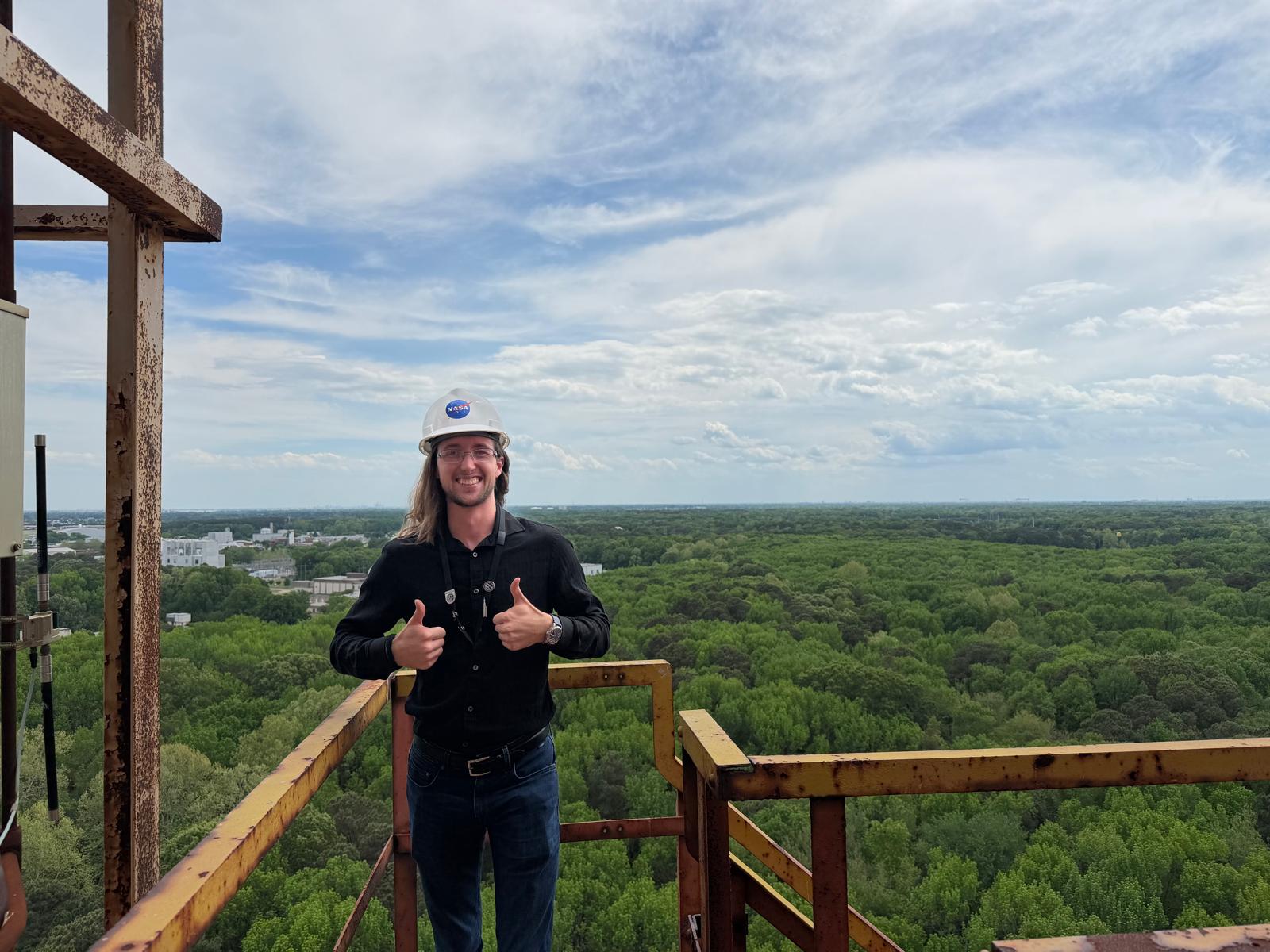
Jaden Caradine standing atop the gantry at NASA Langley's Impact Dynamics Facility
Caradine at NASA Langley’s Impact Dynamics Facility, enjoying the view at the top of the gantry
Credit: NASA

For anyone considering the Pathways program, his advice is direct. “Do it,” he says. “Human beings are far more capable than we give ourselves credit for. If it seems like too much, break it down. A journey of a thousand miles starts with a single step and can only be taken one step at a time.”

Caradine heads back to Embry-Riddle as a junior this fall, with plans to return to Langley next summer. Grad school is on the horizon, and he’s exploring programs that nurture important analysis skills for SMAB, including decision, strategic, and systems analysis.

“Before coming here, I was trying to do everything and cast a wide net,” he says. “Now I know what I need to know how to do. That’ll give me the opportunity to focus my efforts on the high-value skill sets.”

On Caradine’s Sci-Fi Shelf

The Sirens of Titan by Kurt Vonnegut

Dungeon Crawler Carl by Matt Dinniman

Caradine’s instinct runs more toward fantasy than science fiction, but this one, he says, hits something real.

“I enjoy the leveling aspect — constantly improving, constantly getting better. In books it might be physical strength, but in reality, strength takes on many different forms. Constant improvement is quite rewarding in real life, as it is in books.”

The audiobook production, he adds, is its own experience: full sound design, character actors, the works. “It’s like listening to a movie.”

The team also recently convinced him to start Dune, by Frank Herbert. He’s about halfway through.



Part of the Systems Analysis and Concepts Directorate at NASA’s Langley Research Center.
Learn more about our work by visiting our website.

Source: www.nasa.gov
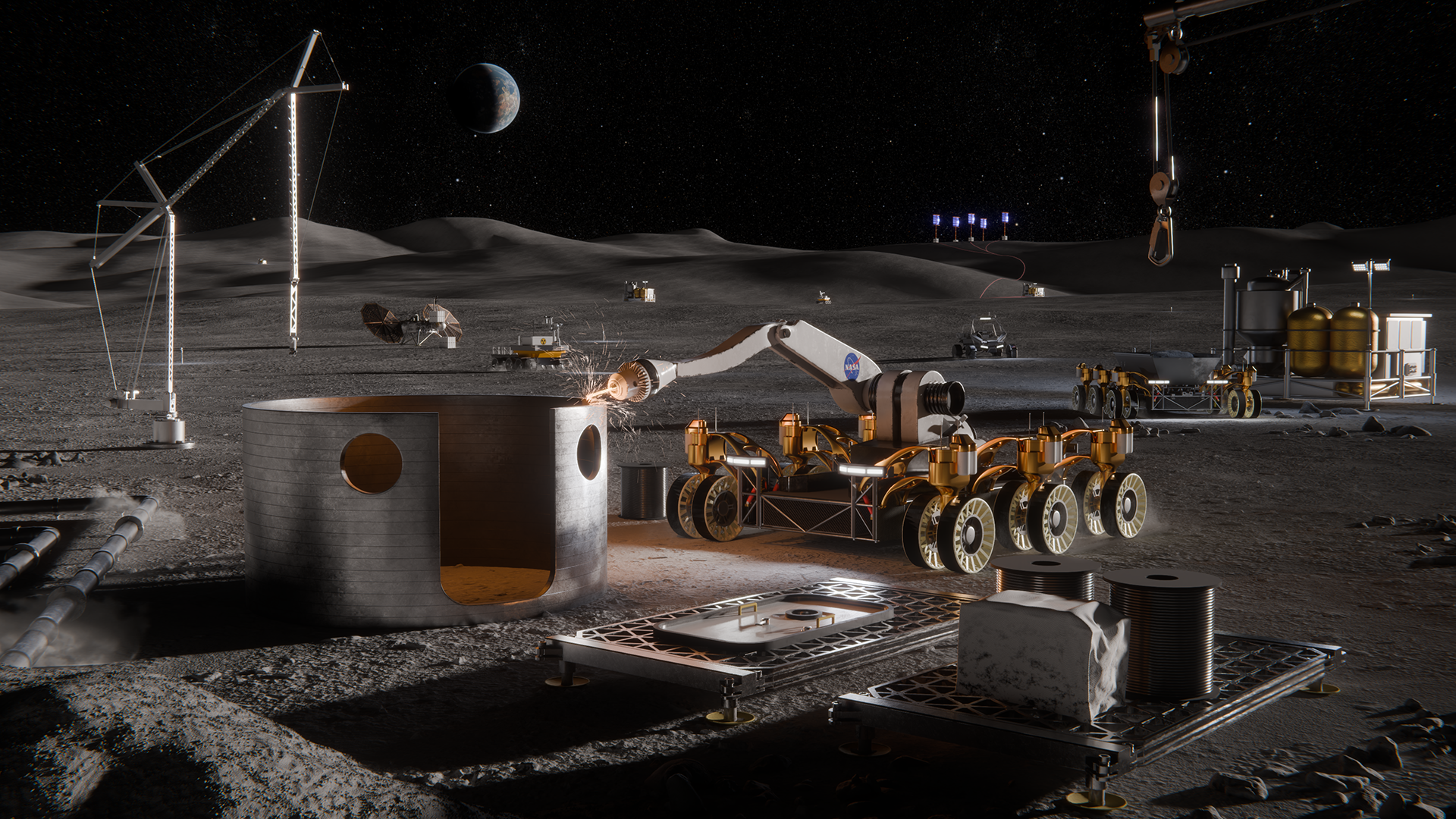
NASA Calls for Proposals to Accelerate Lunar Surface Technologies 

Artistic concept of lunar surface technologies and infrastructure capabilities, including in-situ resource utilization oxygen production systems, surface power systems, in-space manufacturing tools, and advanced nanomaterials production.
Credit: NASA

NASA is seeking proposals to advance the technology and infrastructure needed to explore the Moon and establish a Moon Base in the lunar South Pole region.

Announced on Tuesday, Sept. 8, the solicitation targets capability gaps, including power generation, oxygen extraction, and producing materials on the Moon required for construction and operations. These technologies are essential to making humanity’s next great leap in lunar exploration.

“NASA is accelerating the development of key technologies and closing critical gaps needed for long-term human exploration at the Moon,” said Greg Stover, director of NASA’s Advanced Research and Technology Division. “Partnering with industry will strengthen the U.S. industrial base as we mature the capabilities and infrastructure needed for a sustainable lunar presence.”

The NextSTEP-3 Broad Agency Announcement Appendix A: Lunar Enabling Infrastructure Accelerator solicitation aims to mature and demonstrate capabilities in five areas:

  • Vertical solar array technology that can provide consistent power generation, management, distribution, and energy storage.
  • In-situ resource utilization oxygen from regolith production to extract usable oxygen molecularly bonded to rock and dust covering the Moon’s surface.
  • Radioisotope Stirling generator, a type of nuclear energy technology that uses heat from fissile materials to produce electric power for operating spacecraft systems in the darkest, dustiest, and most remote places.
  • In-space advanced manufacturing to reduce reliance on resupply missions from Earth and to optimize mission flexibility and resilience on the Moon.
  • Innovative nanomaterials production to advance the commercial availability and quality of nanomaterials that can be used in lunar exploration.

The solicitation intends to cultivate U.S.-led capabilities while maintaining full and open competition among private industry, academic institutions, and not‑for‑profit entities, as well as international partners participating through U.S.-led teams. 

NASA may apply insights gained from the resulting contracts of this solicitation, such as technical data, and demonstration results, to shape future acquisition strategies.  

To learn more about NextSTEP-3, visit:

https://go.nasa.gov/4x20o3t

-end-

Rob Margetta
Headquarters, Washington
202-358-0918
[email protected]

Details

Last Updated

Sep 08, 2026

Source: www.nasa.gov
NASA’s Chandra Unveils Mysterious X-Ray Objects

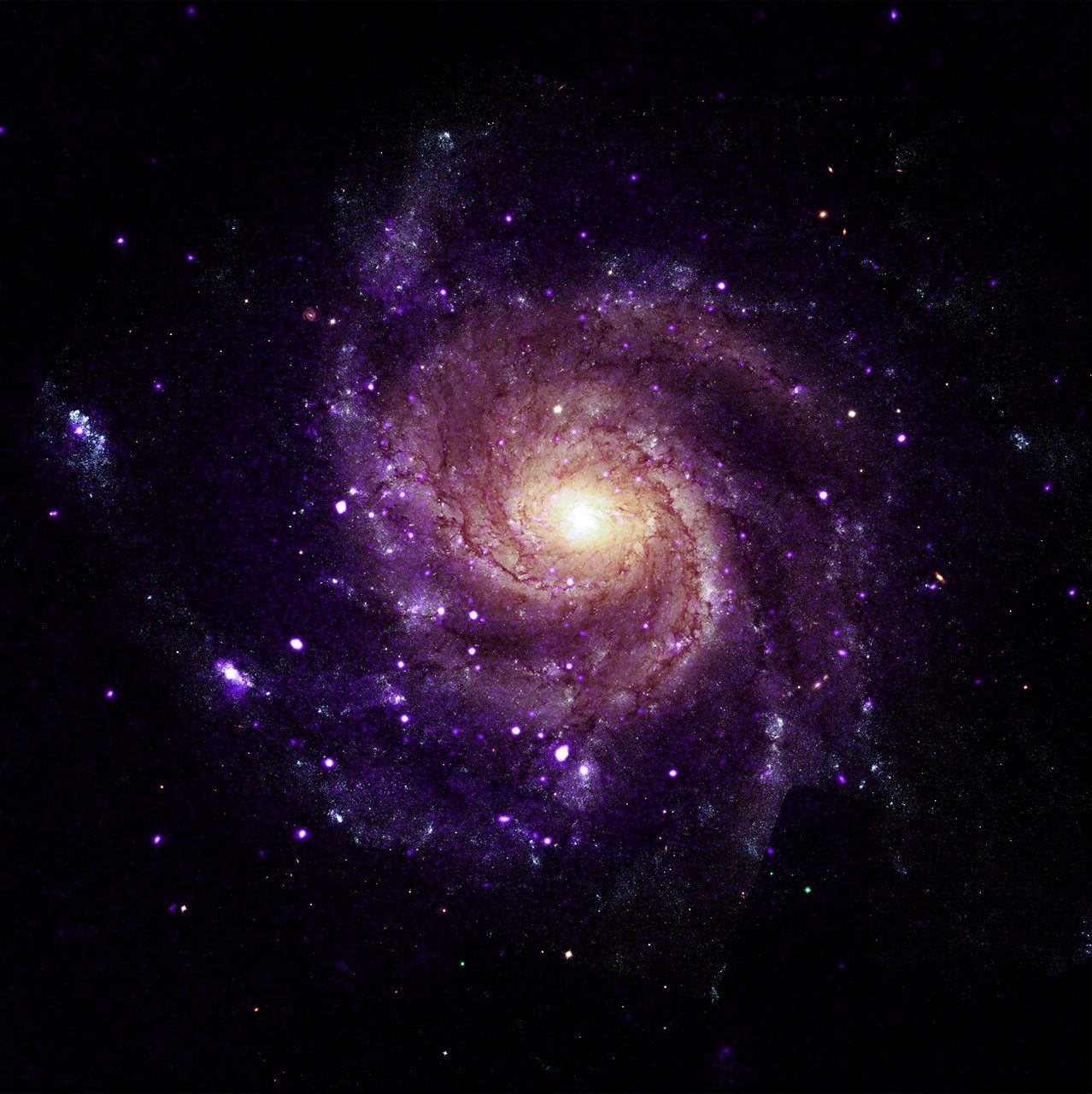
Researchers found 84 so-called hypersoft X-ray sources in M101, Messier 31, and four elliptical galaxies. This newly-discovered class of objects give off very low-energy X-rays and likely high levels of ultraviolet light. Their existence may help explain questions around Type Ia supernova explosions and the intergalactic medium. These images of the face-on spiral galaxy M101 show X-ray data from Chandra and an optical image from the Hubble Space Telescope.
X-ray: NASA/CXC/Univ. of Alabama/M. Muhibullah et al.; Optical: NASA/ESA/STScI; Image Processing: NASA/CXC/SAO/N. Wolk

Using NASA’s Chandra X-ray Observatory, scientists have discovered a new class of objects behaving unlike any they have seen before. Astronomers suggest these newly spotted objects in other galaxies may help solve not one, but two long-standing questions in astrophysics.

These mysterious objects give off unusually low-energy X-rays but intense levels of ultraviolet radiation. This discovery is featured in a paper published Wednesday in Nature Astronomy.

“We’ve never encountered a group of objects that act like this,” said Mustafa Muhibullah of the University of Alabama who led the study. “Of course, the next step was to try to figure out what these things are.”

Researchers found 84 so-called hypersoft X-ray sources in M101, Messier 31, and four elliptical galaxies. This newly-discovered class of objects give off very low-energy X-rays and likely high levels of ultraviolet light. Their existence may help explain questions around Type Ia supernova explosions and the intergalactic medium. These images of the face-on spiral galaxy M101 show X-ray data from Chandra and an optical image from the Hubble Space Telescope.
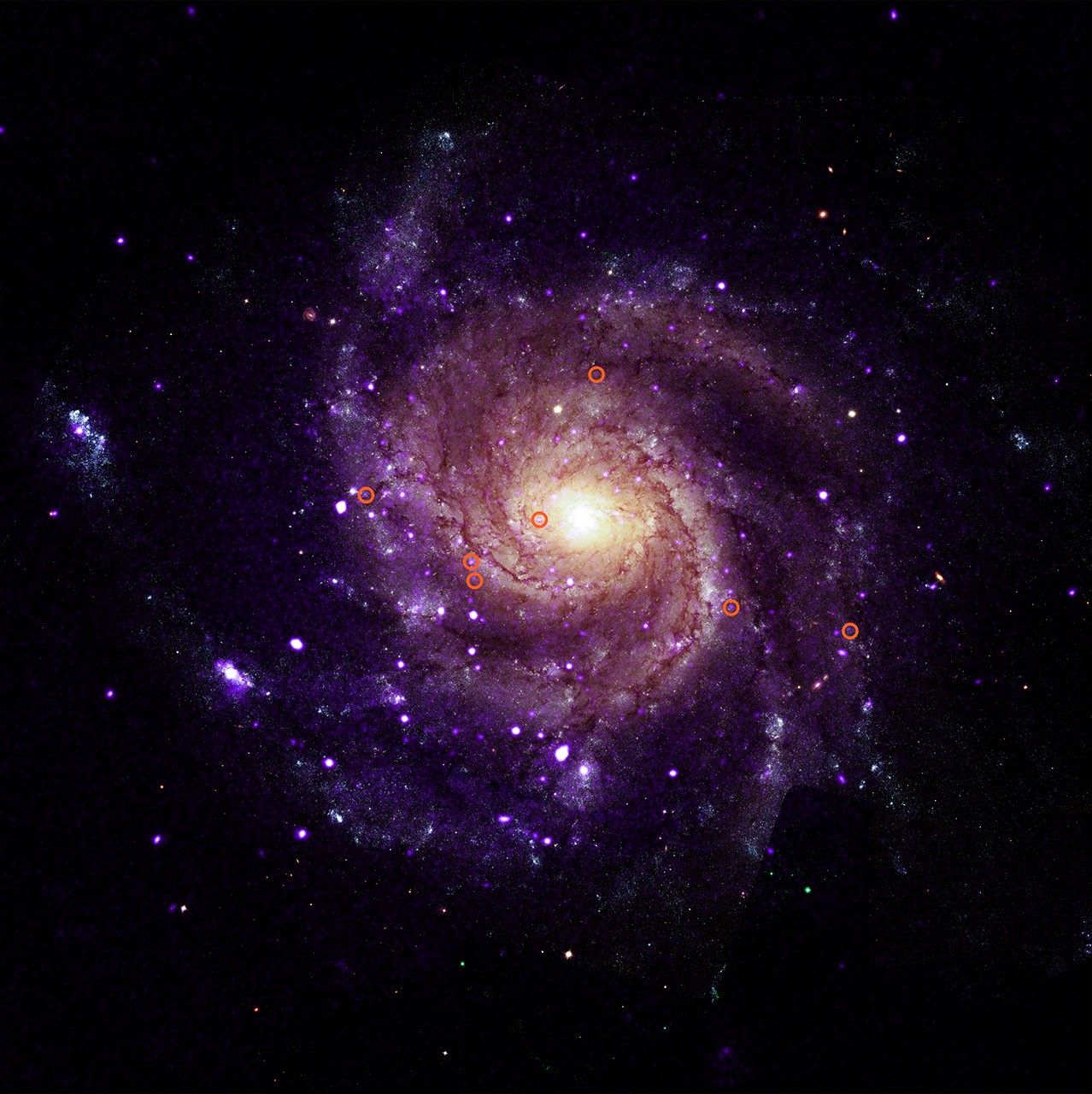
M101 with illustrated circles calling out seven of the newly-discovered objects.
X-ray: NASA/CXC/Univ. of Alabama/M. Muhibullah et al.; Optical: NASA/ESA/STScI; Image Processing: NASA/CXC/SAO/N. Wolk

The researchers found a total of 84 of these “hypersoft X-ray sources” – so named because they give such low-energy X-rays – in the six different galaxies they searched, using data openly available to the public in the Chandra archive. Two of the galaxies are spirals, M31 (the Andromeda galaxy) and M101 (the Pinwheel galaxy), while the other four are ellipticals. They found hypersoft X-ray sources both in regions of active star formation and areas where there are older stars.

The team spotted the sources by finding objects that appeared in Chandra images taken at the lowest X-ray energies but vanished in higher-energy images. That means these objects give off far more low-energy X-rays than high-energy ones. Because low-energy X-rays border energetic ultraviolet radiation on the electromagnetic spectrum, the researchers determined that these sources are producing large amounts of energetic ultraviolet radiation as well.

It is unclear what types of objects are responsible for these low-energy X-rays and intense ultraviolet radiation. The team thinks they most likely involve a black hole, neutron star, or white dwarf pulling material from a companion star. The material pulled from the companion star is heated up to produce X-rays before falling onto the white dwarf or neutron star, or into the black hole. Such binary systems have been seen before, but not with such bright ultraviolet radiation and low-energy X-rays.

The discovery suggests that there may be large populations of binary systems with energetic ultraviolet radiation that have been undetected until now.

“These clandestine X-ray sources are actually among the most energetic objects in galaxies, and they could be solving two cosmic mysteries at once,” said Muhibullah.

Scientists think that some white dwarf systems pulling material from companion stars may eventually explode as a supernova – known as a Type Ia – that is critical for measuring the expansion of the universe. These supernovae played a key role in discovering that this expansion is accelerating. Astronomers have been looking for the stars that turn into Type Ia supernovae for many years, so far without success.

“If we could find a way to spot these Type Ia supernova explosions before they go off, that would be really important,” said co-author Jimmy Irwin, also of the University of Alabama. “Right now, we study them after they’ve exploded, and astronomers have struggled to understand what is actually ignited.”

The other mystery these hypersoft X-ray sources might explain is what strips electrons from gas between the stars in some galaxies. This stripping of electrons is important to probe because it can affect how quickly stars form and influence the life cycles of galaxies. Hot, massive stars play a role, but they do not completely explain what is causing this stripping. The intense levels of ultraviolet radiation from the hypersoft X-ray sources may play a vital role.

Why were these hypersoft X-ray sources not found until now? In addition to the low-energy X-ray output, which is very difficult for X-ray telescopes to detect, the high-energy ultraviolet radiation is readily absorbed by helium and hydrogen gas that fills the space between the stars, creating a nearly impenetrable barrier to look through.

“By combing through the Chandra archive, we were able to eliminate what used to be a blind spot for telescopes,” said co-author Rosanne Di Stefano of the Center for Astrophysics | Harvard & Smithsonian. “That’s how we found what appears to be a new class of cosmic objects with remarkable qualities.”

NASA’s Marshall Space Flight Center in Huntsville, Alabama, manages the Chandra program. The Smithsonian Astrophysical Observatory’s Chandra X-ray Center controls science operations from Cambridge, Massachusetts, and flight operations from Burlington, Massachusetts.

Read more from NASA’s Chandra X-ray Observatory

To learn more about NASA’s Chandra mission, visit:

https://www.nasa.gov/chandra

Visual Description

This release features a composite image of a spiral galaxy, M101; one of six identified galaxies housing a new class of mysterious objects that give off unusually low-energy X-rays.

In this composite image, M101 faces us directly. It has multiple arms in shades of purple, spiraling clockwise around a golden yellow core. Scattered along and between the arms are scores of tiny specks in white and purple. Most of those specks are pairs of stars, but seven of them are a mystery.

To casual observers, the unusual objects are visually indistinguishable from the other specks of light in the galaxy. An annotated version of the composite image is included in this release, with red circles around the mysterious specks for easy identification.

These mystery specks behave like no other class of object discovered before. The curious objects give off X-rays of such low energy, they in fact produce large amounts of ultraviolet radiation, as UV radiation borders X-rays on the electromagnetic spectrum. Searching images of galaxies with low-energy X-rays in the Chandra Observatory archive, scientists have found a total of 84 such objects spread across M101 and five other galaxies. They have dubbed these mysterious objects “hypersoft X-ray sources.”

Details

Last Updated

Sep 09, 2026

Editor
Lee Mohon
Contact
Megan Watzke
Joel Wallace
Location
Marshall Space Flight Center

Source: science.nasa.gov

How 2 US, European Satellites Are Studying Hurricanes During El Niño

5 min read

Preparations for Next Moonwalk Simulations Underway (and Underwater)

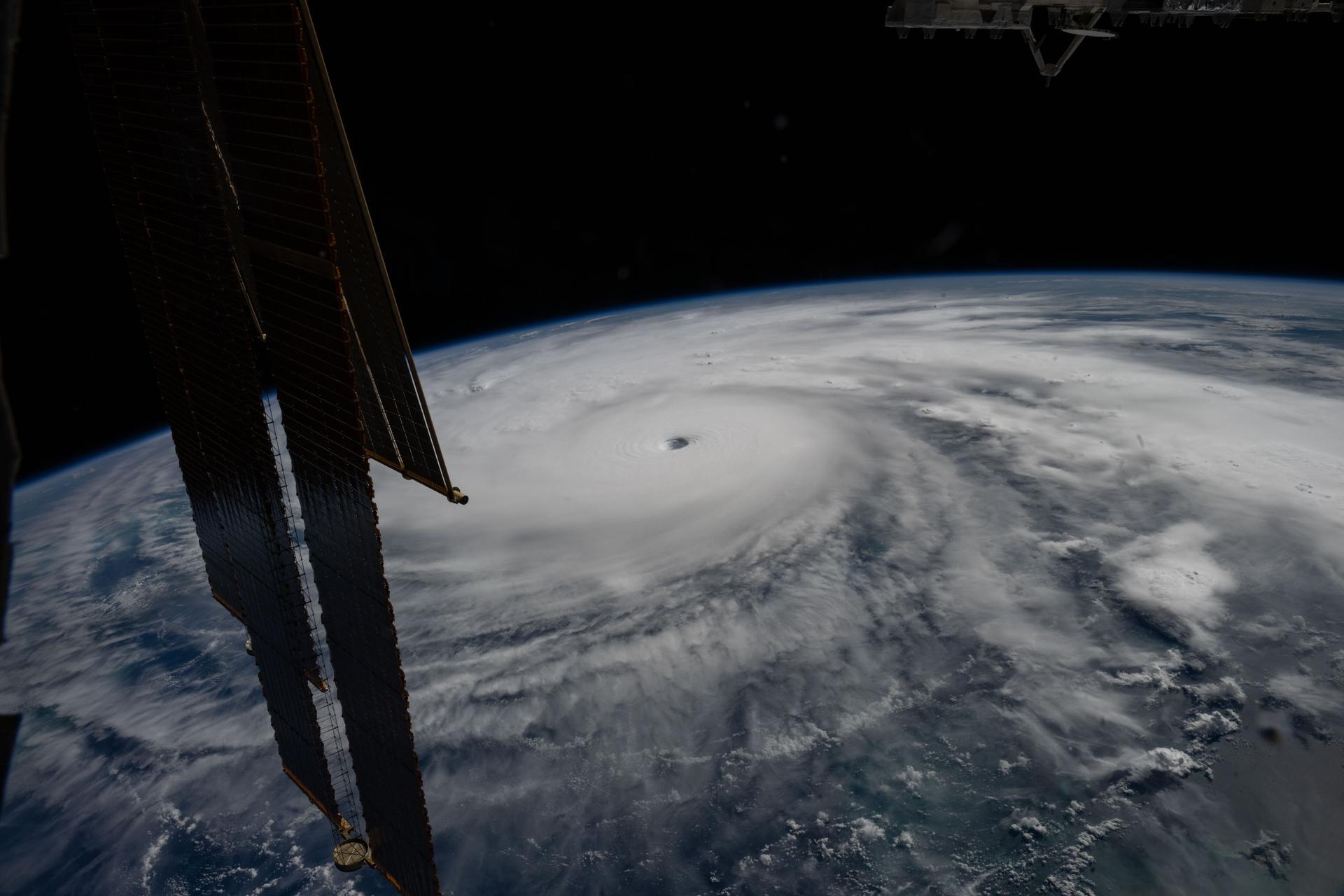
Category 5 Hurricane Melissa, one of the most powerful storms to strike the Caribbean in recent history, is pictured about 50 miles south of Jamaica in this photograph from the International Space Station as it orbited 262 miles above the Yucatan Peninsula.
Hurricane Melissa is seen 50 miles south of Jamaica in this photograph taken from the International Space Station on Oct. 28, 2025.
NASA

Last November, NASA and its European partners launched the Sentinel-6B satellite to improve hurricane forecasts, help protect infrastructure, and benefit commercial industries, including shipping. The satellite now is flying 30 seconds behind its predecessor, Sentinel-6 Michael Freilich. Both satellites are providing precise sea level height measurements during what oceanographers expect to be a historic El Niño, a naturally occurring oceanic phenomenon in which warmer-than-usual Pacific waters shift global weather patterns.

The two satellites make up the Copernicus Sentinel-6/Jason-CS (Continuity of Service) mission, the latest in a series of ocean-observing radar altimetry missions that have been monitoring Earth’s changing seas continuously since the early 1990s.

The data each satellite is collecting will not only allow scientists to better understand this year’s El Niño but will also help them create more accurate hurricane predictions.

“This El Niño was a late-bloomer,” said Josh Willis, Sentinel-6B’s project scientist at NASA’s Jet Propulsion Laboratory in Southern California. “It didn’t kick off until the middle of the year and is just now reaching a strength similar to what we’ve seen in the satellite record during significant El Niños in 1997 and 2015. We expect it to be big, and it’s already having big impacts.”

El Niños generally scramble weather patterns tied to rainfall and storms, including hurricanes. They also redistribute heat in the ocean, which affects sea level. Normally, Earth’s warmest ocean waters sit along the equator in the western Pacific. During El Niño, weakened winds, which usually blow westward along the equator, result in heat spreading east toward South America. The change in ocean heat shifts hurricane activity from the Atlantic to the Pacific Ocean.

Predicting hurricane strength

On July 15, Sentinel-6B began delivering low-latency data to scientists that could be used for weather predictions. That data will take some time to work its way into the research models on which meteorologists and climate scientists rely, but when it does, those improved models could save lives.

Data from Sentinel-6 satellite missions feeds into hurricane tracking algorithms used by federal and state agencies. Those predictions can activate disaster response efforts, mobilizing resources ranging from sandbag placement to National Guard activation. They also can lead to evacuation orders that require quick but well-informed decisions about logistics at a local level. More severe events may require engaging larger organizations, such as the Federal Emergency Management Agency.

A tropical storm can take a week or more to become a hurricane and make its way to a coastline, but a hurricane can rapidly intensify in the 48 hours prior to landfall, leaving planners little time to prepare.

“Hurricanes have been known to speed up quickly at the last moment, so the window in which to decide what to do is short,” said Deirdre Byrne, an oceanographer and altimetry expert with the National Oceanic and Atmospheric Administration (NOAA). “The goal is to forecast how much and how rapidly intensification will happen so that officials can make the right calls.”

Byrne oversees one of the country’s most crucial hurricane forecasting algorithms, NOAA’s Satellite Ocean Heat Content Suite, which has been operating since 2012.

Each Sentinel-6 satellite measures ocean height, as well as the size of waves and marine wind speed, using a radar altimeter, which bounces thousands of radar pulses a second off the crests and troughs of waves. Ocean height varies from place to place and provides insight into the ocean’s heat content, since warm water expands. That, in turn, helps forecast how fast hurricanes will grow.

The satellites each carry a second instrument, called the Global Navigation Satellite System – Radio Occultation (GNSS-RO), which measures atmospheric properties, such as humidity, pressure, and temperature.

Among the measurements Sentinel-6 is gathering, Byrne is most anticipating the ocean height data, which she plans to begin incorporating into the current Satellite Ocean Heat Content Suite algorithm by the end of the year.

“In terms of data quality, the Sentinel-6 missions are unparalleled,” Byrne said.

Together, the missions are also extending a precise dataset deep into its fourth decade. This record of sea level observations traces back to the TOPEX/Poseidon mission, which launched in 1992, and continues through to the present day with Sentinel-6 Michael Freilich. Sentinel-6B will take over for its predecessor as the reference satellite for global sea level measurements later this year.

“The key is consistency, measuring the same way, every time,” said Severine Fournier, Sentinel-6B deputy project scientist, JPL. “That’s what lets us predict hurricanes, and, in turn, protect coastal communities and infrastructure.”

More about Sentinel-6B

Sentinel-6 Michael Freilich, named after a former director of NASA’s Earth Science Division, is one of two satellites that compose the Copernicus Sentinel-6/Jason-CS mission.

Sentinel-6/Jason-CS, a part of the European Union’s Earth observation program called Copernicus, was jointly developed by ESA (European Space Agency), EUMETSAT (European Organisation for the Exploitation of Meteorological Satellites), NASA, and NOAA, with funding support from the European Commission and technical support on performance from the French space agency CNES (Centre National d’Études Spatiales). Spacecraft monitoring and control, as well as the processing of all the altimeter science data, is carried out by EUMETSAT on behalf of the European Union’s Copernicus Programme, with the support of all partner agencies.

NASA JPL, a division of Caltech in Pasadena, contributed three science instruments for each Sentinel-6 satellite: the Advanced Microwave Radiometer, the GNSS-RO, and the Laser Retroreflector Array. NASA also contributed launch services, ground systems supporting operation of the agency’s science instruments, the science data processors for two of these instruments, and support for the United States members of the international Ocean Surface Topography Science Team.

For more about Sentinel-6B, visit:

https://science.nasa.gov/mission/sentinel-6B

-end-

Media Contacts

Andrew Good / Andrew Wang
Jet Propulsion Laboratory, Pasadena, Calif.
818-393-2433 / 626-379-6874
[email protected] / [email protected]

2026-060

Source: www.nasa.gov
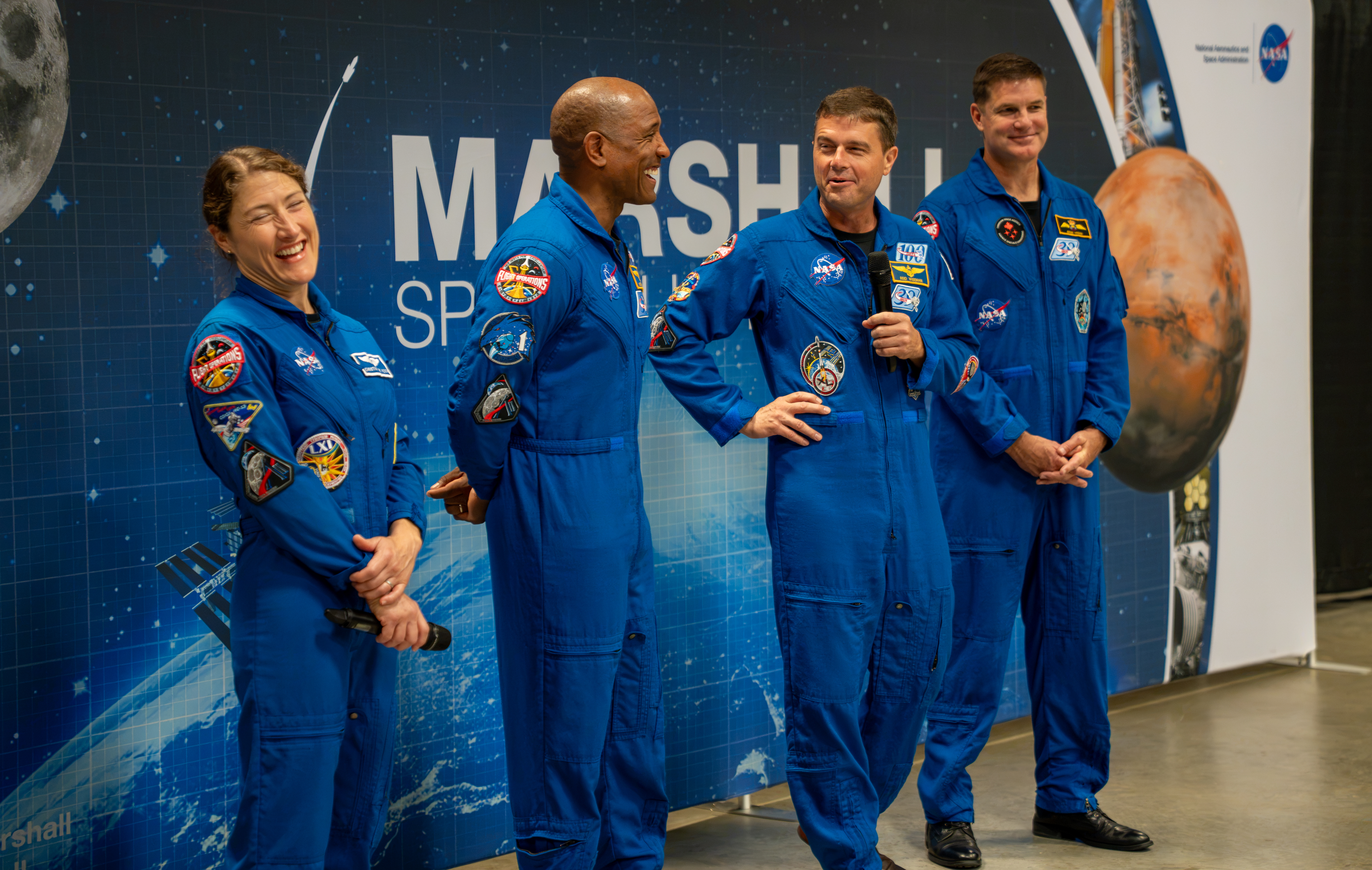
Artemis II Crew at NASA Marshall

The Artemis II crew smile and laugh. They are wearing blue jumpsuits with patches on them. Christina Koch, left, and Reid Wiseman, second from right, are holding microphones.
NASA/Brandon Hancock

The crew of NASA’s Artemis II mission – NASA astronauts Christina Koch, Victor Glover, and Reid Wiseman and CSA (Canadian Space Agency) astronaut Jeremy Hansen – visited Huntsville, Alabama, Sept. 1, 2026, where they met with the NASA workforce at NASA’s Marshall Space Flight Center. The event gave the crew an opportunity to share firsthand experiences from their mission, reflect on their time in space, and connect with the workforce that supported the mission through an engaging question-and-answer session.

Image credit: NASA/Brandon Hancock

Source: www.nasa.gov

NASA’s Hubble, Webb Find Far-out Solar System Objects ‘Remember’ Past

5 min read

NASA’s Hubble, Webb Find Far-out Solar System Objects ‘Remember’ Past

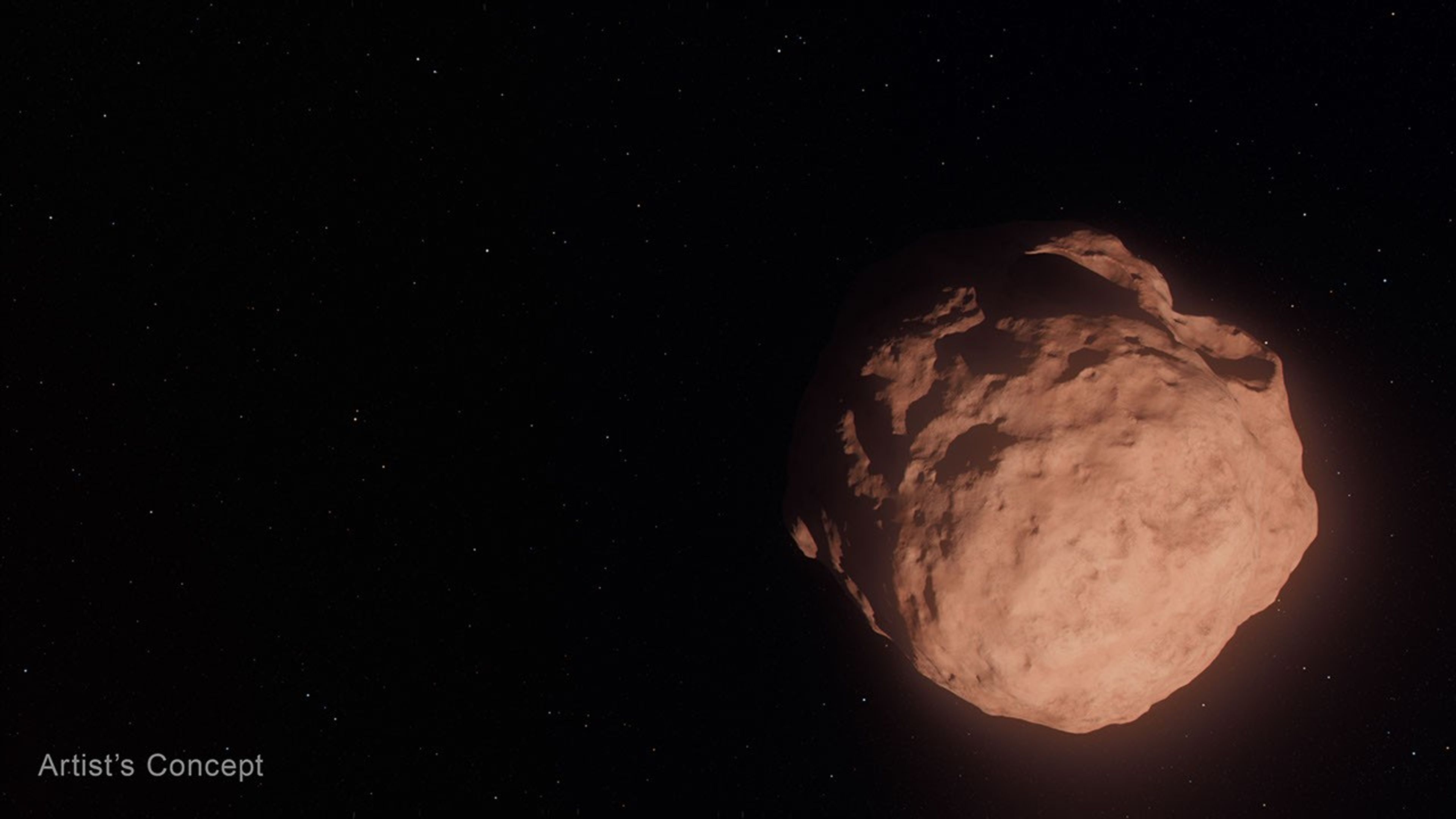
An illustration of a roughly spherical, rocky object against a black background speckled with distant, white stars. The object is the color of red clay and is pockmarked with craters and other geological scars. At the bottom left corner of the illustration in gray lettering is the label “Artist’s Concept.”
This artist’s concept depicts a Trans-Neptunian Object, a small, faint, icy body orbiting the Sun beyond the orbit of Neptune. These objects are so small that even with NASA’s Hubble and Webb space telescopes, they appear only as tiny points of light.
Artwork: NASA, ESA, Leah Hustak (STScI)

For the first time, scientists used the joint power of NASA’s Hubble and James Webb Space Telescopes to study some of the most far-flung bodies in our solar system, Trans-Neptunian Objects (TNOs). Some of these are the smallest and faintest ever directly seen. The researchers unexpectedly found fewer small TNOs than they expected, and that the colors of these bodies followed the same relationships as their larger family members.

These objects are typically small, faint, icy bodies orbiting the Sun beyond the orbit of Neptune. Most are more than 100 million times dimmer than objects visible to the unaided eye. In two complementary papers published Tuesday in The Astronomical Journal, teams analyzed the color, composition, and size distribution of 27 newly discovered tiny, dim TNOs. 

This class of small bodies offers the best view into an early stage of planet-building, when a disk of dust and pebbles in orbit around the Sun coalesced into city-sized “planetesimals” — the solid building blocks that clump together to form planets — but had not yet merged into full-sized worlds.  Beyond Neptune, this second stage never happened, leaving behind a frozen population of planetesimals.

In the deepest TNO survey to date, teams led by PhD candidates from the University of Victoria in Canada, under the guidance of the National Research Council of Canada, and Northern Arizona University in Flagstaff examined a patch of sky simultaneously with Hubble, observing the TNOs’ visible light, and Webb, observing their infrared light. The team of researchers measured the objects’ colors, which are like a fingerprint of the surface composition, as well as their sizes and determined their orbits. 

In the coordinated observations, the teams studied two different types of TNOs. The first, dynamically “cold” TNOs, are on their original, relatively circular orbits around the Sun in the plane of the solar system. The second type, dynamically “hot” TNOs, formed between the current locations of Uranus and Neptune but were pushed outward where they are today when the outer gas giants migrated early in the solar system’s history. Today they reside in highly elliptical orbits and move in and out of the plane of our solar system.

NASA’s Goddard Space Flight Center; Lead Producer: Paul Morris

Prior to these observations, astronomers thought that small TNOs from both hot and cold populations would have undergone many collisions, changing their surfaces compared to larger TNOs. But that’s not what the observations showed. Instead, the small bodies look like their larger counterparts. This implies that collisions are not changing the surfaces significantly—perhaps because there are fewer collisions than expected, or because the TNOs somehow retain their primordial, pre-collision compositions. The teams are still trying to unravel this mystery.

“You could imagine a scenario where getting knocked around and fragmented would change the surface composition, and then you would see a different surface color for tiny TNOs compared to their larger siblings. So it’s really fascinating to see that the smallest objects are somehow ‘remembering’ and preserving the history of how they were made,” said Northern Arizona University PhD candidate Anastasia Morgan, who led the study of color and composition. 

“These dynamically ‘hot’ TNOs retain a signature of where they were born, even though they’ve been orbitally scrambled since then,” said co-author David Trilling of Northern Arizona University.

Both the “hot” and “cold” populations seem to keep the same colors as when they were formed, with little change since the birth of the solar system. 

The Webb data also allowed researchers to measure the number of objects of each size. They found that the overall size distributions for both populations were surprisingly similar.

“It’s very interesting that the process of planetesimal formation ends up producing the same distribution of sizes for both cold and hot populations, despite forming in different regions of the early solar system. The process seems to be insensitive to disk conditions, producing similar planetesimal sizes whether the disk is hot or cold, and dense or fluffy,” said University of Victoria PhD candidate Marielle Eduardo, who led the study on size distribution. 

Researchers also found fewer of these very small bodies than they expected based on some planet formation models. Webb discovered 27 new, remarkably dim TNOs, one so faint it is equivalent to standing on Earth and seeing a small swarm of fireflies on the Moon. The smallest one they observed has a diameter of about 3 miles (5 kilometers), which is about five times smaller than what is possible to detect with the most sensitive ground-based telescopes.

This project would not have been possible without Hubble and Webb working together to detect and characterize these TNOs. With Hubble’s sensitivity in visible light and Webb’s in infrared, the space telescopes provide more insights than either can on its own.

The Hubble Space Telescope has been operating for over three decades and continues to make ground-breaking discoveries that shape our fundamental understanding of the universe. Hubble is a project of international cooperation between NASA and ESA (European Space Agency). NASA’s Goddard Space Flight Center in Greenbelt, Maryland, manages the telescope and mission operations. Lockheed Martin Space, based in Denver, also supports mission operations at Goddard. The Space Telescope Science Institute in Baltimore, which is operated by the Association of Universities for Research in Astronomy, conducts Hubble science operations for NASA.

The James Webb Space Telescope is the world’s premier space science observatory. Webb is solving mysteries in our solar system, looking beyond to distant worlds around other stars, and probing the mysterious structures and origins of our universe and our place in it. Webb is an international program led by NASA with its partners, ESA (European Space Agency) and CSA (Canadian Space Agency).

To learn more about NASA’s space telescopes, visit:
https://science.nasa.gov/universe

Details

Last Updated

Sep 08, 2026

Editor
Andrea Gianopoulos
Contact

Media

Claire Andreoli
NASA’s Goddard Space Flight Center
Greenbelt, Maryland
[email protected]

Ann Jenkins, Christine Pulliam
Space Telescope Science Institute
Baltimore, Maryland

Source: science.nasa.gov

Superbubble in the Large Magellanic Cloud

Blue and orange stars shine through a wispy bubble of gas; the center is mostly clear, but blue and gray tendrils snake throughout most of the rest of the image. The background of the image is filled with other stars.
NASA, ESA/Hubble, D. Gouliermis

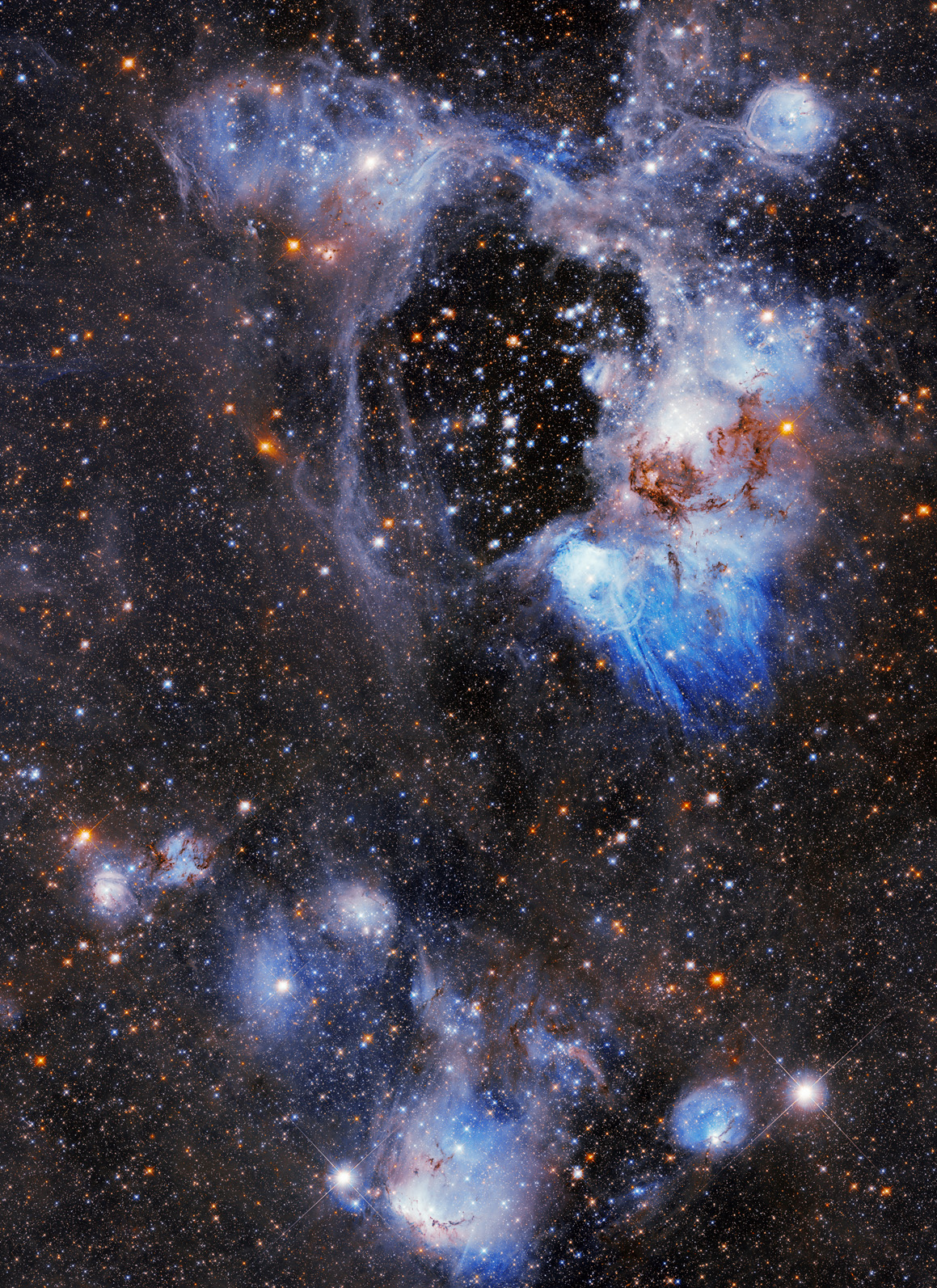
NASA’s Hubble Space Telescope captures a photogenic nebula, N44, in the Large Magellanic Cloud in this Sept. 3, 2026, image. N44 is dominated by two features: a vast central void and a shell of dense, dusty gas. The central void is a ‘superbubble’ spanning roughly 210 by 140 light-years across. The glittering stars at the center of the void are responsible for its creation; through their powerful stellar winds and explosive supernovae, these stars expelled much of the gas from which they were born.

Read more about this cosmic vista.

Image credit: NASA, ESA/Hubble, D. Gouliermis

Source: www.nasa.gov
NASA Technique for Manipulating Satellite Photos Now Reveals Ancient Images  

3 min read

Preparations for Next Moonwalk Simulations Underway (and Underwater)

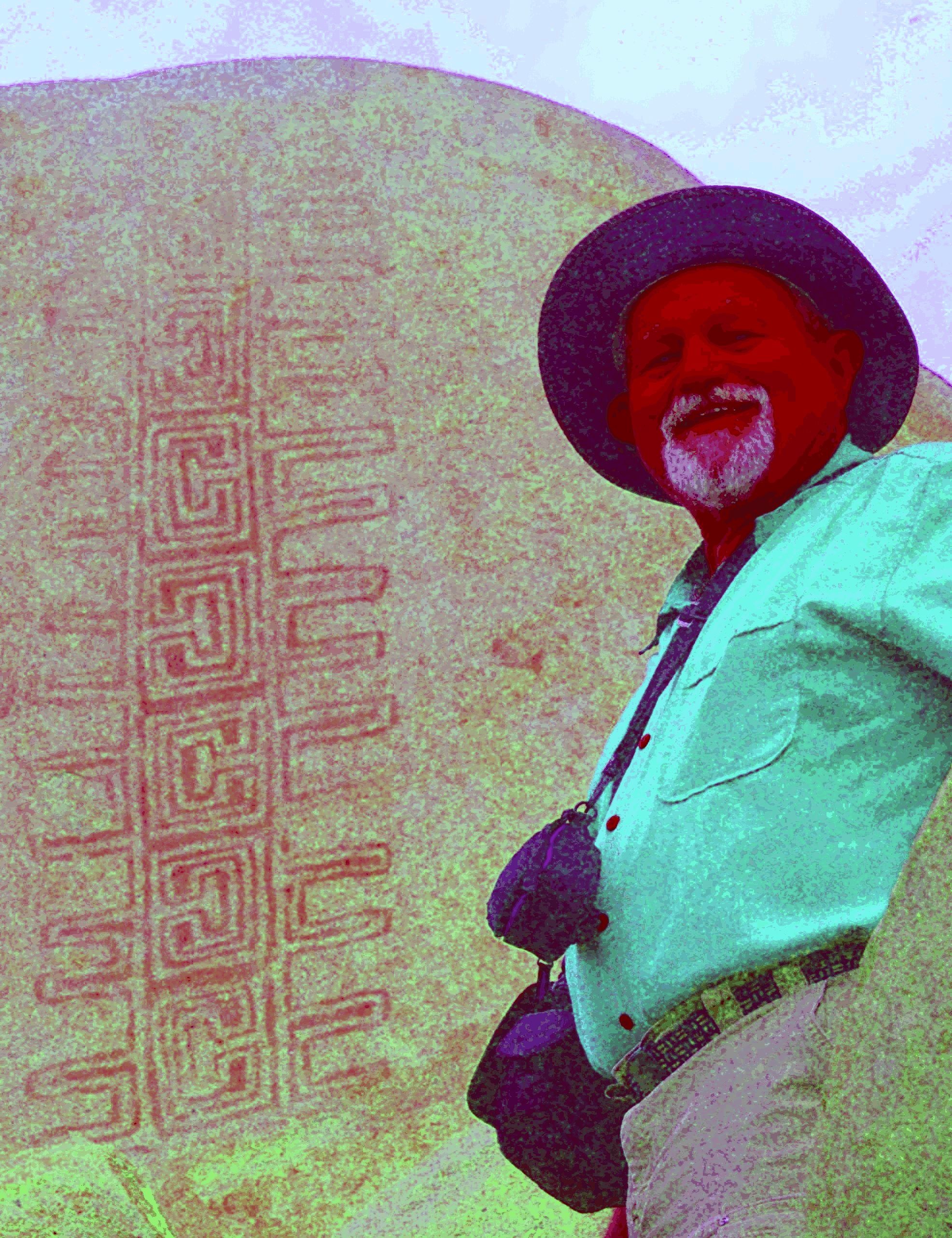
A man stands in front of a rock with art on it, the colors are intense and exaggerated revealing an intricate design in the rock's surface.
Jon Harman poses in front of an example of the Rancho Bernardo style of Native American artwork that’s barely visible until Dstretch is applied. 
Credit: Jon Harman 

High in the central tower in the ancient Cambodian temple of Angkor Wat, paintings depict horseback riders and a traditional musical ensemble. Thousands of visitors pass these images daily without noticing, because they’re faded to the point of invisibility. 

They were discovered between 2010 and 2012, along with about 200 other paintings throughout the complex, by an archaeologist using a method conceived at NASA’s Jet Propulsion Laboratory in Southern California. 

The technique, known as decorrelation stretch, heightens contrasts in digital imagery, making features easier to spot. It is especially popular for studying ancient rock art, partly due to the chance intersection of one man’s hobby with his professional background. 

Around 2005, rock art enthusiast Jon Harman saw NASA images depicting the Martian surface with and without the application of decorrelation stretch. Seeing how much detail the technique revealed, Harman, now retired in Pacifica, California, understood the implication for studying ancient, faded images. 

He also worked in medical imaging. “I Googled it and found a NASA paper that explained how to do the algorithm,” he said. “I knew from my medical imaging experience that I could do it, so I did.” 

The paper was written in 1996 by Ronald Alley, a JPL employee developing applications for the Advanced Spaceborne Thermal Emission and Reflection Radiometer (ASTER), a Japanese imaging instrument on NASA’s Terra satellite. One of Alley’s former supervisors at JPL had coinvented decorrelation stretch, and Alley had recognized its potential for gleaning information from ASTER imagery.  

Harman made his plug-in for use with ImageJ, an open-source program developed by the National Institutes of Health.  


before
after

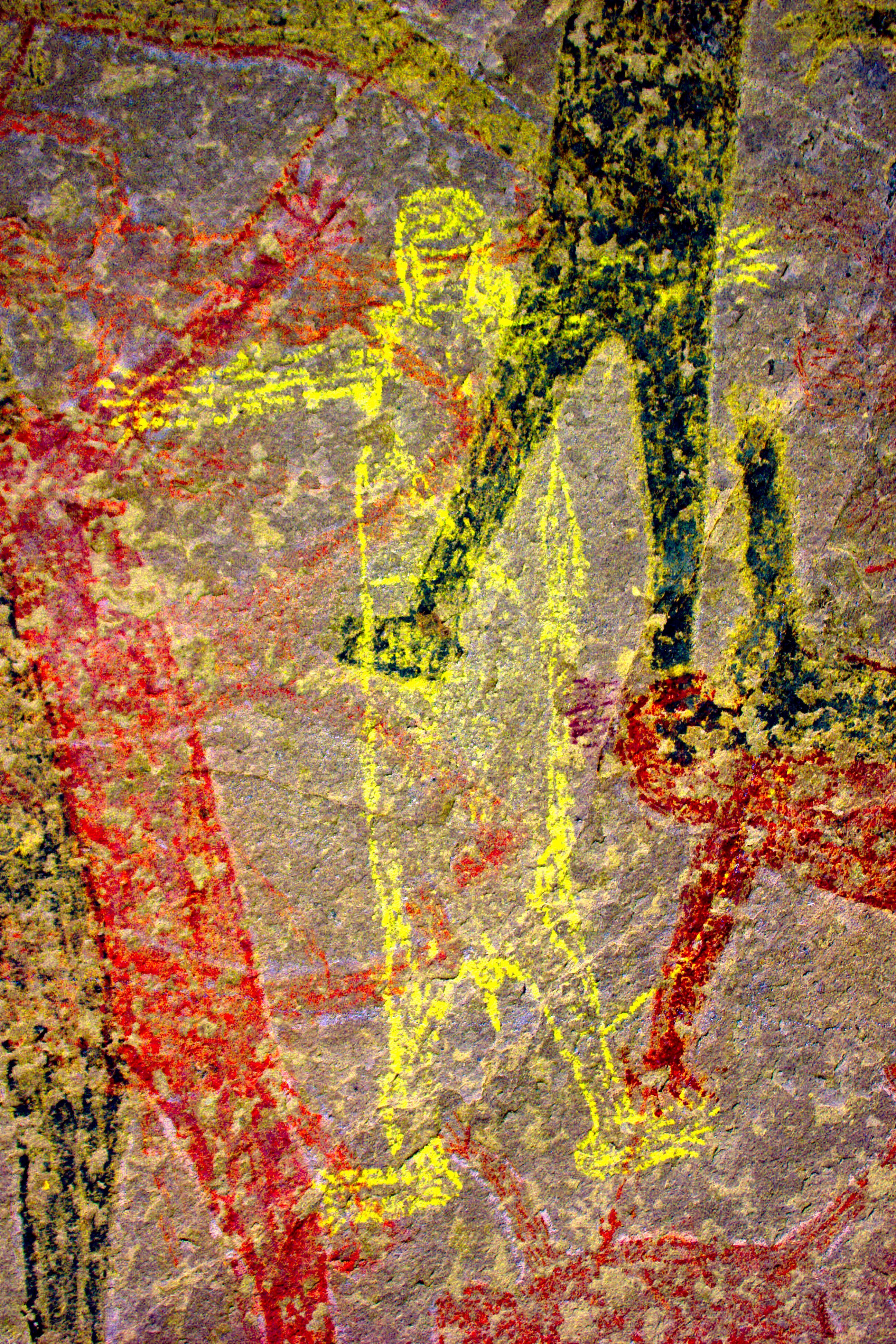
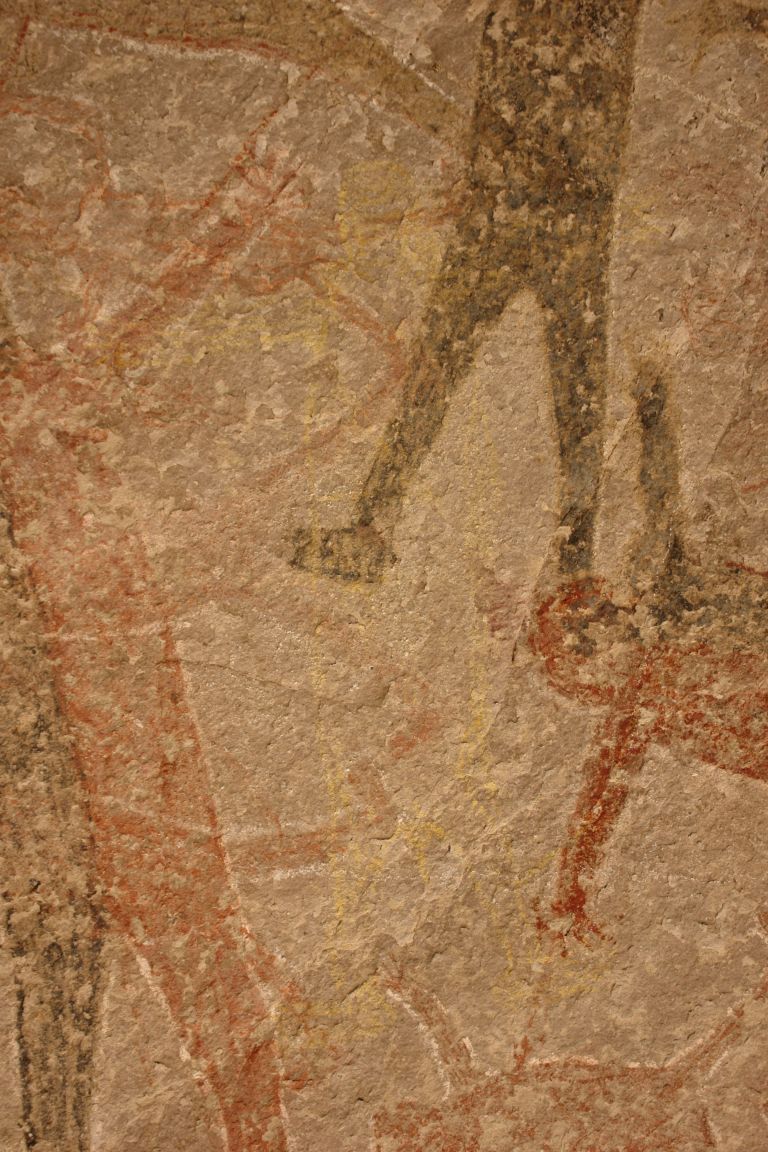
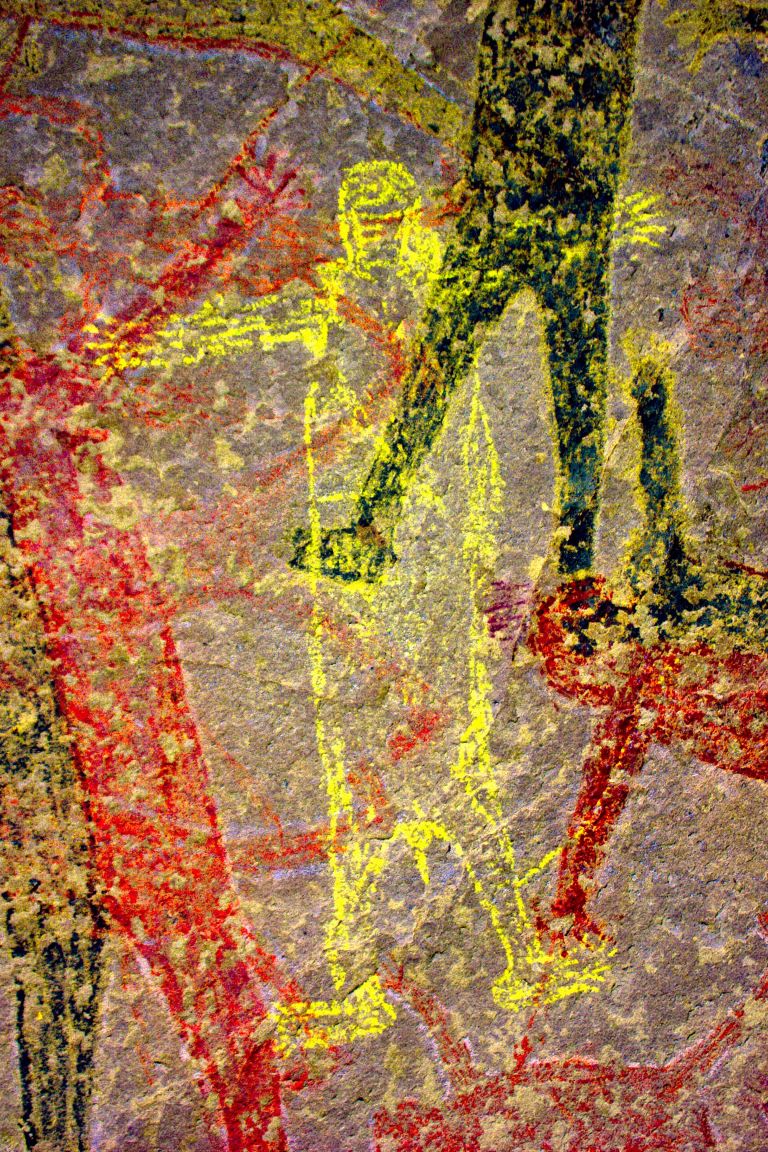
A wall with a series of faded humanoid figures painted on it.

A new yellow figure emerges from behind the other after the dstretch algorithm is applied

A wall with a series of faded humanoid figures painted on it.
A new yellow figure emerges from behind the other after the dstretch algorithm is applied

before

after

Before and After

Dstretch applied to Cave of San Borjitas in Baja California, Mexico


As Jon Harman was developing the Dstretch plug-in, he applied it to this image from the Cave of San Borjitas in Baja California, Mexico. When the yellow figure appeared in the middle of the picture, he knew he had something useful. Credit: Jon Harman 

He said he fulfills about 200 requests for Dstretch per year. Around 2010, he also created smartphone apps that use a shortcut to mimic decorrelation stretch. The apps have been downloaded thousands of times, and papers have been published describing Dstretch’s usefulness in archaeology. 

It has been used to spot and clarify imagery at ancient sites under a cliff in Norway, in an Egyptian tomb, at a park in Canada, and in many other locations. It has also helped archaeologists find buried remains of ancient Greek buildings and examine tattoos on mummified human remains, among its non-rock-art applications.  

Harman said he was not surprised Dstretch found wide use in the rock art community. “But I’ve been surprised by a lot of the different applications people have found. So that’s been cool.”  

Details

Last Updated

Sep 08, 2026

Source: www.nasa.gov